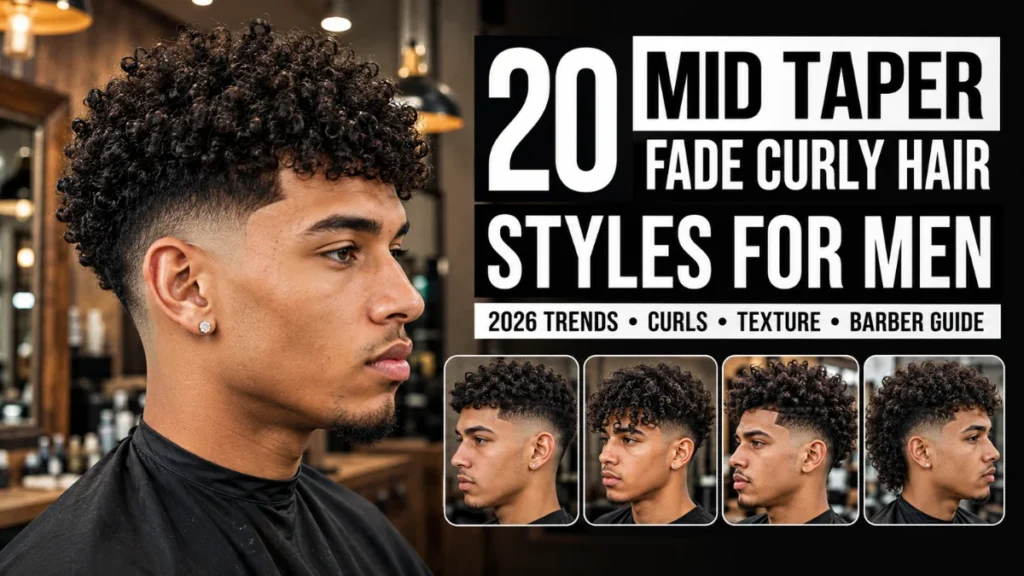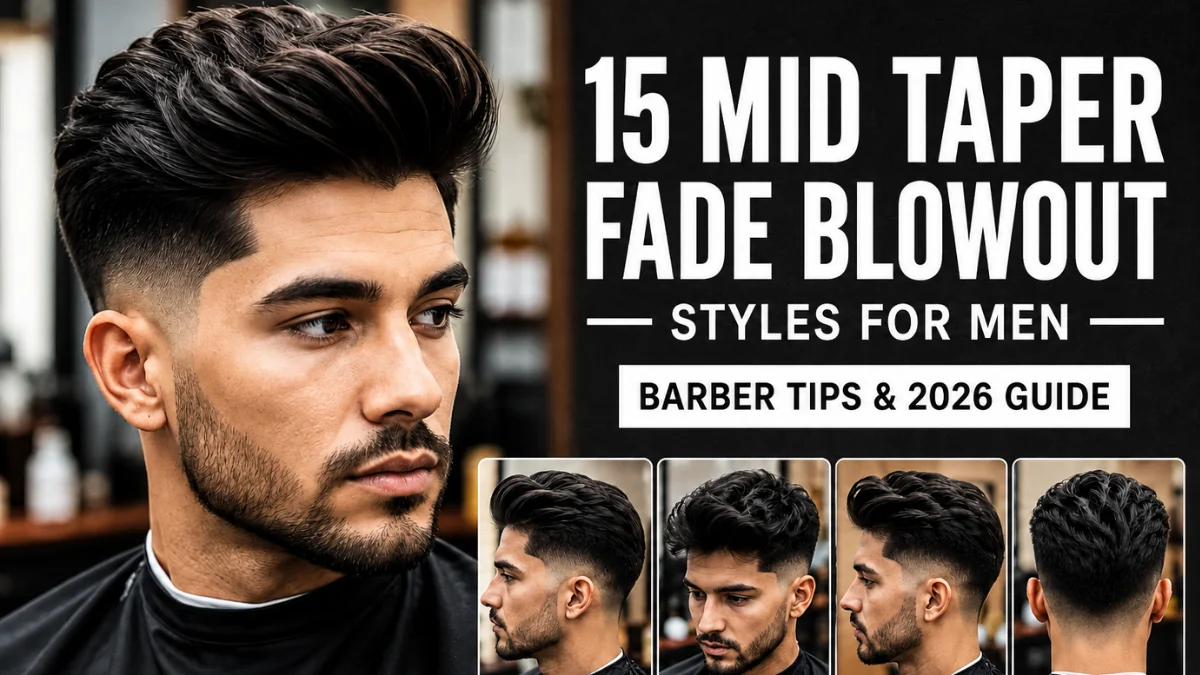
15 Modern Mid Taper Fade Blowout Haircuts for Men: Barber Tips & 2026 Guide

A mid taper fade blowout combines two distinct elements: a controlled taper around the temples, sideburns, and neckline, plus a fuller top styled outward, upward, or backward for noticeable volume. The result has a clean perimeter without sacrificing the height and movement that make a blowout recognizable.
The haircut works across straight, wavy, curly, and coarser textures, but the cutting and styling approach should change with the hair. A good blowout is not simply about making the top as large as possible; the volume needs to suit the head shape, density, and overall proportions.
In 2026, men’s hair is continuing to move toward more personalized texture, softer silhouettes, and styles that retain movement instead of looking overly rigid. Current trend coverage also shows continued interest in longer tops and updated versions of classic cuts, which makes the blowout especially adaptable.
What Is a Mid Taper Fade Blowout?
A mid taper fade blowout keeps the taper concentrated around the middle area of the temples and sideburns while maintaining substantial length on top. The longer hair is then dried with a blow dryer to create lift, direction, and outward movement.
The taper provides the structure. The blowout provides the personality.
This distinction matters because the haircut can look completely different depending on how the top is cut. A short, controlled blowout has a much cleaner appearance than a long, dramatic version with significant height and flow.
What Makes a Blowout Different From a Regular Taper?
A regular taper can be paired with almost any top style, while a blowout specifically depends on volume and directional styling.
The top needs enough length and density to create visible lift. If the hair is cut too short or the weight is distributed poorly, the result may look like an ordinary tapered haircut rather than a true blowout.
The taper also should not overpower the top. The goal is to create a transition where the sides look neat while the longer hair remains the visual focus.
15 Modern Mid Taper Fade Blowout Haircuts for Men
There are many ways to customize the basic combination. The best variation depends on hair texture, density, face shape, top length, and how much time you want to spend styling.
1. Classic Blowout With Mid Taper
The classic version keeps medium-to-long length across the top and directs the hair upward and slightly backward. The sides remain controlled without eliminating their natural shape.
This is the easiest variation to recognize as a traditional blowout and provides a strong foundation for experimenting with different styling products.
Best for: Medium to thick hair with enough length to create lift.
2. Short Blowout With Mid Taper
A short blowout keeps the top compact while still creating some root lift. Instead of chasing extreme height, the goal is a clean shape with visible movement. This version is practical if you like the blowout aesthetic but do not want a long morning styling routine.
3. Textured Blowout
A textured blowout relies on separation rather than height alone. The barber can introduce controlled variation through the top so the hair does not sit as one solid mass. A matte product usually works well when the goal is definition without a wet-looking finish.
4. Messy Blowout
The messy version deliberately leaves some irregularity in the top. The hair is lifted and directed, but individual sections are allowed to move rather than being perfectly aligned. This works particularly well with naturally wavy or thick hair.
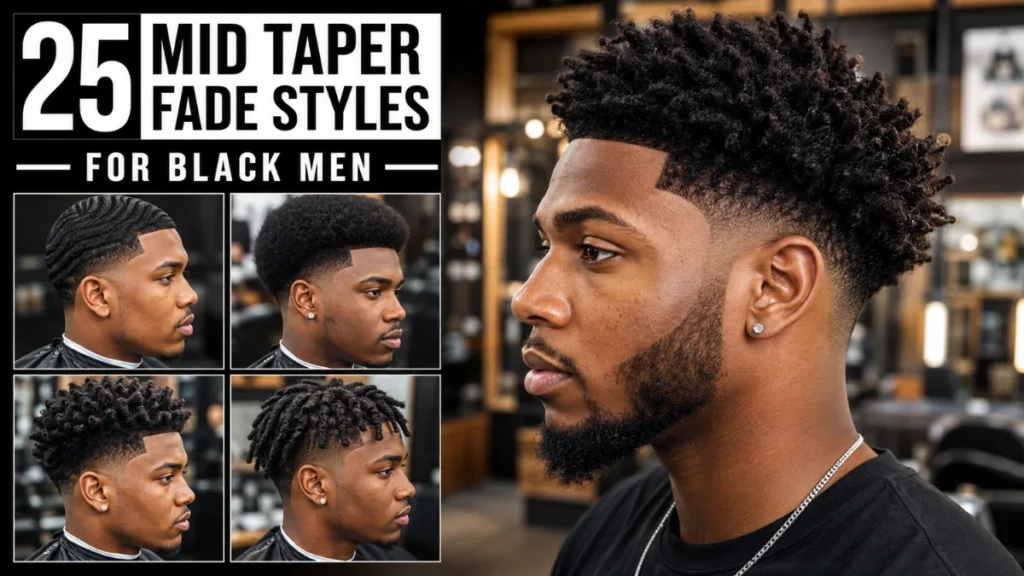
5. Blowout With Curly Hair
Curly hair can create substantial natural volume, making it an excellent candidate for a blowout-inspired shape. The styling approach should preserve the curl pattern rather than aggressively stretching it. A diffuser can help dry curls while maintaining their natural structure.
6. Blowout With Wavy Hair
Wavy hair naturally provides some of the movement that a blowout requires. The barber can keep enough length on top for the waves to expand while using the taper to control the perimeter. A lightweight styling cream or mousse can help maintain movement without turning the waves stiff.
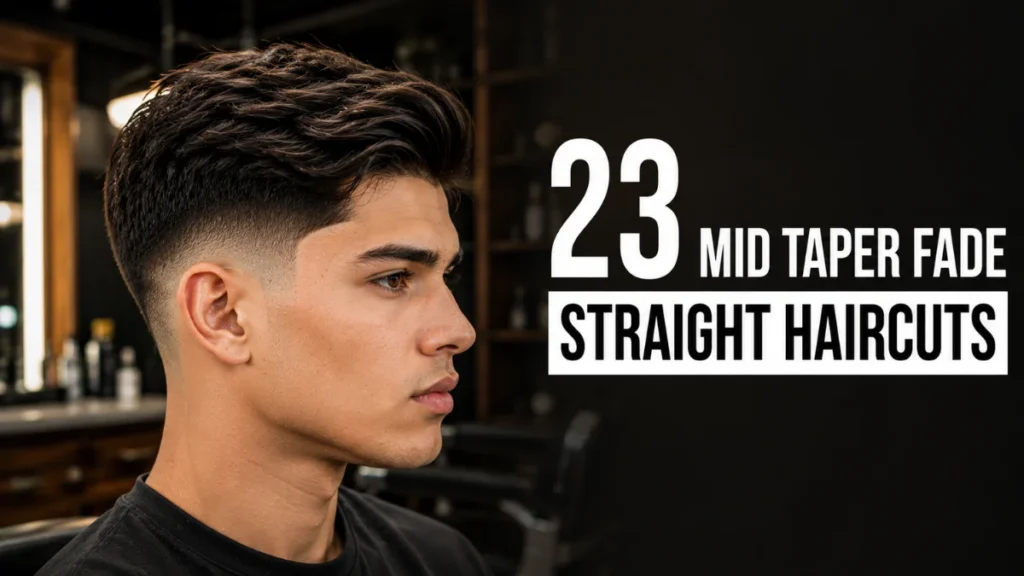
7. Blowout With Straight Hair
Straight hair often needs more deliberate styling to create lift. A round brush and blow dryer can establish volume at the roots before a finishing product is applied. Layering or selective texturing can also prevent the top from looking too flat or heavy.
8. Blowout With Thick Hair
Thick hair can produce impressive volume, but too much weight can make the top difficult to control. The barber should remove weight selectively rather than simply thinning everything. The objective is to make the hair easier to direct while preserving enough density for a full silhouette.
9. Blowout With Fine Hair
Fine hair can still be styled into a blowout, but the approach should focus on lightweight volume. Overloading fine hair with heavy pomade can quickly flatten the roots. A volumizing pre-styler followed by a small amount of lightweight finishing product is often a more practical approach.
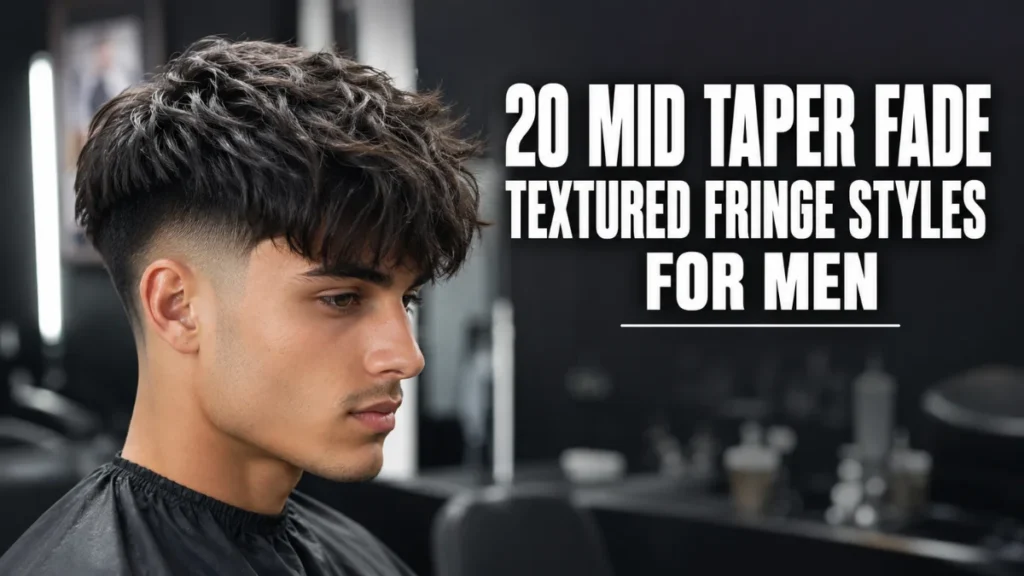
10. Blowout With a Textured Fringe
Instead of directing the entire front backward, leave part of the fringe moving slightly forward or diagonally. This creates a hybrid between a blowout and a textured fringe, giving the haircut a more contemporary appearance.
11. Blowout Quiff
The front can be lifted higher than the rest of the top, creating a quiff-like profile. This is useful when you want more height around the forehead without making the entire top equally tall.
12. Blowout With Side Part
A side part adds a more organized direction to the top. The hair can still have volume, but the part gives the style a clearer structure. It is a good choice when you want a blowout that can work in both casual and more polished settings.
13. Blowout With Slicked-Back Finish
Longer straight or wavy hair can be dried backward and finished with a controlled product. Unlike a traditional slick back, the blowout version can retain some lift instead of sitting completely flat against the scalp.
14. Blowout With Beard
Adding facial hair changes the balance of the haircut. The beard introduces visual weight around the lower face while the blowout creates height above it. The barber should consider the beard length when shaping the sideburn and temple transition.
15. Blowout With Natural Hairline
A natural hairline gives the style a softer appearance. Because the blowout already creates strong volume, an aggressively squared hairline is not necessary for everyone. This can also make the haircut easier to maintain as it grows.
How to Choose the Right Blowout for Your Hair Type?
Your hair texture determines how easily you can create volume and how the finished shape behaves throughout the day.
Straight Hair
Straight hair usually needs heat styling to create substantial lift. Focus on the roots first because the foundation of the blowout determines how long the volume lasts.
Wavy Hair
Wavy hair already has natural movement, so you may need less manipulation. Use the blow dryer to direct the waves rather than trying to completely straighten them.
Curly Hair
Curly hair should generally be handled with a diffuser when you want to preserve curl definition. Too much direct airflow can disturb the curl pattern and create unnecessary frizz.
Thick Hair
Thick hair has plenty of volume but may need weight management. Your barber should decide where bulk needs to be reduced based on how your hair expands naturally.
Fine Hair
Fine hair benefits from a lighter styling routine. Too much product can flatten the hair and cancel out the volume created during blow-drying.
Best Face Shapes for a Blowout
A blowout changes the vertical profile of the haircut, so the amount of height matters.
| Face Shape | Recommended Approach | What to Consider |
|---|---|---|
| Oval | Most variations | Keep the overall proportions balanced |
| Round | Moderate to high volume | Added height can create a longer visual profile |
| Square | Textured or controlled blowout | Avoid excessive width if you want to emphasize angles |
| Oblong | Lower-volume blowout | Avoid making the top excessively tall |
| Diamond | Medium volume with controlled sides | Balance the forehead and jaw |
| Heart | Moderate volume | Keep the overall silhouette proportional |
These are starting points rather than strict rules. Your hair density and natural head shape can matter just as much as your face shape.
How to Ask Your Barber for a Mid Taper Blowout?
A reference photo is helpful, but your barber also needs to know what you actually want from the haircut.
Tell them:
- You want a mid taper around the temples and sideburns.
- How much length you want to retain on top.
- Whether you want moderate or dramatic volume.
- Whether the front should move backward, upward, or slightly forward.
- How much texture you want.
- Whether you prefer a natural or lined-up hairline.
- Whether your beard should connect to the taper.
A clear request might sound like:
“Keep the taper around the middle of the temple and sideburn area, preserve enough length on top for a blowout, and shape the top for upward and backward movement. I want volume without making the sides completely disappear.”
That gives your barber considerably more useful information than simply asking for a “blowout fade.”
How Barbers Build the Shape?
The finished haircut depends on both cutting and styling.
1. Establish the Taper
The barber first determines where the taper should sit around the temple, sideburn, and neckline.
Its position affects the entire silhouette, so it should be chosen according to your head shape and the amount of side weight you want.
2. Establish the Top Length
The top must have enough length to create the desired blowout. The amount required varies significantly between hair types.
Curly hair may create volume with less visible length, while straight hair often needs additional length to achieve the same effect.
3. Remove Unnecessary Weight
Thick hair may need internal weight reduction. This should be selective rather than automatic.
The goal is easier styling and better movement, not simply making the hair thinner.
4. Create Direction
The top should be shaped according to how it will be styled. If you always wear your hair backward, the cut should support that direction.
A haircut that looks good only when manually forced into position is usually not as practical as one that works with the hair’s natural growth pattern.
5. Refine the Perimeter
The hairline, temple corners, sideburns, and neckline should be refined after the main structure is established.
This gives the finished haircut a cleaner appearance without letting edge work become the main feature.
How to Style a Mid Taper Fade Blowout?
The blow dryer is the most important tool because the volume is created primarily through heat, airflow, and direction.
- Start With Damp Hair: Wash or rinse the hair according to your normal routine, then gently towel-dry it. Do not aggressively rub the hair because rough handling can create unnecessary frizz and disrupt the shape.
- Apply a Pre-Styler: Use a suitable heat protectant or lightweight volumizing product. The product should support the style rather than make the hair feel heavy before you even begin drying.
- Lift the Roots: Use a blow dryer while lifting the hair with your fingers or a round brush. Direct the airflow along the direction you want the hair to travel, rather than blasting randomly from every angle.
- Build the Front: Spend extra time on the front because it usually determines how the blowout looks from the front and side. Lift the roots first, then guide the hair backward or outward.
- Control the Sides: Keep the side hair closer to the head while drying. This reinforces the contrast between the controlled taper and fuller top.
- Finish With Cool Air: A short burst of cool air can help the styled shape settle after the heated styling stage.
- Add Finishing Product: Use a small amount of clay, paste, cream, or another suitable product according to the desired finish.
Work it through the top instead of dumping product directly onto the roots.
Blow Dryer vs. Air Drying
Air drying can work for naturally wavy or curly hair when you want a softer version of the style.
However, a traditional high-volume blowout generally benefits from a blow dryer because the heat and airflow help establish root direction.
For straight or fine hair, blow-drying is usually much more important because the hair may naturally fall back toward the scalp.
How to Get Volume Without Making the Hair Stiff?
A common mistake is trying to create volume entirely through strong-hold product.
The better approach is to create most of the shape with the blow dryer and use the finishing product to maintain it. This keeps the hair lighter and allows some natural movement.
If the hair feels hard or looks greasy, you are probably relying too heavily on product.
Best Products for a Blowout
| Styling Goal | Product Type | Suitable Finish |
|---|---|---|
| Root Lift | Volumizing mousse | Light and airy |
| Texture | Matte paste | Natural separation |
| Stronger Control | Clay | Matte, structured finish |
| Soft Movement | Styling cream | Natural and flexible |
| Pre-Styling | Heat protectant | Protection and preparation |
| Curl Definition | Curl cream | Defined, softer texture |
| Light Texture | Sea salt spray | Loose, tousled finish |
The correct product depends on your hair. Fine hair usually needs lightweight formulas, while dense or coarse hair may need more hold.
How to Maintain the Mid Taper Fade Blowout Haircut?
The top and taper have different maintenance requirements.
The taper will lose its crispness as the sides and neckline grow. Meanwhile, the top may continue looking good even as it becomes longer.
This means you do not always need to remove substantial length from the top during every appointment.
Between Barber Visits
- Keep the hair clean according to your normal routine.
- Use conditioner when the hair needs additional softness.
- Avoid excessive heat without protection.
- Refresh the style with a small amount of water rather than repeatedly adding product.
- Avoid cutting the taper yourself unless you are experienced with clipper work.
- Keep the neckline and sideburns tidy if you want a consistently sharp appearance.
- Give longer hair occasional breaks from heavy styling.
Common Mistakes With This Haircut
- Making the Top Too Heavy: A blowout needs volume, but excessive weight can make the hair difficult to control. Thick hair especially benefits from strategic weight management.
- Making the Taper Too High: If the taper climbs too far into the side panel, the haircut can lose the fuller silhouette that makes a blowout attractive. Be clear if you want more natural side coverage.
- Using Too Much Product: Heavy product can flatten the very volume you worked to create. Build the shape with the dryer first and add product gradually.
- Ignoring Hair Growth Direction: If your hair naturally moves forward but you want a slicked-back blowout, you will need more styling work. Your barber should know your preferred direction before determining the top shape.
- Over-Thinning Thick Hair: Removing too much internal density can make the top lose its fullness. The goal is controlled weight, not maximum thinning.
- Applying Excessive Heat: Frequent high-temperature styling can contribute to dryness and damage. Use appropriate heat protection and avoid holding the dryer unnecessarily close to the hair.
Mid Taper Blowout vs. Blowout Fade
The main difference comes down to how much of the sides are reduced.
A taper preserves more of the natural side structure, while a broader fade creates stronger contrast.
| Characteristic | Mid Taper Blowout | Blowout Fade |
|---|---|---|
| Side Structure | More preserved | More reduced |
| Contrast | Moderate | Higher |
| Top Prominence | Strong | Very strong |
| Overall Feel | Balanced | Bold |
| Grow-Out | Softer | More obvious |
| Styling | Volume-focused | Volume plus contrast |
If your goal is a blowout that looks modern without being excessively aggressive, the mid taper is a strong middle ground.
Mid Taper Blowout vs. Quiff
These styles share a focus on volume, but the direction differs.
A quiff usually emphasizes the front and directs it upward and backward. A blowout can distribute volume across a larger portion of the top and sides.
You can also combine the two by creating a blowout with a more pronounced quiff at the front.
Mid Taper Blowout vs. Pompadour
A pompadour typically has a more deliberate, structured shape with significant front volume and a controlled sweep backward.
A blowout generally allows more movement and a less rigid finish.
If you prefer a relaxed, touchable hairstyle, the blowout is usually the more natural direction.
Who Should Get a Mid Taper Fade Blowout?
This haircut is worth considering if you want:
- Noticeable volume on top.
- A cleaner temple and neckline area.
- More styling flexibility than a short haircut.
- A modern alternative to a standard fade.
- A style that can work with several hair textures.
- The ability to customize the top length.
- A haircut that can transition into longer styles.
It may not be ideal if you want a completely maintenance-free haircut or strongly dislike using a blow dryer.
Pros and Cons
| Pros | Cons |
|---|---|
| Creates strong visual volume | Requires styling for the full effect |
| Works with multiple hair textures | Long tops take more time to dry |
| Easy to personalize | Heavy products can flatten it |
| Taper keeps the perimeter clean | Close tapers need regular cleanup |
| Can be worn casually or formally | Very fine hair may have limited height |
| Works with different face shapes | Poor weight distribution can create bulk |
Conclusion
A mid taper fade blowout is at its best when the taper and top are treated as one haircut rather than two unrelated features. The taper creates a clean framework, while the blowout provides the volume, direction, and movement that define the style.
The right version depends on your hair’s density, texture, natural growth pattern, face shape, and willingness to style it. Straight hair may need more root work, curly hair benefits from curl-preserving techniques, and thick hair often needs careful weight management.
For 2026, a softer and more wearable blowout is a smart direction: controlled volume, natural movement, a personalized taper, and enough top length to adapt as your hair grows. Current trend reporting supports this broader shift toward movement, texture, and less rigid men’s hairstyles.
The most important thing to tell your barber is not simply that you want a “blowout.” Explain how much top length you want, where you want the taper placed, how much volume you expect, and whether you prefer a natural or sharply defined finish. That information gives the barber room to build a haircut that works with your actual hair rather than forcing your hair to imitate someone else’s.