Low Taper Fade: A Complete Guide to This Modern Men’s Haircut

A low taper fade is a clean, stylish haircut that keeps the sides and back neat without removing too much hair. It creates a gradual transition around the temples and neckline while leaving more length toward the upper sides and top. This balance makes it a popular choice for men who want a fresh appearance without an extremely short haircut.
One reason this haircut stands out is its flexibility. It works with straight, wavy, curly, and textured hair, and you can pair it with different hairstyles on top. Whether you prefer a short crop, a messy fringe, or a longer textured look, a low taper fade can give your haircut a sharp finish.
In this guide, you will learn what a low taper fade is, where it starts and ends, how it compares with other taper styles, and how to choose, style, and maintain it.
History of Low Taper Fade
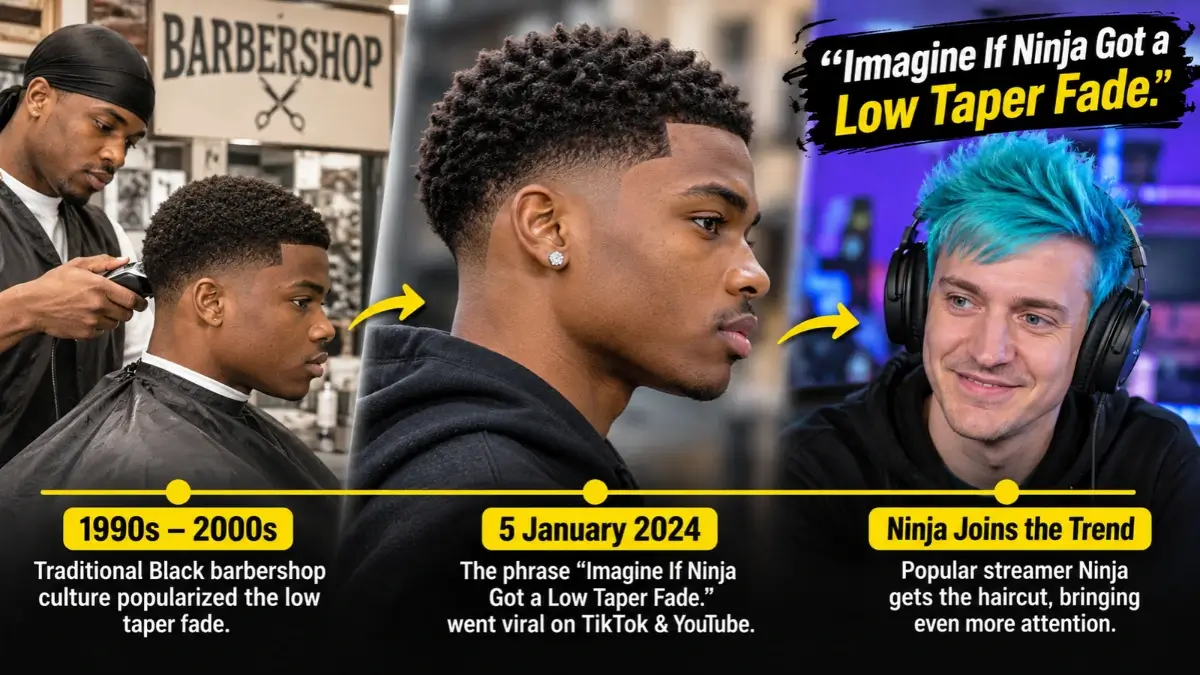
The low taper fade has its roots in traditional Black barbershop culture, where barbers popularized techniques such as temple fades, bald fades, and Brooklyn fades during the 1990s and 2000s. These styles focused on smooth blending around the temples, sideburns, and neckline while keeping the hair longer on top.
The haircut gained massive internet attention on 5 January 2024 through the viral meme “Imagine If Ninja Got a Low Taper Fade.” The phrase came from a freestyle by hyperpop artist ericdoa during a Twitch livestream and quickly spread across TikTok and YouTube. Popular streamer Ninja eventually joined the trend by getting the haircut himself, bringing even more attention to this classic barbershop style.
What Is a Low Taper Fade Haircut?
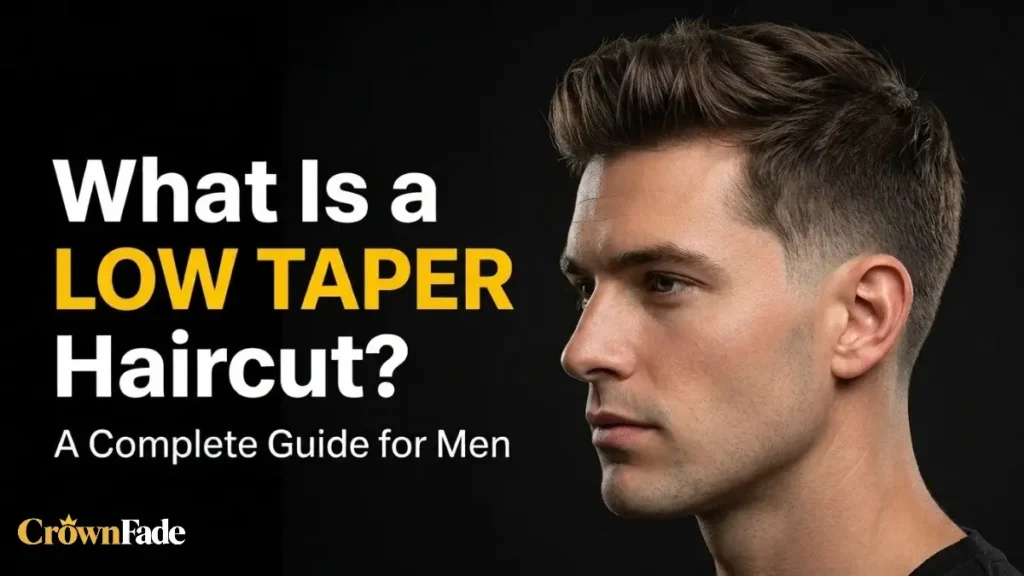
A low taper fade is a modern haircut where the hair gradually becomes shorter around the lower sides, temples, and neckline. The transition begins close to the ears and follows the natural shape of the head rather than moving high toward the crown.
Unlike a high fade, which removes more hair from the upper sides, this haircut keeps most of the side length intact. The top can remain short, medium, or long, depending on the hairstyle you want.
A barber usually creates the transition using different clipper guards, blending techniques, and detail work. The goal is to make the hair look gradually shorter without visible steps or harsh lines.
What Does a Low Taper Fade Look Like?
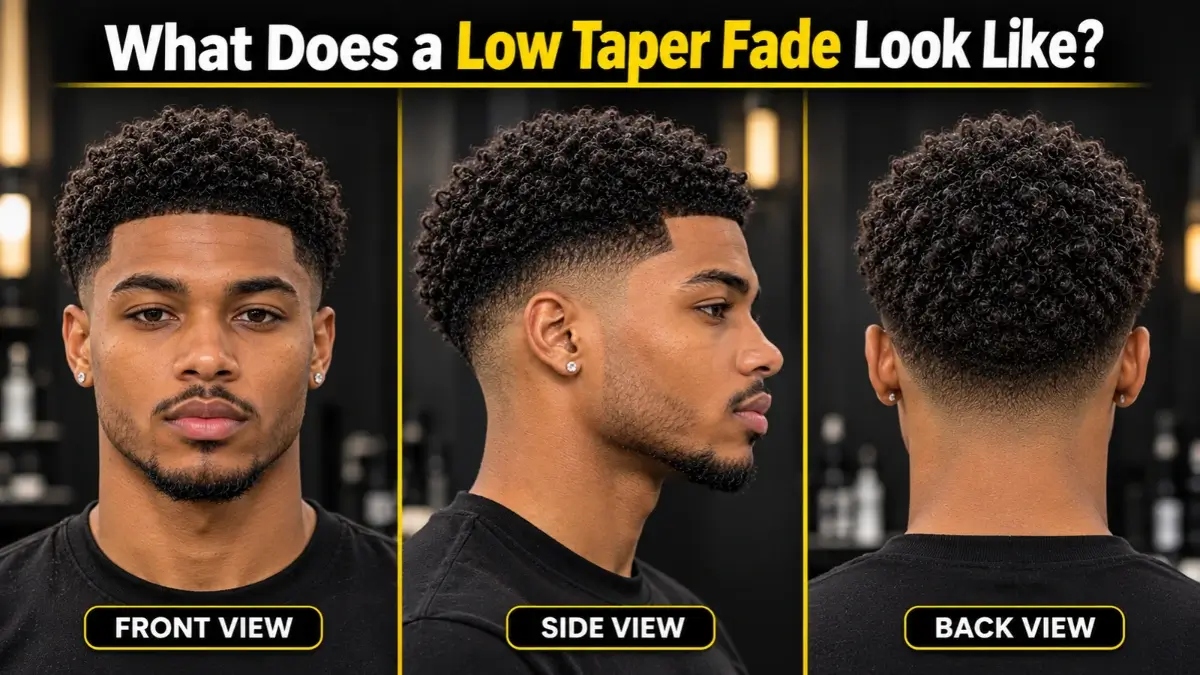
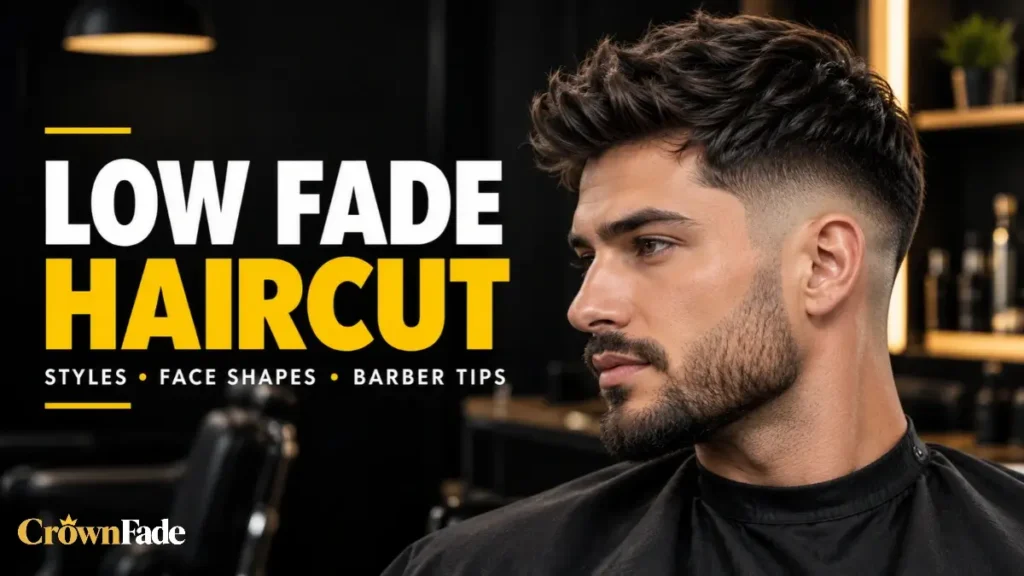
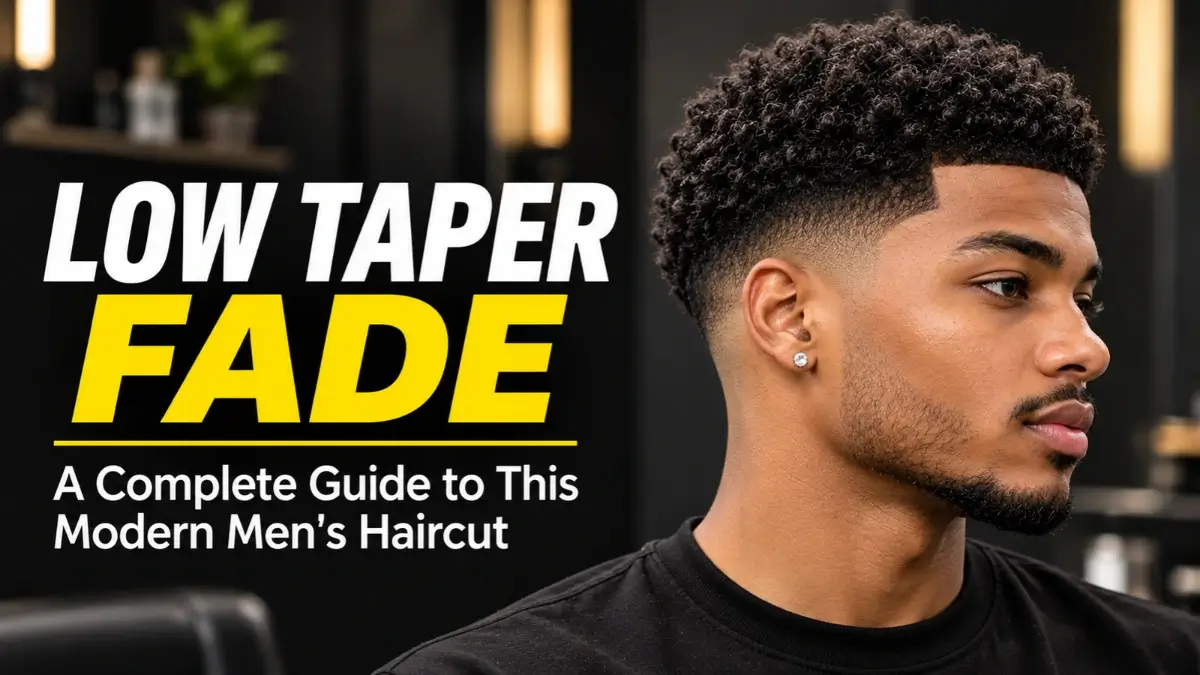
A low taper fade has a subtle, clean appearance around the temples and lower neckline. The hair gradually gets shorter as it moves toward the edges, while the upper sides maintain more length.
From the front, you can notice a neat transition near the temples. From the side, the hair remains fuller above the ears, and from the back, the neckline looks clean and gradually tapered.
For men who prefer a natural-looking haircut instead of a dramatic skin fade, this style offers a good balance between length and definition.
Where Does a Low Taper Fade Start and End?
The low taper fade starts close to the bottom of the temples, usually around the sideburn area. It gradually blends shorter hair into longer hair as it moves upward along the lower sides of the head.
At the back, the taper begins around the lower neckline and follows the natural hairline. The transition generally stays close to the ears and nape rather than extending toward the middle or upper sides.
The exact starting point depends on your head shape, hairline, and personal preference. Some men prefer a very subtle taper, while others want a more noticeable contrast near the edges.
Key Benefits
A low taper fade offers several practical benefits that make it a reliable choice for everyday grooming.
- Clean appearance: It keeps the temples, sideburns, and neckline looking neat.
- Natural finish: The gradual transition avoids an overly dramatic change in hair length.
- Styling flexibility: You can combine it with short crops, textured fringes, quiffs, curls, and other hairstyles.
- Works with different hair types: Straight, wavy, curly, and coily hair can all work with this cut.
- Professional appearance: Its subtle finish makes it suitable for many workplaces and formal settings.
- Easy to customize: Your barber can adjust the length and blending to match your preferences.
Another advantage is that it does not require the entire sides to be cut extremely short. You can maintain a fuller appearance while still enjoying the sharp finish of a modern fade.
Low Taper Fade vs Mid Taper Fade
The main difference between a low taper fade and a mid taper fade is where the transition begins. Both styles gradually reduce hair length, but they create different levels of contrast.
| Feature | Low Taper Fade | Mid Taper Fade |
|---|---|---|
| Starting Point | Near temples and neckline | Higher around the sides |
| Appearance | Subtle and natural | More noticeable |
| Side Length | Keeps more hair | Removes more hair |
| Contrast | Low | Moderate |
| Best For | Understated styles | Defined modern styles |
Difference Between a Low Taper and a Taper Fade
The terms taper and fade are closely related, but they do not always describe exactly the same haircut.
A traditional taper gradually shortens the hair around specific areas, usually the sideburns and neckline. It often leaves more length throughout the sides, creating a softer and more natural finish.
A taper fade combines tapering with a closer fade effect. The hair becomes noticeably shorter near the edges, sometimes reaching very short clipper lengths or the skin.
A low taper fade uses this gradual blending technique close to the temples and neckline. It offers more definition than a traditional taper while keeping the transition low.
A low fade is slightly different because it can extend the faded area farther around the lower sides of the head instead of focusing mainly on the temples and neckline.
Who Should Get a Low Taper Fade?
A low taper fade suits men who want a neat haircut without losing too much length from the sides. It also helps if you like having different styling options for the hair on top. Here is who gets the most out of it.
By lifestyle:
- Men who prefer clean, understated haircuts.
- Students looking for a modern everyday hairstyle.
- Professionals who want a tidy appearance for work or interviews.
- Men who like switching between casual and formal looks.
- Beginners trying a fade for the first time, since the blend is subtle.
By hair type:
- Straight hair: The taper shows up clearly on straight hair, so the blend needs to be smooth. Pair it with a textured crop or a side part.
- Wavy hair: The clean edges keep waves looking intentional instead of messy. A medium-length top with light styling cream works well.
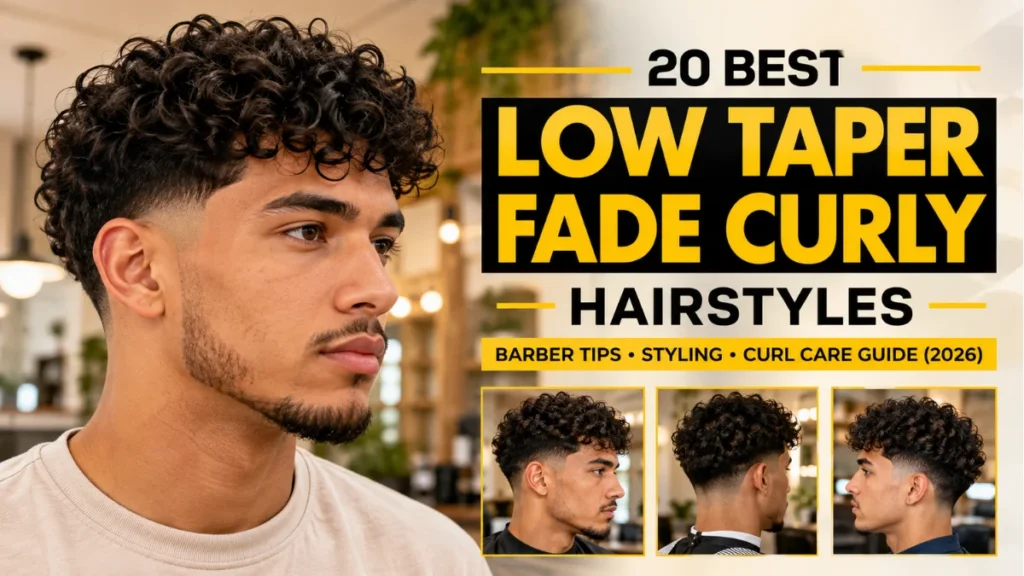
- Curly hair: The short, tidy sides frame your curls and keep them from looking bulky. Leave enough length on top to show the curl pattern.
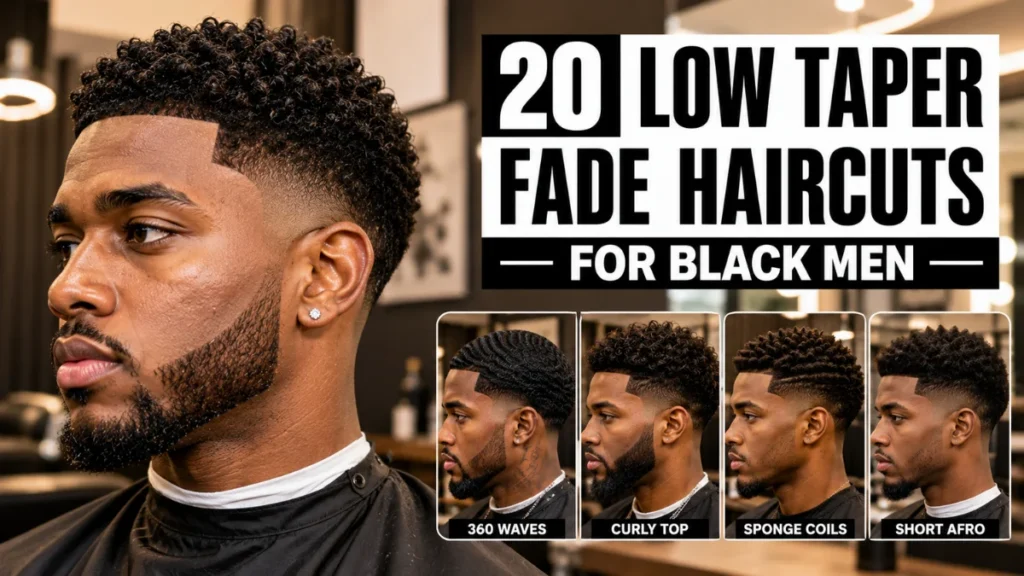
- Coily and afro-textured hair: This is a strong match for Black men. Black barbers helped shape fade culture, and the low taper works well on coily hair because it gives sharp edges while keeping natural texture on top. Styles like a twist-out, short afro, or sponge twists look great with it.
- Waves (360 waves): A low taper keeps the sides clean while you build and brush your waves on top.
By mood and style:
- Clean and professional: Keep the top short and combed, with a neat neckline.
- Casual and relaxed: Go for a messy fringe or textured top with matte clay.
- Bold and modern: Add height with a quiff or pompadour, or try a sharper line-up.
Your hair density and growth pattern also matter. If you have thick hair, the taper reduces bulk around the edges. If your hair is fine, keeping more length on the sides helps maintain a fuller look.
Which Face Shapes Look Best with a Low Taper Fade?
A low taper fade can work with most face shapes, but the hairstyle on top plays an important role in creating a balanced appearance.
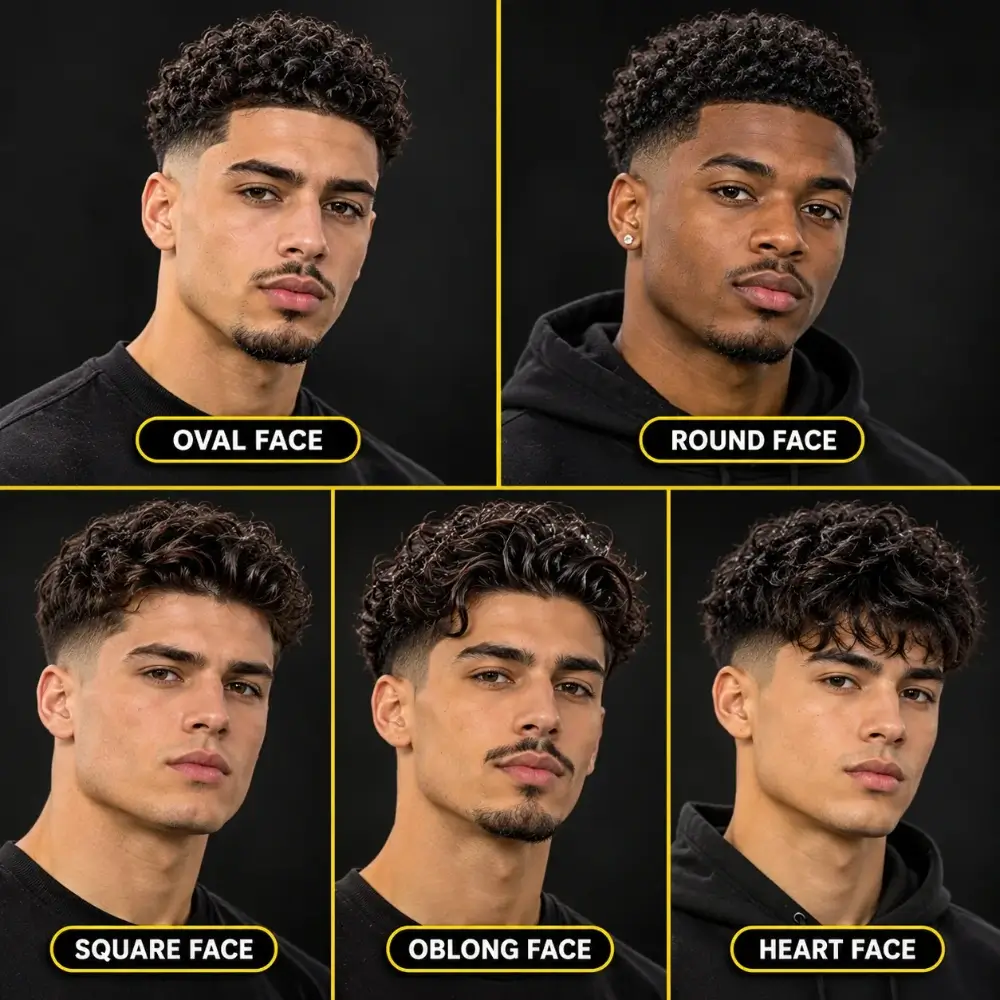
- Oval face: This face shape works with most variations. You can choose a textured crop, quiff, or longer hairstyle.
- Round face: Extra height on top can make the face appear longer. Avoid excessive width around the sides.
- Square face: A low taper complements a strong jawline and works well with textured or slightly longer hair.
- Oblong face: Keeping moderate volume on top and some fullness around the sides can create better balance.
- Heart-shaped face: A textured fringe or medium-length hairstyle can help balance a wider forehead and narrower chin.
The best approach is to choose a top hairstyle that complements your facial proportions rather than focusing only on the fade.
How to Ask Your Barber for a Low Taper Fade Haircut?
Clear communication helps your barber understand exactly what kind of haircut you want. Instead of simply saying you want a fade, explain where you want the taper to start and how much length you want to keep.
You can say:
“I want a low taper fade around the temples and neckline. Keep the transition low and blend it smoothly into the sides. Leave the top at its current length and give it a natural finish.”
Here are a few additional tips:
- Show a reference photo: A picture makes it easier to communicate the exact look you want.
- Explain the starting point: Tell your barber that you want the fade close to the ears and neckline.
- Discuss clipper guards: Ask what guard lengths will work with your hair thickness and desired finish.
- Mention your top length: Decide whether you want to keep the top short, medium, or long.
- Discuss the neckline: Choose between a natural, tapered, or more defined neckline.
If you are unsure about the length, ask your barber to start conservatively. Removing too much hair is easier to avoid than trying to restore length after the cut.
Common Mistakes to Avoid
Even a simple haircut can lose its shape if the blending or proportions are not handled correctly. Watch out for these common mistakes:
- Starting the fade too high: This can turn a low taper into a mid or high fade.
- Leaving visible blend lines: Poor clipper blending can create noticeable steps between hair lengths.
- Removing too much from the sides: Cutting the sides too short can change the natural appearance of the style.
- Ignoring the neckline: An uneven or poorly finished neckline can make the haircut look incomplete.
- Choosing the wrong top length: The hair on top should complement the taper and your face shape.
- Using too much styling product: Heavy products can make the hair look greasy or flat.
- Not explaining your preference: Assuming your barber understands exactly what you mean can lead to an unwanted result.
A good low taper fade should look balanced from the front, sides, and back. Smooth blending and proper proportions matter more than making the fade extremely short.
How to Style a Low Taper Fade?
One of the best things about a low taper fade is that you can style the top in several ways. Your choice depends on your hair length, texture, and the amount of volume you prefer.
Products to Use
Choosing the right styling product helps you control your hair without making it look unnatural.
| Product | Best For | Finish |
|---|---|---|
| Matte Clay | Thick and textured hair | Natural, matte |
| Hair Wax | Short and medium styles | Flexible hold |
| Pomade | Slick backs and side parts | Medium to high shine |
| Styling Cream | Wavy and medium-length hair | Soft, natural |
| Sea Salt Spray | Adding texture and volume | Light, relaxed |
| Curl Cream | Curly and coily hair | Defined curls |
You do not need to use every product. Choose one based on your desired finish and hair type.
Step-by-Step Styling for Short Hair
Short hair is generally easy to manage because it requires less product and styling time.
- Start with clean, slightly damp hair.
- Apply a small amount of matte clay or styling cream.
- Spread the product evenly between your palms.
- Work it through your hair from the back toward the front.
- Use your fingers or a comb to create the desired shape.
- Finish with a light hairspray if you need extra hold.
For a textured crop, use your fingers to create separation. If you prefer a cleaner look, use a comb to direct the hair forward or slightly to one side.
Styling Tips for Medium and Long Hair
Medium and long hairstyles offer more flexibility but usually need additional control.
Start by towel-drying your hair and applying a small amount of styling cream or sea salt spray. Use a blow dryer with your fingers or a brush to create volume and direct the hair into your preferred shape.
For a side part, use a comb to create a clean separation. For a quiff, lift the front section while drying to build height.
Avoid applying too much product near the roots. A lightweight formula helps maintain movement instead of making longer hair look heavy.
Styling Tips for Curly and Textured Hair
Curly and textured hair can look especially good with a low taper because the shorter edges create a clean contrast with the natural volume on top.
Apply curl cream or a lightweight leave-in conditioner to damp hair. Use your fingers to distribute the product evenly and gently scrunch the curls to encourage their natural shape.
Allow your hair to air-dry or use a diffuser on a low heat setting. Avoid brushing dry curls aggressively because this can disturb their pattern and create unwanted frizz.
If you have tightly coiled hair, a small amount of moisturizing product can help maintain definition and reduce dryness.
How to Maintain a Low Taper Fade?
Regular maintenance helps your haircut retain its shape and clean appearance. The most important areas to watch are the temples, sideburns, and neckline because these sections show regrowth first.
Keep your hair clean with a shampoo suitable for your scalp and hair type. Use conditioner when needed, especially if your hair is curly, dry, or textured.
Avoid cutting the faded areas yourself unless you have experience using clippers. A small mistake around the temples or neckline can make the transition uneven.
How Often Should You Get a Touch-Up?
Most men benefit from a low taper fade touch-up every two to four weeks. The exact timing depends on how quickly your hair grows and how sharp you want the edges to look.
If you prefer a very clean finish, you may want to visit your barber every two weeks. If you are comfortable with a slightly grown-out appearance, waiting three or four weeks can work.
You can also ask your barber for a light cleanup between full haircuts. This helps maintain the shape without removing unnecessary length from the top.
How Long Does It Take to Grow Out?
A low taper fade usually starts losing its original sharp appearance after a few weeks of hair growth. However, growing it into a fuller hairstyle takes longer.
The timeline depends on your natural growth rate, starting hair length, and how much length you want to restore. The faded sections need time to catch up with the longer hair above them.
If you want to grow out the haircut, avoid repeatedly cutting the sides too short. Ask your barber to blend the growing sections while preserving as much length as possible.
Daily Care and Neckline Cleanup Tips
A little daily care can keep your haircut looking tidy between barber appointments.
- Wash your hair according to your scalp’s needs.
- Use conditioner to maintain softness and manageability.
- Brush or comb your hair gently into shape.
- Apply a small amount of styling product when needed.
- Keep your sideburns and neckline neat.
- Avoid trimming too high around the temples.
- Use a clean trimmer if you are experienced with basic neckline maintenance.
For a natural appearance, do not make your neckline excessively sharp or remove too much hair around the edges.
Pros and Cons
Like any haircut, a low taper fade has advantages and a few limitations. Understanding both can help you decide whether it matches your grooming preferences.
Pros
- Versatile styling: Works with short, medium, and long hairstyles.
- Natural appearance: Keeps the fade subtle and balanced.
- Suitable for different textures: Can be adapted for straight, wavy, curly, and coily hair.
- Clean edges: Gives the temples and neckline a neat finish.
- Professional look: Suitable for many casual and formal environments.
- Customizable: Your barber can adjust the blend and length.
Cons
- Regular touch-ups: The edges can lose their sharp appearance as the hair grows.
- Requires skilled blending: Poor technique can leave visible lines.
- Less dramatic contrast: Men who prefer an extremely noticeable fade may find it too subtle.
- Hairline differences: Uneven temple growth or natural hairline patterns can affect the final appearance.
- Not completely maintenance-free: It still needs basic grooming and occasional barber visits.
FAQ
Is a Low Taper Fade the Same as a Low Fade?
Not exactly. Both start low, but a low fade usually goes closer to the skin and has stronger contrast. A low taper fade is softer and keeps a more natural finish.
How Long Does a Low Taper Fade Last?
A low taper fade generally keeps its sharp appearance for around two to three weeks, although this varies from person to person. Hair growth, texture, and the level of detail in the original cut all affect how long it looks fresh.
What Guard Number Is Used for a Low Taper Fade?
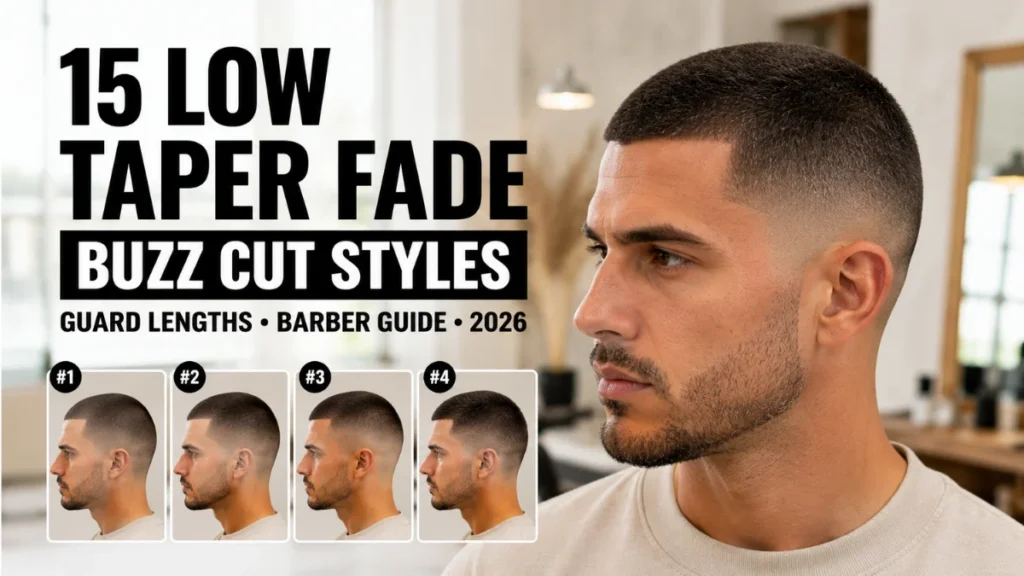
It depends on your barber, but many start around a #0.5 or #1 at the bottom and blend upward through a #2 and #3 before meeting the longer hair. Ask your barber what they recommend for your hair type.
Does a Low Taper Fade Look Good with a Beard?
Yes. The cut blends smoothly into a beard, especially a short or medium one. The beard line and the fade should connect cleanly around the sideburns, so tell your barber you are keeping your beard.
How Much Does a Low Taper Fade Cost?
Prices change a lot by city and shop. In many places, expect somewhere between $25 and $45 at a standard barbershop, with premium salons charging more. Local prices elsewhere will differ, so check with your barber.
Is a Low Taper Fade Professional?
Yes. It is neat, understated, and suits formal and casual settings alike. Keep the top tidy and the neckline clean, and it works well for offices and interviews.
Conclusion
A low taper fade is a versatile men’s haircut that combines clean edges with a natural-looking transition. Its low starting point keeps more length around the sides while creating a neat finish around the temples and neckline.
Whether you have straight, wavy, curly, or textured hair, this haircut can be adjusted to match your preferred style. The key is choosing the right top length, communicating clearly with your barber, and maintaining the edges with regular touch-ups.
If you want a modern haircut that looks clean without being too bold, a low taper fade is a practical option worth considering.