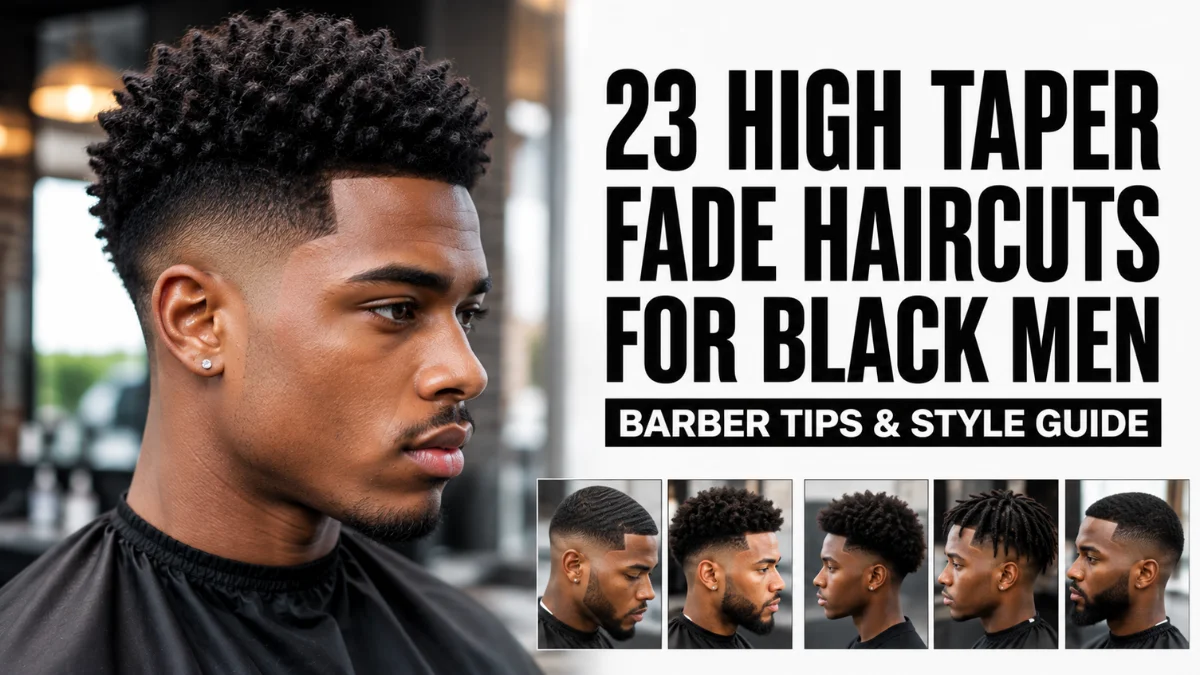
High Taper Fade for Black Men: 23+ Sharp Styles, Barber Tips, & 2026 Guide

A high taper fade black male haircut is one of the easiest ways to create strong contrast while keeping natural texture as the main feature. The sides and back are taken noticeably higher than a low or mid taper, while the hair on top can stay curly, coiled, waved, twisted, braided, or naturally full.
What makes this haircut work is not simply how short the sides are. The placement of the taper, the shape of the head, the density of the hair, the natural hairline, and the amount of length left on top all affect the final silhouette.
In 2026, the best versions are less about copying a single template and more about tailoring the cut to the individual. Natural curls, sponge twists, 360 waves, short afros, locs, textured crops, clean lineups, beard blends, and subtle designs can all be built around a high taper when the proportions are right.
This guide explains how to choose the right variation, what to tell your barber, how the haircut behaves on different textures, and how to keep it looking intentional as it grows out.
What Is a High Taper Fade for Black Men?
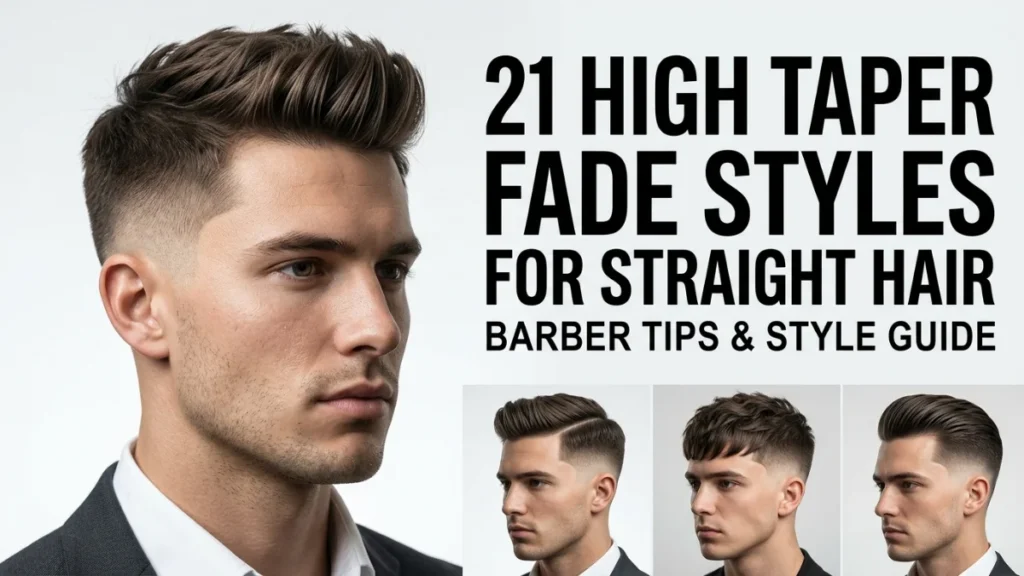
A high taper fade places the shortest section of the haircut high around the temples and upper side area while progressively leaving more length as the blend moves toward the top. Depending on the desired finish, the lowest section can stop at very short stubble, a clipper guard, or bare skin.
The important detail is where the taper begins. A higher starting point creates more visible contrast between the top and sides, while a lower placement preserves more side weight and produces a quieter silhouette.
For Black men’s hair, that contrast can be particularly effective because curls, coils, waves, twists, and other textured tops naturally create visual volume. The taper acts like a frame around that texture rather than competing with it.
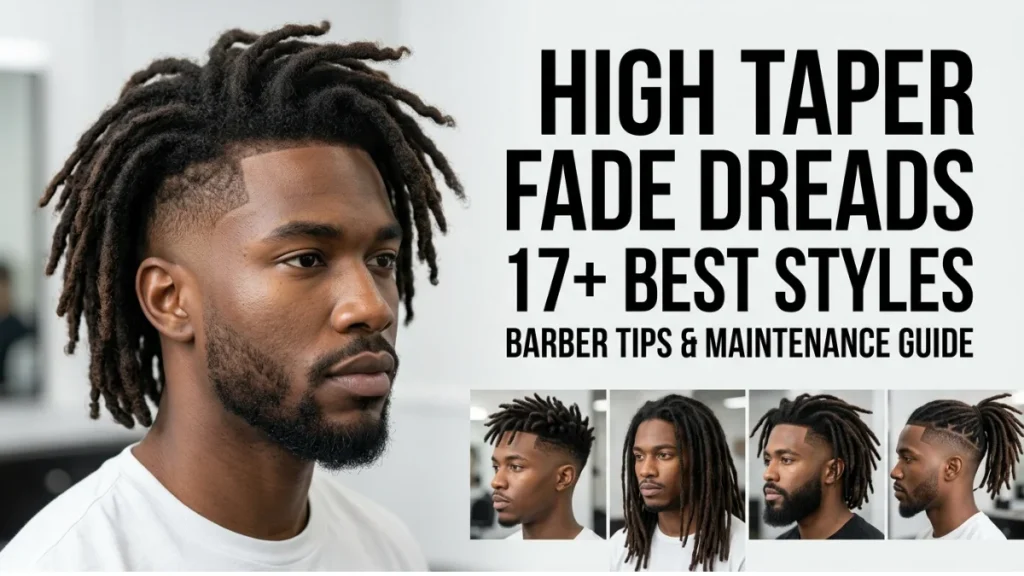
A high taper does not automatically mean the entire side of the head should be taken bald. A barber can create a high taper with a shadow finish, a low guard, or a skin finish depending on the client’s preference and maintenance routine.
High Taper Fade vs. High Fade vs. Temple Fade
These names are often used interchangeably online, but they can describe noticeably different shapes in a barbershop.
| Haircut | Main Characteristic | Overall Effect |
|---|---|---|
| High Taper Fade | Tapering concentrated high around the sides and neckline | Bold but controlled |
| High Fade | Shortened area extends more broadly across the sides | Strong, dramatic contrast |
| Temple Fade | Focuses primarily around the temples and sideburn area | More localized and subtle |
| Mid Taper Fade | Taper begins lower than a high taper | Balanced contrast |
| Low Taper Fade | Shortening stays close to the ear and neckline | Conservative and understated |
The terminology can also vary between barbers. Instead of relying only on the haircut name, describe where you want the shortest point to begin and how much length you want preserved.
For example, saying, “Keep the top full, start the taper high around my temples, and don’t push my natural hairline back,” gives your barber more useful information than simply saying “high taper.”
Why This Haircut Works So Well With Black Hair?
Natural Black hair offers a wide range of curl patterns, densities, and styling possibilities. That gives a barber plenty of ways to change the character of the same taper.
A high taper can make a dense afro look more structured, give sponge curls a cleaner perimeter, frame 360 waves, sharpen short coils, or create contrast around twists and locs.
The key is respecting the natural texture instead of cutting the top as though it were straight hair. Shrinkage can make a textured top appear considerably shorter after washing, while density can make the same measured length look much fuller on another client.
That is why a good barber evaluates the hair in its natural state and while considering how it will be styled, not simply by following a measurement from a photograph.
23 Best High Taper Fade Haircuts for Black Men
The following variations are better viewed as starting points. Your barber can adjust the height, top length, fade finish, and lineup according to your hair density and head shape.
1. High Taper Fade With 360 Waves
A wave pattern becomes more noticeable when the sides are kept tight, and the top remains relatively uniform. The contrast around the temples gives the waves a clean visual boundary without taking attention away from the pattern.
This version works best when the wave pattern is already established. Tell your barber to preserve the direction of your waves instead of cutting the top in a way that disrupts the pattern.
2. High Taper With Sponge Curls
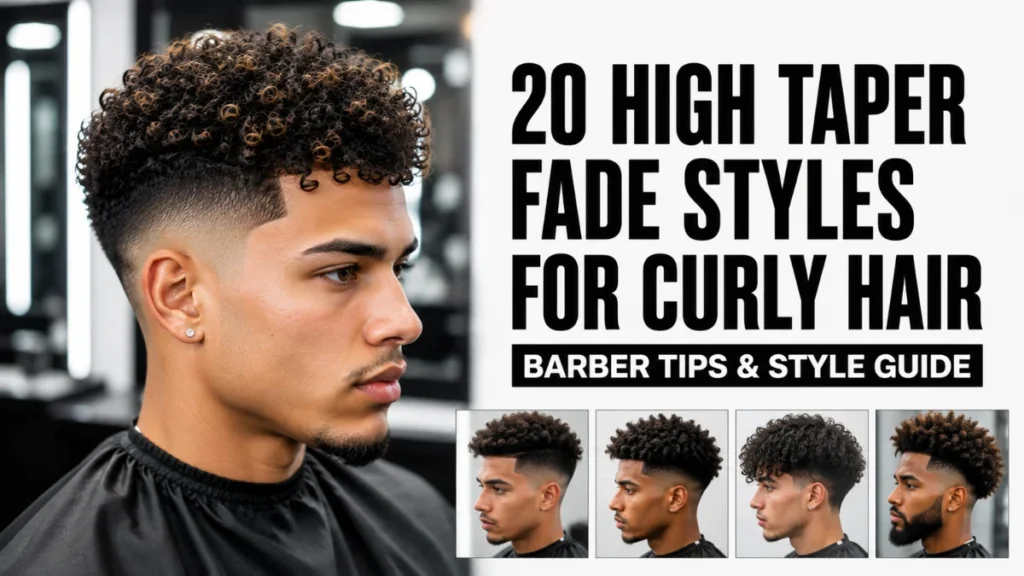
Sponge curls add dimension without requiring a long top. A high taper keeps the sides controlled while the curls provide movement and texture above them.
For tighter curl patterns, avoid taking too much length from the top simply to make the haircut appear cleaner. The curl needs enough length to form consistently.
3. High Taper With a Short Afro
A short afro paired with a high taper creates a strong architectural shape. The fuller crown contrasts with the cleaner sides, making the haircut look deliberate without requiring an elaborate styling routine.
The barber should shape the afro according to its natural density rather than forcing a perfectly flat or perfectly round silhouette.
4. High Taper With a Rounded Afro
A rounded afro creates a softer outline than a box-shaped top. This can be useful if you prefer natural volume and do not want the haircut to look overly geometric. The taper provides the sharper element, while the rounded top keeps the overall appearance organic.
5. High Taper With a Box Afro
A box-shaped afro is more structured and emphasizes straight lines and controlled corners. The higher taper makes the upper shape stand out even more.
This style demands good attention to proportion. If the taper is taken too high or the top is cut too narrow, the haircut can lose the balance that makes the style work.
6. High Taper With Defined Coils
Defined coils give the haircut a textured, detailed finish. The sides can be tapered tightly while the top remains long enough for the coils to retain their shape. A curl-enhancing cream or lightweight styling product can help define the top without making it look stiff.
7. High Taper With a Twist-Out
A twist-out adds a softer, more separated texture to the top. Pairing it with a high taper creates a strong contrast between the styled crown and the clean sides. This is a useful option when you want more visible texture without committing to a long protective style.
8. High Taper With Two-Strand Twists
Two-strand twists give the top more length and movement while the taper keeps the perimeter controlled. The result can range from neat and compact to loose and expressive depending on the twist size.
If you plan to wear twists regularly, tell your barber before the cut. The sides may need enough retained length to complement your future styling plans.
9. High Taper With Locs
Locs and a high taper create a dramatic difference between the structured sides and the longer top. The taper can make an established set of locs look cleaner around the temples and neckline.
If you are growing your locs, think carefully before requesting an extremely tight finish on the sides. Your barber can leave more usable length if you want greater flexibility later.
10. High Taper With Short Locs
Short locs can benefit from a high taper because the cleaner sides help the locs stand out. This is especially useful when the top is relatively compact.
A sharp edge-up can complete the look, but the barber should avoid pushing the hairline beyond its natural growth pattern.
11. High Taper With Braids
Braids or cornrows on top create a strong contrast against a tight taper. The result can look clean without making the haircut itself overly complicated.
The important consideration is planning. Braided styles require sufficient hair length and enough density for the braider to grip the sections properly.
12. High Taper With Cornrows
Cornrows give the top a more structured appearance while the taper keeps the temples and lower sides neat. This combination works particularly well when the braid pattern is designed to complement the shape of the head. Ask both your barber and braider to consider the finished proportions before removing too much side hair.
13. High Taper With Short Curls
Short curls provide an easy everyday option. You get visible natural texture without maintaining the length required for an afro or longer twists. A clean edge-up and controlled taper can make this one of the simplest high-contrast styles to maintain.
14. High Taper With a Textured Crop
A textured crop gives the haircut a shorter, more contemporary shape. The top can be cut forward or slightly lifted, depending on your curl pattern and preferred finish. This option is particularly practical for men who want texture without spending much time styling every morning.
15. High Taper With a Caesar
A Caesar keeps the top compact and controlled while the taper creates the contrast around it. A short textured finish can make the haircut appear fuller without requiring significant length. The front edge is important here, so the barber should work with your natural hairline rather than artificially pushing it forward.
16. High Taper Buzz Cut
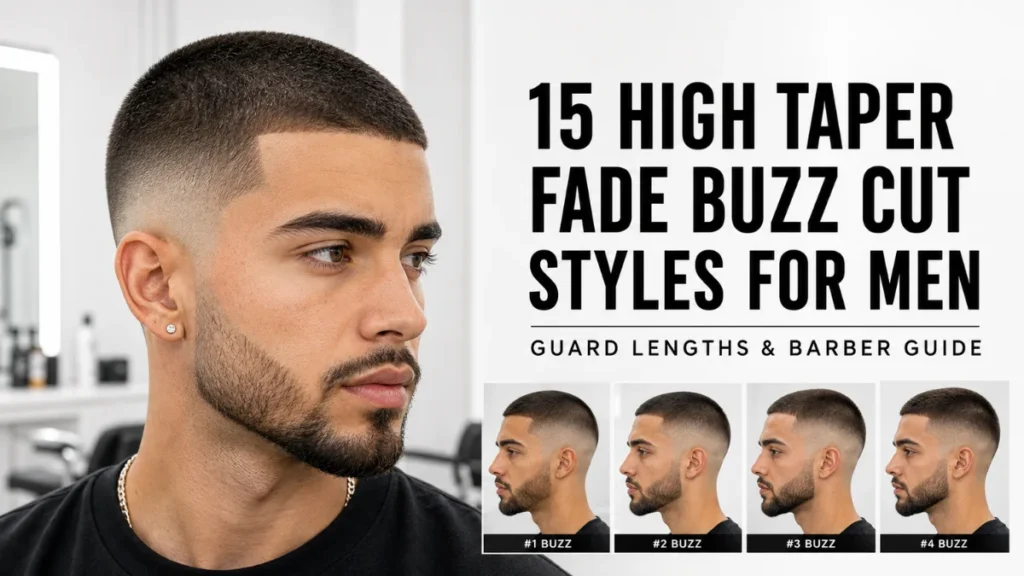
A buzz cut removes much of the styling requirement from the equation. The high taper gives the short haircut additional shape around the temples and sides. This is a strong choice for someone who prefers a clean routine but still wants more visual detail than an all-over buzz.
17. High Taper With a Line-Up
A line-up can make the haircut look immediately sharper, especially when the front hairline is naturally strong. However, more aggressive is not always better. A barber should preserve the natural corners and density rather than creating an artificially straight hairline that becomes obvious as it grows.
18. High Taper With a Beard Blend
Connecting the sideburn area into the beard can make the haircut and facial hair look like one continuous design. The beard does not need to be extremely full. Even a short beard can benefit from a carefully controlled transition between the haircut and jawline.
19. High Taper With a Full Beard
A fuller beard creates a substantial lower frame around the face. The high taper then draws the eye upward toward the textured top. The best beard blend follows the client’s actual density. Trying to force a perfectly symmetrical connection where the growth pattern does not support it can make the result look unnatural.
20. High Taper With a Goatee
A goatee changes the balance of the face by concentrating facial hair around the mouth and chin. Combined with a high taper, it can create a clean separation between the haircut and facial hair. This can be especially useful if your cheek beard is naturally lighter than the chin area.
21. High Taper With a Shaved Design
A small razor design can add personality without changing the fundamental haircut. Lines, curves, geometric details, or custom patterns can be placed within the shortest section. Keep in mind that designs grow out quickly. Choose something you are comfortable maintaining or allowing to disappear naturally.
22. High Taper With a Hard Part
A hard part introduces a deliberate dividing line into the haircut. It can make the top appear more directional and structured. This works best when the part follows the natural growth pattern rather than fighting against it.
23. High Taper Faux Hawk
A faux hawk keeps additional length through the center while the sides are cleaned up. With naturally curly or coily hair, the top can create substantial texture without requiring extreme length. The taper gives the center section more visual emphasis.
Best High Taper Fade by Hair Texture
There is no single top length that works for every Black man’s hair. Texture, density, shrinkage, and styling method all change how much hair should remain above the taper.
3C Hair
Looser curls can support a textured crop, defined curls, curly top, or short natural style. Because the curls generally have more visible length than tightly coiled textures, the barber can create movement without needing an extremely long top.
4A Hair
Defined coils work well with sponge curls, short afros, twist-outs, and natural textured tops. The main consideration is maintaining enough length for the chosen pattern to remain visible after shrinkage.
4B Hair
The more angular coil pattern can create excellent visual contrast against a clean taper. A shaped afro, sponge texture, twists, or short natural top can all work. The barber should pay attention to density when creating the transition because thick areas can visually overpower a narrow taper.
4C Hair
Tightly coiled hair can produce a very clean contrast between the top and tapered sides. A short afro, sponge curls, coils, twists, or compact natural top are strong choices. Do not judge the required length solely while the hair is stretched. Shrinkage can dramatically change the apparent length once the hair returns to its natural pattern.
360 Waves
Waves require a different approach because the top is not simply being cut for volume. The barber needs to work with the existing grain and pattern. A high taper can frame the waves, but an overly aggressive top cut can interrupt the pattern. Tell your barber how established your waves are before the clippers touch the crown.
Locs
Locs need planning because the top and sides may have different long-term goals. If you intend to continue growing your locs, discuss the desired side length before choosing a skin-level finish. A guarded taper gives you more hair to work with later than a very close finish.
Choosing the Right Taper Height
The biggest advantage of a high taper is also its biggest limitation: it creates obvious contrast.
If you want the haircut to make a statement and emphasize the top, a high placement can be ideal. If you prefer a more conservative outline or need maximum flexibility during grow-out, a mid or low taper may make more sense.
Choose High if You Want:
- Strong separation between the top and sides
- A noticeable temple taper
- More emphasis on curls, coils, waves, or textured tops
- A sharper silhouette
- A haircut that looks distinctly modern
Consider a Mid or Low Taper if You Want:
- More weight around the sides
- A softer transition
- Easier grow-out
- More side length for future braids or twists
- A less dramatic appearance
The right choice is ultimately about proportion, not simply trendiness.
High Taper Fade and Face Shape
Face shape should guide the haircut, but it should never be treated as a rigid rule.
- Round Face: Additional height and controlled side volume can help create a longer-looking silhouette. Keeping unnecessary width out of the upper sides can be useful.
- Square Face: A square jaw already provides strong structure. A high taper can emphasize that angular appearance, especially when combined with a clean lineup.
- Oval Face: An oval face generally gives you more flexibility with top length and shape. The main goal is keeping the haircut balanced rather than trying to correct proportions that do not need correcting.
- Oblong Face: Be cautious about adding excessive vertical height. A textured top with moderate volume may produce a more balanced result than a very tall style.
- Heart-Shaped Face: The top and temples should work together rather than creating too much width or height in one isolated area. Your barber can adjust the taper and top shape to balance the forehead and chin.
Your head shape matters just as much as the face shape. A skilled barber will look at both.
How to Ask Your Barber for a High Taper Fade?
Avoid relying on a haircut name alone. Give your barber four pieces of information:
- Where the taper should start
- How short the lowest section should be
- How much length you want on top
- How you want the hairline and neckline finished
A useful request might sound like:
“I want a high taper around the temples and upper sides. Keep my natural hairline, leave enough length on top for my curls, and blend the lowest section without taking the sides completely bald.”
If you want skin, say so. If you want a guard finish, give the barber permission to adjust the exact number according to your density. A side-angle reference photo is also extremely useful because a front-facing photograph often hides the actual taper height.
How Long Does a High Taper Fade Stay Sharp?
There is no universal number of days because hair growth rate, contrast, density, and the closeness of the finish all affect how quickly the haircut appears grown out.
A skin-level taper will usually show regrowth more quickly than a guarded taper. A naturally dense hairline may also make small amounts of growth more noticeable.
Instead of scheduling every appointment according to a fixed calendar, pay attention to the point where the transition loses definition.
For many men, a cleanup every couple of weeks is a practical starting point, while a fuller grow-out may be acceptable for those who prefer a softer appearance.
High Taper Fade Maintenance at Home
The haircut itself is only part of the finished look. The condition and styling of the top can determine whether the cut still looks intentional several days later.
For Waves
Continue your normal wave routine and protect the pattern while sleeping. A satin or durag covering can help reduce friction and keep the hair laid. Avoid aggressively brushing directly across freshly cut areas if your scalp is irritated.
For Coils and Curls
Use a lightweight moisturizer or curl product appropriate for your hair. The goal is definition and manageability without coating the hair in excessive product. If your curls lose their shape after washing, re-form them with your normal styling method instead of repeatedly adding heavy product.
For Twists and Locs
Keep the scalp clean and avoid unnecessary manipulation. If your style is professionally maintained, coordinate barber appointments with your twisting or retwist schedule. This prevents one service from undoing the work of another.
Common Mistakes to Avoid
- Pushing the Hairline Too Far Back: A lineup should enhance the existing hairline, not replace it with a new one. Over-pushing the corners can make the haircut look sharp for a moment but can create an obvious imbalance as the hair grows.
- Making the Taper Too High: High does not mean “as high as possible.” If too much side hair is removed, the top can appear disconnected from the rest of the head. The correct height depends on the client’s head shape and the amount of top length being preserved.
- Ignoring Shrinkage: This is especially important with tightly coiled hair. The length you see when the hair is stretched is not necessarily the length that will remain visible after it contracts. Always choose the top shape based on how you actually wear your hair.
- Copying Someone Else’s Exact Haircut: A photograph is useful for communicating direction, but another person’s head shape, hairline, density, and curl pattern may be completely different. Use the photo to communicate the aesthetic rather than demanding an identical construction.
- Overdoing the Design: A razor design can improve a haircut, but too many lines can compete with natural texture. If your top is already highly textured, a simple design often gives a cleaner result than several competing details.
Who Should Avoid a Very High Taper?
There is no universal “bad” candidate, but some clients may prefer a lower placement. If you are trying to preserve substantial side length for future braids, twists, or another style, removing the sides aggressively may work against your long-term goal.
Likewise, if you dislike strong contrast or do not want frequent edge maintenance, a mid or low taper may better match your routine.
FAQ
What is the difference between a high taper and a high fade?
A high taper generally concentrates the tapering around specific perimeter areas such as the temples and neckline, while a high fade can remove much more of the side area as the blend rises. The exact terminology can vary between barbers, so describing the desired placement is safer than relying only on the label.
Should I get a skin or guard finish?
Choose skin if you want maximum contrast and do not mind more visible regrowth. Choose a shadow or guard finish if you want a softer appearance and a more forgiving grow-out.
What should I bring to my barber?
Bring a clear reference photo, preferably showing the side and back as well as the front. Then explain your preferred taper height, lowest finish, top length, and whether you want a natural or sharply defined lineup.
Is a high taper better than a low taper?
Neither is automatically better. A high taper creates stronger contrast and puts more emphasis on the top, while a low taper preserves more side weight and gives a softer appearance.
Final Thoughts
The best high taper fade black male haircut is not determined by a guard number or a photo alone. It comes from matching the taper height to your head shape, preserving the right amount of top length, respecting your natural texture, and choosing a finish that fits your maintenance routine.
Waves, coils, curls, afros, twists, locs, braids, textured crops, and short natural tops can all work with the cut. The difference between an average result and a great one usually comes down to proportion and communication.
Before your appointment, decide how bold you want the sides to look, how you wear the hair on top, whether you want skin or guard at the base, and how often you realistically want to visit your barber.
If you communicate those details clearly, your barber has the information needed to build a high taper that fits your hair rather than simply reproducing somebody else’s haircut.