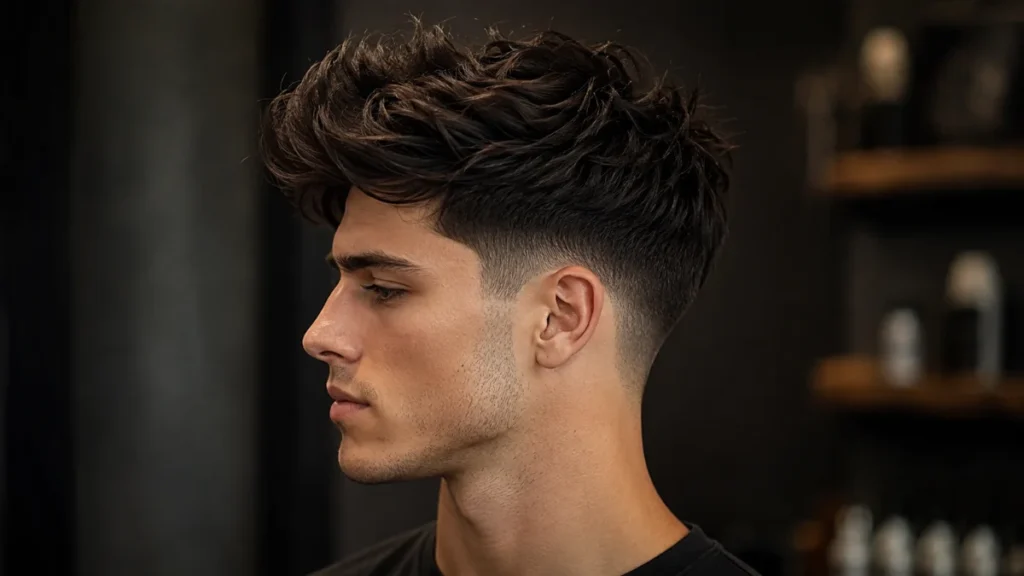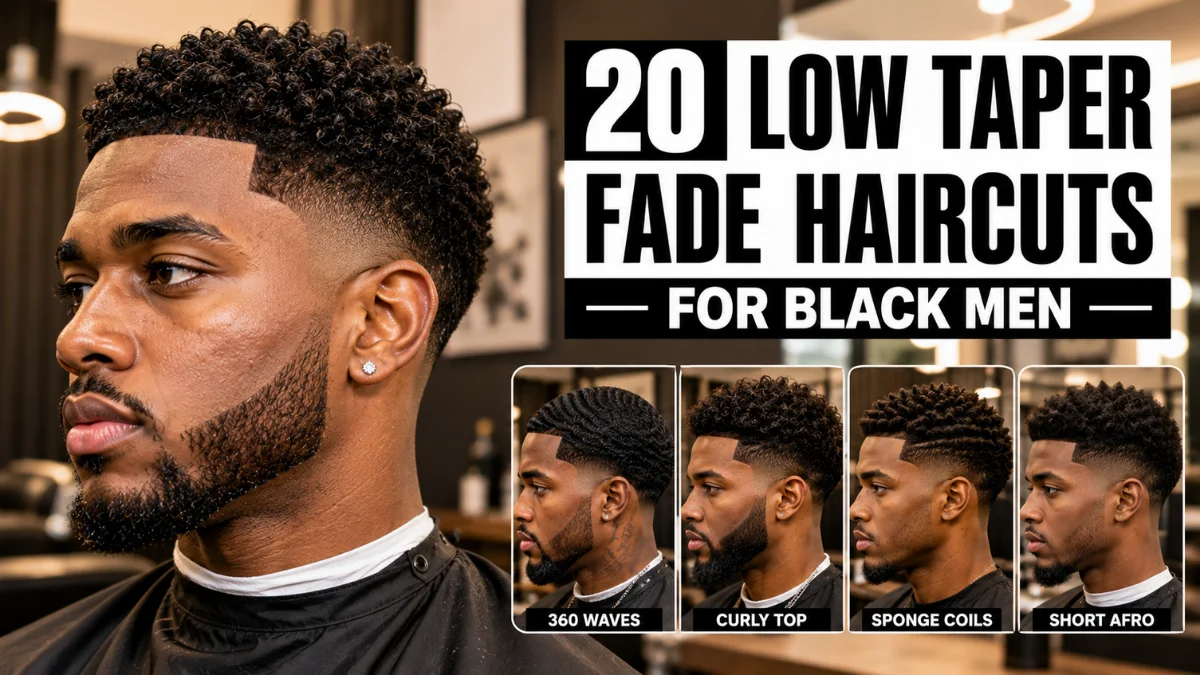
20 Low Taper Fade Haircuts for Black Men: Best Styles (2026)

A low taper fade for Black men is one of the few cuts that works with almost any texture, from loose 3C curls to dense 4C coils, without fighting the hair’s natural pattern. It’s the fade most barbers reach for when a client wants something clean but doesn’t want to lose the character of their natural hair on top.
This guide walks through 20 low taper fade styles worth bringing to your next appointment, how to match one to your face shape and hair type, and what to actually say in the chair so you leave with the cut you asked for.
What Makes a Low Taper Fade Different?
A taper is a gradual shortening of the hair that never exposes bare skin; there’s always some length left, even at the shortest point. A fade pushes that blend further, often down to the skin. A taper fade borrows from both: the soft, graduated blend of a taper combined with the tighter finish of a fade.
The “low” part refers to where the blend starts. On a low taper fade, the barber begins working the clippers in just above the ear and along the nape, usually starting around a #2 or #3 guard and moving down toward a #1 or #0.5. Nothing above the ear gets touched, so the top of the head keeps its full length and shape.
That matters more on Black hair than on any other texture. Type 4 hair holds its density even when cut short, so the contrast between the full top and the tapered sides shows up clean and sharp without needing a dramatic skin fade to make a statement. A high or mid taper can look great too, but it removes more hair and needs sharper upkeep. The low taper is the version that plays it safest while still looking deliberate.
| Fade Style | Where the Blend Starts | How Often It Needs a Touch-Up |
|---|---|---|
| Low Taper Fade | Just above the ear/nape | Every 2–3 weeks |
| Mid Taper Fade | Temple level | Every 2–3 weeks |
| High Taper Fade | Upper third of the side | Every 1.5–2 weeks |
| Skin/Bald Fade | Any height, fades to skin | Every 1–2 weeks |
| Low Fade | Above the ear, drops faster than a taper | Every 2–3 weeks |
Low Taper vs. Low Fade
These terms are sometimes used interchangeably, but they are not always describing exactly the same haircut.
A traditional low taper usually focuses more narrowly on the temples, sideburns, and neckline. A low fade can extend farther around the sides and create a more noticeable reduction in overall side density.
If you want your natural hair to remain fuller around the sides, tell your barber that you want a low taper, not simply a “low fade.”
20 Low Taper Fade Styles For Black Men Worth Trying
Each style below notes who it tends to suit and what keeps it looking sharp between visits. Think of this less as a menu and more as a starting point; most barbers will adjust guard length or top length once they see your actual hair in person..
1. Classic Low Taper with a Line-Up
The default low taper: natural length on top, tapered sides, and a crisp line-up along the front hairline and temples. It reads as put-together without looking like you tried too hard, which is exactly why it’s the most requested version of this cut in barbershops that serve Black clientele. Works on virtually every face shape and hair type from 3C through 4C.
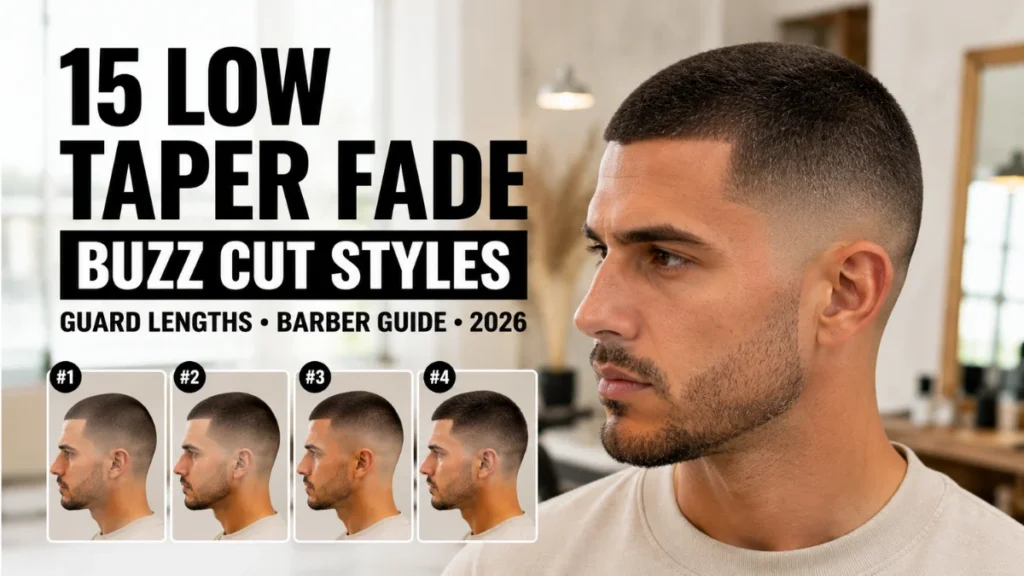
2. Low Taper Buzz Cut
The top is buzzed to a single guard length, usually a #1 or #2, so there’s no styling required at all. It’s a smart pick if you’re dealing with a receding hairline or patchy edges, since a uniform short length draws less attention to unevenness than a longer top would. Rinse or moisturize the scalp daily; buzzed hair exposes more skin to dryness than a longer cut does.
3. Caesar Cut with a Low Taper
Short horizontal fringe brushed forward across the forehead, blended into a low taper on the sides. It’s been a barbershop staple for decades because it looks intentional on 4B and 4C hair without needing any real styling effort. A light hold pomade on the fringe is the only product most guys need.
4. Crew Cut with a Low Taper
Slightly longer on top than a buzz cut, with length tapering down from front to back and a clean low taper finishing the sides. This is the version most guys wear to interviews and formal settings because it splits the difference between “styled” and “no fuss.”
5. Low Taper Fade with a Hard Part
A razor-drawn part line shaved into the side of the head, right where the top meets the taper. It gives the cut a defined edge and works with almost any top style: waves, a short afro, curls- it doesn’t matter. The part needs a touch-up every 7 to 10 days, or it starts to grow in fuzzy and loses its crispness fast.
6. Low Taper Fade with 360 Waves
This pairing shows up constantly in barbershops for a reason: the tapered sides give the wave pattern on top room to be the focal point instead of competing with bulk on the sides. Getting the waves themselves takes consistent daily brushing over several weeks, plus nightly durag or wave-cap compression; the haircut is only half the equation here.
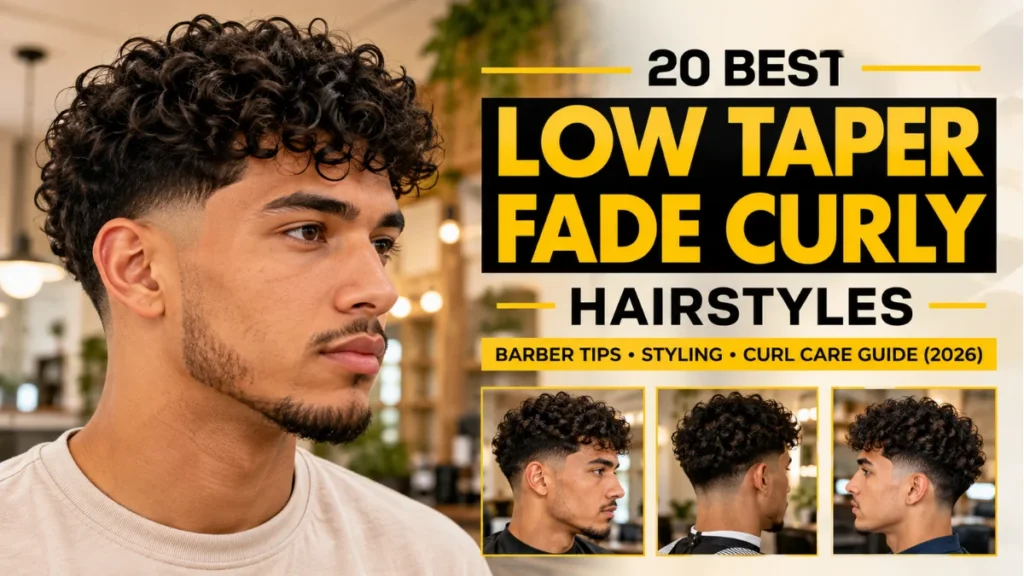
7. Low Taper Fade with Natural Curls
Curls left at their natural length on top, defined rather than picked out into a fuller shape. It suits looser curl patterns (3C to 4A) best, since those patterns hold visible curl definition instead of coiling too tightly to see individual strands. A curl cream on damp hair, diffused or air-dried, keeps the pattern from frizzing out by midday.
8. Low Taper Fade with Sponge Coils
A twisting sponge worked in small circles over short natural hair creates a full head of uniform coils in a few minutes, far faster than hand-twisting for the same result. It looks best on 4A and 4B hair where the coils are tight enough to hold shape without much product. Re-sponge every day or two to keep the coils from unraveling.
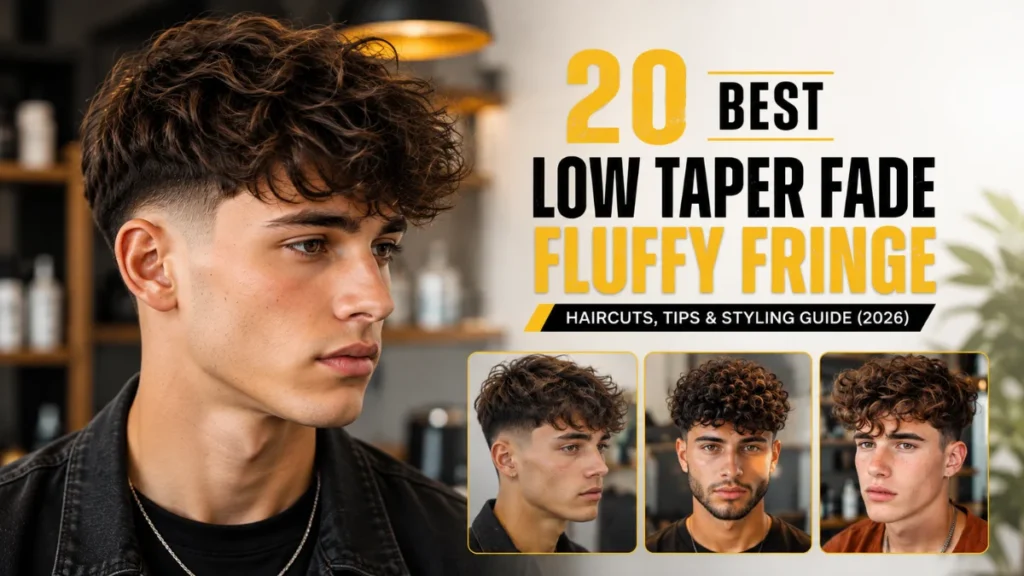
9. Low Taper Fade with a Curly Fringe
Loose curls fall forward over the forehead instead of being pushed back, giving the cut a more relaxed, less structured feel than a Caesar. It works especially well on 3C and 4A hair with enough curl definition to show movement. Skip the heavy pomade here; a lightweight curl cream keeps the front soft instead of stiff.
10. Low Taper Fade with Finger Coils
Every coil on top is individually twisted around a finger, which takes real time in the chair, often 30 to 60 minutes depending on hair length and density. The payoff is a precise, uniform coil pattern that looks intentional from every angle. Best suited to 3C through 4B hair, and worth recoiling weekly to keep the definition sharp.
11. Low Taper Fade with a Rounded Afro
A short-to-medium afro, shaped into a clean round silhouette, sitting above tapered sides. It’s one of the most recognizable pairings in Black barbershops because it works at almost any afro length and any face shape. Shea butter or a leave-in conditioner applied daily keeps the afro from drying out and frizzing at the edges.
12. Low Taper Fade High Top
The top grows straight up rather than out, using the natural vertical growth pattern common in 4B and 4C hair to build height instead of width. It’s a cut that’s come back with cleaner, less exaggerated proportions than its 90s version. A strong-hold gel or pomade is non-negotiable for keeping the shape upright through the day.
13. Low Taper Fade Frohawk
The center strip of hair stays full while both sides are cut down into the taper, landing somewhere between a full afro and a shaved mohawk in terms of boldness. It works well for guys who want something eye-catching without going all the way to a skin-fade mohawk. Edge control along both sides of the strip keeps the transition from looking messy.
14. Low Taper Fade Blowout
A blow-dryer and comb attachment stretch the natural coil pattern out, adding visible length and volume that Type 4 hair usually hides through shrinkage. It’s a great option for events or photos, since it reveals length that’s invisible in the hair’s resting state. Always use a heat protectant first; repeated blowouts without one will dry the hair out over time.
15. Low Taper Fade with a Textured Crop
Short, choppy layers on top, styled forward or left loose, over clean tapered sides. It suits 3C to 4A curl patterns particularly well, since the looser pattern gives the choppy layers natural separation and movement. A texture clay or matte paste keeps the definition without adding shine.
16. Low Taper Fade with Two-Strand Twists
Twists protect the natural hair from daily manipulation while the tapered sides keep the overall look structured instead of loose. It’s a solid option if you’re trying to grow your hair out, since the twists reduce breakage during the length phase. Retwist every 2 to 4 weeks as new growth comes in, and keep the scalp moisturized underneath.
17. Low Taper Fade with Cornrows
Flat braids running close to the scalp, paired with a low taper that keeps the sides from looking untidy as the cornrows grow out. Pattern options range from straight-back rows to curved or geometric designs, depending on what your braider or barber can execute. Hydrating spray on the scalp every few days prevents the itching that comes with braids left in too long without moisture.
18. Low Taper Fade with Locs
Locs on top, worn loose, tied back, or in a bun, with a low taper keeping the sides from overgrowing into the loc line. It’s a low-maintenance combination once the locs are mature, since the sides need attention far more often than the locs themselves. Argan oil on the locs, and a light styling cream on the sides keep both looking intentional rather than neglected.
19. Low Taper Fade with a Full Beard
The taper blends seamlessly into the beard along the sideburn and cheek line, creating one continuous gradient instead of a hard stop between hair and beard. It’s one of the more demanding combinations to keep sharp, since both the taper and the beard line need attention on roughly the same schedule. Clean up the cheek line and neckline of the beard separately from the fade appointment if you want the sharpest possible finish.
20. Low Taper Fade with a Design
A pattern, a single line, initials, or something more intricate shaved into the taper zone with a straight razor or detail trimmer. Not every barber does design work well, so it’s worth asking to see examples before committing to anything elaborate. Designs grow out fast, usually within a week or two, so budget for more frequent touch-ups if you want to keep it visible.
Matching a Low Taper Fade to Your Face Shape
Hair texture decides how the top of the cut behaves, but face shape decides how tall, wide, or close-to-the-head that top should sit.
| Face Shape | What Tends to Work | Why |
|---|---|---|
| Oval | Almost any style on this list | Balanced proportions don’t fight any particular silhouette |
| Round | High top, rounded afro, blowout | Vertical volume adds length and breaks up width |
| Square | Waves, short curls, crew cut | Clean sides let a strong jawline stay the focal point |
| Diamond | Textured crop, medium curls | Softens wider cheekbones without adding harsh contrast |
| Heart | Short afro, curly fringe | Keeps the crown from adding extra width above a narrower chin |
| Oblong | Waves, textured crop, crew cut | Adds width instead of extra height |
If you’re not sure which category you fall into, pull your hair back and look straight into a mirror. Trace the outline of your face with a finger. The shape you draw is a more reliable guide than trying to guess from memory.
How Does Hair Texture Change What You Ask For?
Black hair spans a wide range even within the “Type 4” category, and each pattern responds a little differently to a low taper. Knowing your general texture makes the conversation with your barber faster and helps you pick products that actually work.
3C hair has tight, well-defined curls that are still loose enough to see individual coils. It pairs naturally with a textured crop, curly fringe, or finger coils, and generally holds curl definition longer between washes than tighter patterns.
4A hair has a soft S-shaped coil with strong definition and decent moisture retention compared to tighter Type 4 patterns. It works especially well with sponge coils, a twist-out, or a rounded, short afro, since the coils hold their shape without heavy product.
4B hair has a more angular, Z-shaped pattern and shows noticeable shrinkage when dry, even though the actual strand length is longer than it looks. It creates strong contrast against tapered sides and suits an afro, two-strand twists, or 360 waves particularly well.
4C hair is the tightest and most fragile of the group, with the highest shrinkage and the most sensitivity to dryness. That density is exactly what makes a low taper look so sharp on it, but it also means daily moisture isn’t optional. Leave-in conditioner or shea butter applied every day or two prevents the breakage that tight coils are prone to, especially right at the taper line where the hair is shortest.
What to Say to Your Barber?
Most bad haircuts don’t come from bad barbers; they come from vague instructions. “Just give me a fade” leaves too much open to interpretation, and every barber will fill in those gaps differently.
Bring a reference photo if you can, ideally of someone with a similar hair texture to yours. A low taper on straight hair photographs completely differently than the same cut on 4C coils, so a photo that doesn’t match your texture can send the wrong signal.
Then be specific out loud. Something close to this works well in the chair:
“I want a low taper fade starting just above my ears, blending down toward the neckline. Keep the base around a [skin / #0.5 / #1]. Leave the top [length or style natural, my curls, my waves, X inches]. I’d also like [a line-up / a beard blend / no design]. For the neckline, keep it [natural/rounded/squared].”
A few things guys forget to mention, and end up unhappy about afterward:
- Whether they want the neckline squared off or left to taper naturally
- Whether the beard should blend into the fade or stay separate
- The exact guard number at the base, rather than just saying “low”
- Whether they want a line-up done as part of the same visit or want to keep it grown out
Keeping It Sharp Between Visits
A low taper fade is more forgiving than a mid or high fade because it grows out gradually instead of leaving a visible line partway down the head. Even so, a maintenance rhythm keeps it looking intentional instead of overdue.
| Task | How Often |
|---|---|
| Full Taper Touch-Up | Every 2–3 weeks |
| Line-Up / Edge-Up Only | Every 1–2 weeks |
| Moisturize Hair and Scalp | Daily or every other day |
| Wash With a Sulfate-Free Shampoo | 1–2 times per week |
| Deep Condition | Once a week |
| Clarify to Remove Product Buildup | Once a month |
If money or time is tight, stretching the full cut to three or four weeks and getting a standalone line-up in between is a reasonable compromise. A line-up alone is quicker and cheaper than a full appointment, and it keeps the front of the cut looking fresh even while the taper itself grows out.
FAQ
How often does a low taper fade need a touch-up?
Most guys get a full touch-up every two to three weeks. Because the low taper starts close to the ear rather than higher up the head, it grows out more gracefully than a mid or high fade, so stretching to three or four weeks between full cuts is workable if you get a line-up in between.
Does a low taper fade work with 360 waves?
Yes, it’s one of the most common pairings specifically because the tapered sides don’t compete with the wave pattern on top. The waves themselves come from consistent brushing and durag compression over time, not from the haircut alone.
Can a low taper fade work with braids or locs?
Yes. Cornrows, box braids, two-strand twists, and locs all pair naturally with a low taper, since the clean sides give a structured frame to a textured or braided top without requiring you to cut the length on top short.
Is a low taper fade appropriate for work or formal settings?
Generally, yes. Because it removes the least amount of hair of any fade style and keeps the transition subtle, it reads as clean and professional in most workplaces, interviews, and formal events without looking overly styled.
What products actually matter for maintaining this cut?
A leave-in conditioner or lightweight oil for daily moisture, a sulfate-free shampoo for washing, and edge control if you’re maintaining a line-up between visits cover most of it. Beyond that, the right product depends on what’s on top: curl cream for curls, wave pomade for 360 waves, shea butter for denser 4B/4C coils.