High Taper vs High Fade: Which Haircut Fits You Better?

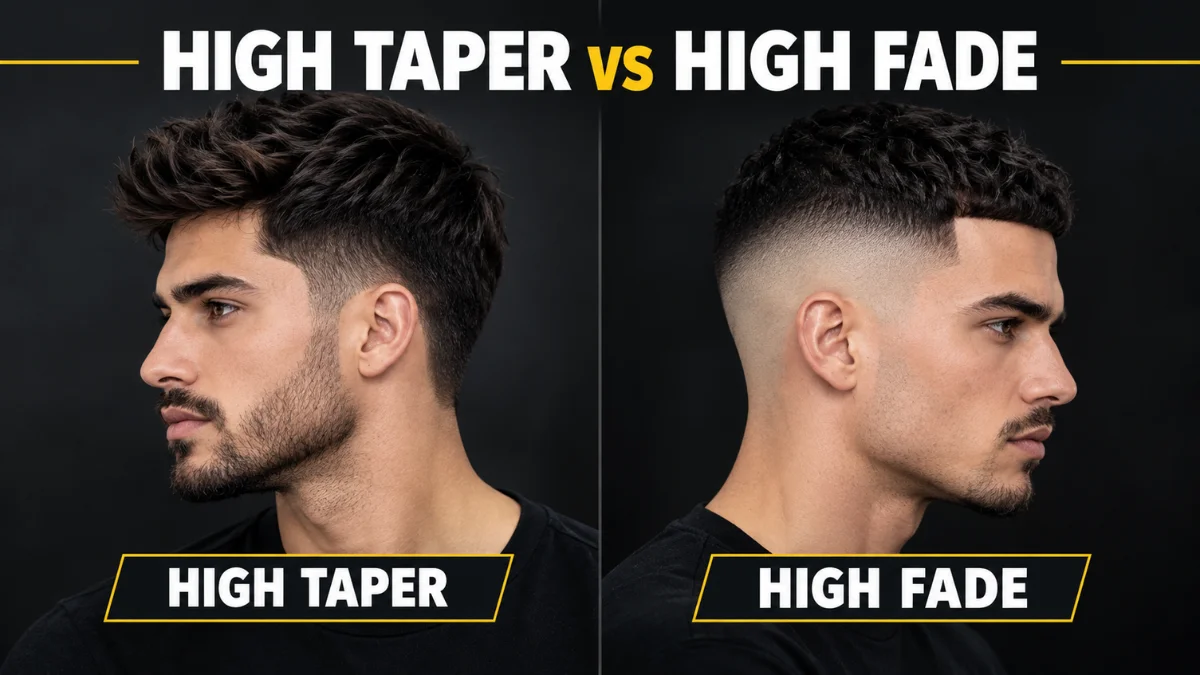
A high fade starts at the same height but cuts down to the skin, creating a much stronger contrast than a high taper, which gradually shortens the hair while keeping some length at the bottom. That one difference changes how the cut looks, how often you need a trim, and how it grows out.
If you have ever sat in the barber chair and said “high and tight, but not too short,” you were probably describing a high taper without knowing the name. This guide from Crown Fade explains both cuts in plain terms, shows who each one suits, and gives you the exact words to use when you book your next visit.
High Taper vs High Fade: The Quick Difference
A high taper reduces length around the neckline, sideburns, and temples while keeping more hair on the sides. A high fade makes the sides and back much shorter, and the short area climbs higher up the head, so the line between the longer top and the tight sides looks sharper.
Both cuts start their blend high, near the temple and just above the ear. What separates them is how much hair is left once the blend is done. With a taper, you still see hair at the bottom edge. With a fade, the lowest section is cut to a shadow, a close clipper finish, or bare skin.
| Feature | High Taper | High Fade |
|---|---|---|
| Side fullness | More hair kept on the sides | Much less hair on the sides |
| Blend start | High, near the temple | High, near the temple or upper parietal ridge |
| Bottom finish | Short hair, often a #1 or #2 guard | Shadow, zero guard or skin |
| Contrast | Moderate to strong | Strong to dramatic |
| Scalp visibility | Usually low | Usually high |
| Overall shape | Fuller and more natural | Sharp and well-defined |
| Time between trims | About 3 to 4 weeks | About 2 to 3 weeks |
| Grow-out | More forgiving | Regrowth shows sooner |
| Best for | Versatility and controlled definition | Bold contrast and a cleaner outline |
The term “high” refers to the location of the mix rather than the required cut length. The result also depends on the finish your barber chooses at the bottom. The guard sizes and timings above are typical, and your barber will adjust them to your head shape, hair growth, and the style on top.
What Is a High Taper Haircut?
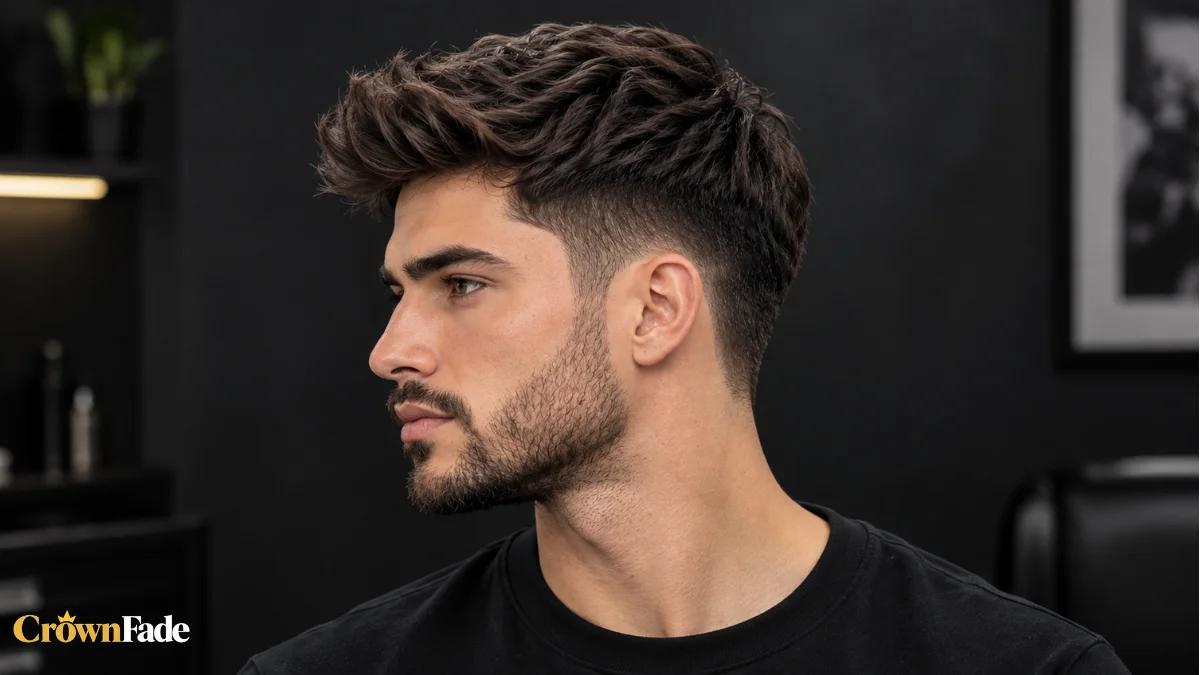
A high taper haircut is a short cut on the back and sides that progressively shortens as it descends near the neckline and rises toward the temple. The word “high” tells you where the shortening begins: close to the temple and the top of the ear, not low near the nape.
The key point is that the hair never goes to bare skin. The barber uses clippers with guard attachments and a scissor-over-comb pass to blend long into short, so the finish looks neat and natural rather than sharply faded.
How does a barber cut a high taper?
- The top is sectioned out of the way and left at the desired length.
- The sides are cut with a longer guard first, then stepped down with shorter guards as the barber works toward the ears and neckline.
- The sideburns and neckline are tapered so they thin out instead of ending in a hard line.
- The barber blends the upper edge with a comb and clipper-over-comb or scissors so no line shows where one length meets the next.
Who usually asks for it?
Men who desire a conservative yet crisp cut. It works well for office jobs, school, weddings, and anyone who dislikes how stark a skin fade can look. It goes well with a longer slick-back, a quiff, a textured crop, or a traditional side part.
What Is a High Fade Haircut?
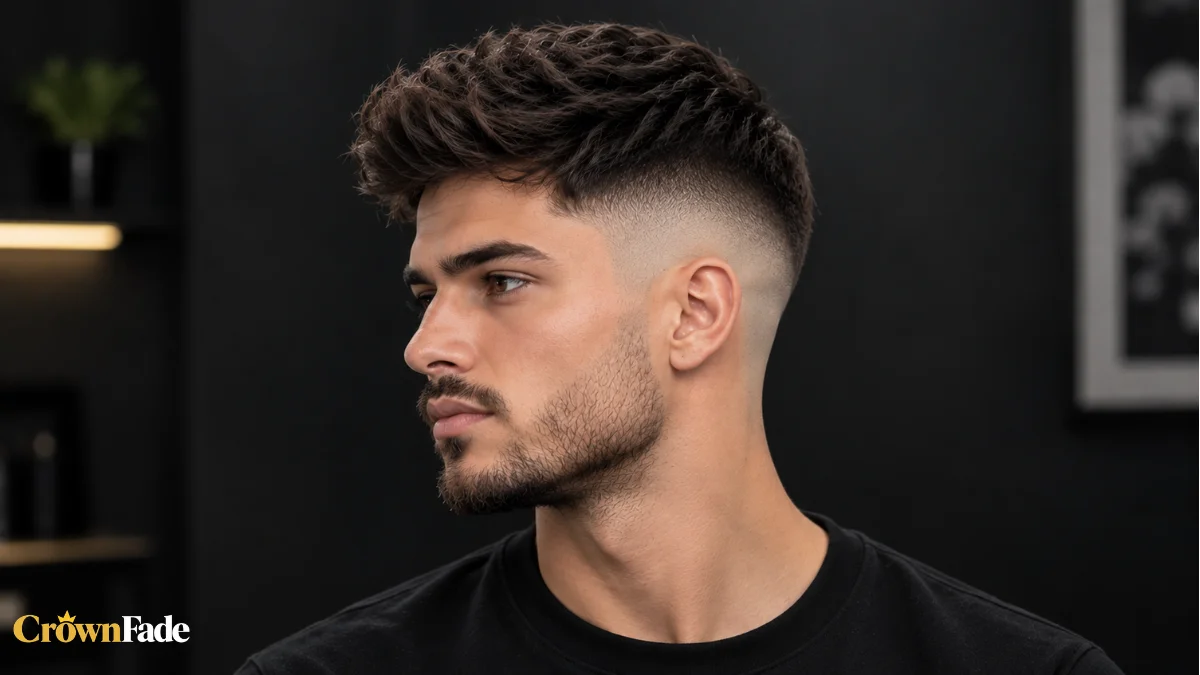
A high fade haircut begins high on the head, close to the temple, and mixes the hair from long on top down to skin on the sides and back. Because it reaches the skin, you see a clear gradient from dark hair to bare scalp, and the haircut stands out from a distance.
The fade may be a skin fade, where the clippers run with no guard or a foil shaver finishes the lowest section, or a shadow fade that stops just above skin. Strong contrast between the top and the sides is the result in both situations.
How does a barber cut a high fade?
- The barber marks the fade line high on the head, usually near the temple or just above it.
- Clippers with no guard or the shortest guard shave the lowest section, then the barber works upward with longer guards.
- There is no step or line apparent because each guard change is combined with a flicking motion.
- The neckline and sideburns are cleaned up, and many barbers finish with a trimmer for a crisp edge.
Who usually asks for it?
Men who want a bold, modern look and don’t mind more frequent upkeep. It suits short crops, curls, waves, a textured top, a pompadour, and many beard styles, because the bare skin around the ears and neck makes the beard line stand out.
Which Haircut Suits You Best?
No cut is right for everyone. These pointers cover the things barbers usually check first.
By face shape
- Round face: A high fade adds height and sharpens the sides, which makes the face look longer. If you maintain volume at the top, a high taper also works.
- Square face: Either cut works. A taper softens the jaw slightly; a fade emphasizes it.
- Oval face: Most styles fit. Choose according to the level of maintenance you desire.
- Long or narrow face: Keep the sides a little fuller. A high taper with a textured top is usually more flattering than a very tight skin fade.
By hair type
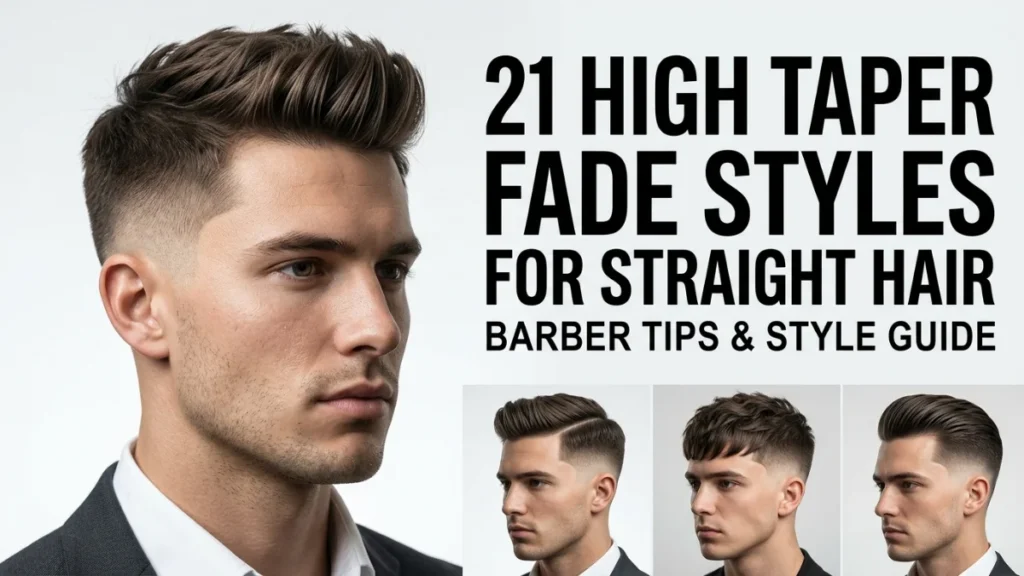
- Straight hair: Both work. Fades show every flaw in the blend, so a skilled barber matters.
- Wavy hair: A taper keeps some body at the sides and lets waves sit naturally on top.
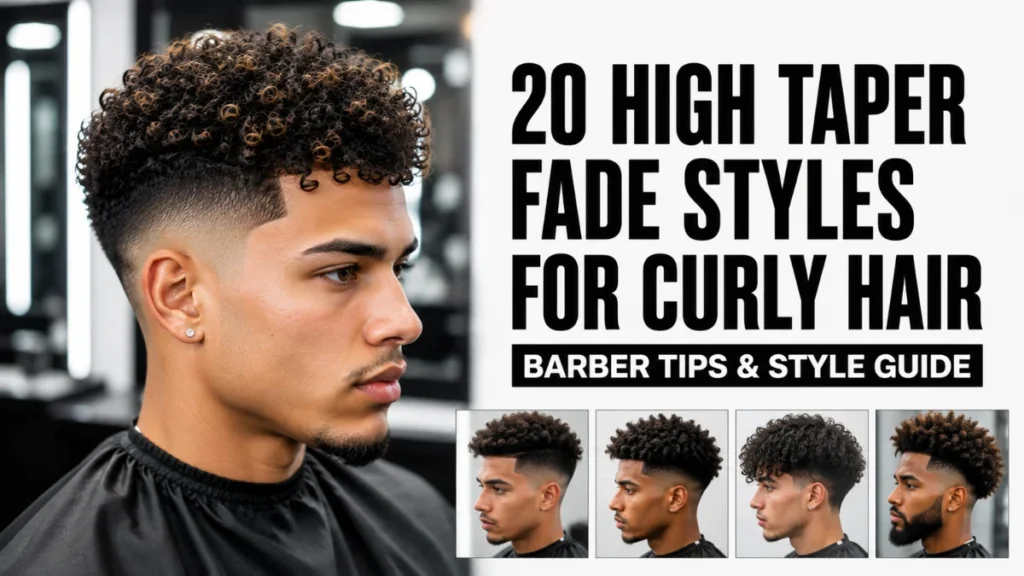
- Curly and coily hair: A high fade with a curly hair top gives clear definition. A taper is a good middle ground if you like more hair at the sides.
- Receding hairline or thinning hair: A taper frequently appears more organic. A fade can make thin areas stand out, though some men like that clean contrast.
Read More: 21 High Taper Fade Straight Hair Styles for Men
By lifestyle
If you like a quick routine and don’t want to visit the barber every two weeks, choose the taper. If you enjoy a crisp look and book regular appointments, the fade will reward you.
Pairing the Cut With a Beard or Top Style
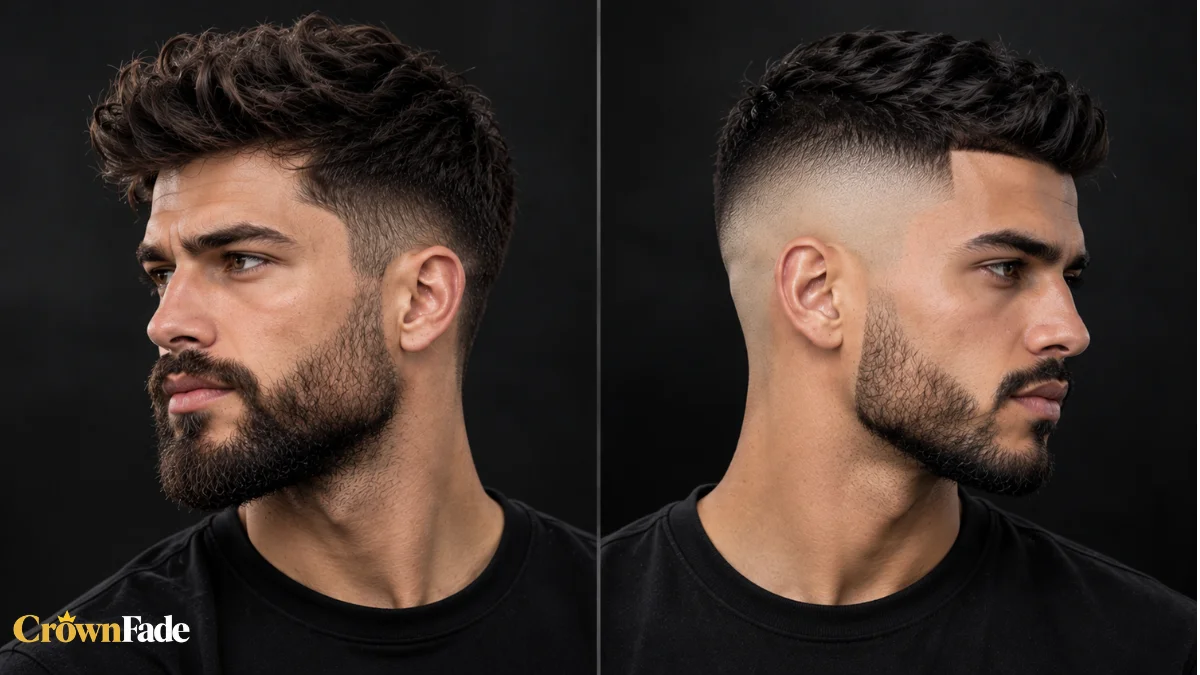
A high fade makes a beard look cleaner because the beard line meets bare skin, which shows an obvious contrast. A high taper works better with a fuller or longer beard because the soft blend leads naturally into the facial hair.
Both cuts go nicely with a side part, a crop, a pompadour, a textured quiff, or a slicked-back style. Pick the top length first, then ask the barber to build the sides around it.
What I Notice When Men Ask for These Cuts
I’m Darren Veylo, and I write about men’s haircuts and grooming. Most of the confusion I see comes from one sentence: “just give me a fade.” To one barber, that means a skin fade with a high start. To another, it means a gentle taper with a little shadow. Men leave the chair unhappy, not because the cut was bad, but because the word meant something different on each side.
A few things that I find myself returning to:
- Reference photos beat names. A picture of the exact fade or taper you want, from the front and the side, saves more time than any description.
- The second haircut matters most. The first visit is often a test. After a week of growth, you’ll know whether you want the sides tighter or a touch longer, and you can tell your barber precisely.
- Men underestimate upkeep. By day three, a high fade looks fantastic, but by day twenty, it doesn’t. If you know you’ll stretch appointments, a taper is the more forgiving choice.
- The top decides the whole look. Even a perfect fade can look flat if the top has no shape. Talk about the top first.
These are patterns I’ve seen and heard from barbers and clients, not rules. Hair grows differently on every head, so treat this as a starting point for the conversation with your barber.
How to Ask Your Barber for the Right Cut?
Use clear words about three things: where the blend starts, where it ends, and how the top should look.
- High taper: “I’d like a high taper. Maintain a number 1 or 2 at the bottom, begin the blend close to the temple, and leave the top three inches.”
- High fade: “I’d like a high skin fade. Start high at the temple, take it to skin and keep the top textured and a bit longer.”
- Not sure: “I want a high taper fade. I’ll let you know if you should take it tighter if you start high and finish short but not bald.”
Bring a photo, and say how often you plan to come back. A good barber will change the plan based on that.
Before and After: What to Expect
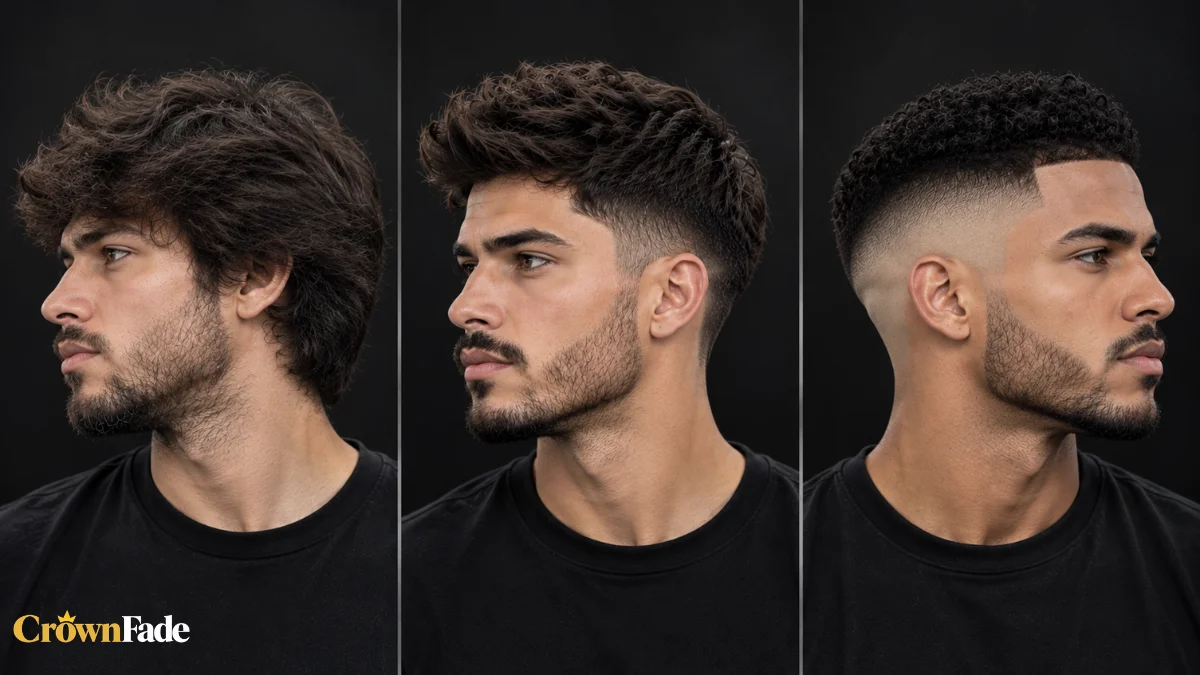
Before this, the neckline is often hazy, and the sides are typically full. The hair on top has weight, but the shape looks heavy around the ears.
After a high taper, the sides look slimmer and tidier, but still soft. The change is clear without feeling dramatic. After a high fade, the sides drop to skin, the top stands out, and the face looks sharper and longer.
Expect the first few days to look best. The sharpest edge lasts about a week for a fade and around two for a taper.
Maintenance and Styling
How often to get a trim?
Plan on a fade refresh every two to three weeks. For three to four weeks, a taper will look good. Ask your barber to clean just the sideburns and neckline in between full cuts if you want to extend it.
Daily styling
- Short textured top: Work a small amount of matte clay or paste into dry hair and push it forward or sideways.
- Quiff or pompadour: Blow-dry the hair up and back with a bit of volumizing spray, then finish with pomade for hold.
- Slick back: Use a medium-hold gel or pomade on damp hair and comb it back.
- Curly top: Apply a curl cream to damp hair and let it dry naturally or diffuse it.
Start with a pea-sized amount of product. Add more only if you need it.
Keeping the edges clean at home
Wash with a gentle shampoo, moisturize your scalp if it gets dry, and avoid shaving the sides yourself. A home trim can ruin the blend. Use a tiny trimmer simply around the neckline if you have to tidy up.
How to Grow Out a High Taper or High Fade?
A taper is the easier of the two to grow out. The hair stays soft at the bottom, so the length just fills in evenly. A fade needs a bit more patience because the skin area fills in first and can look patchy for a few weeks.
- Go to the barber every six to eight weeks so the shape stays tidy while the length builds.
- Instead of cutting back, request that the sides be tidied up.
- Let the top grow first, since that decides what the whole cut looks like.
- Use a light styling product so the in-between length looks intentional.
- Expect awkward weeks around the ears and neck. Short breaks between trims help most there.
FAQ
Are a high fade and a high taper the same thing?
No. Both begin high on the head, but a high fade reaches the skin, whilst a high taper ends at short hair. The fade has stronger contrast and needs more frequent upkeep.
Which is preferable, a high fade or a high taper?
Neither is better in every case. Pick the taper if you want a softer, lower-maintenance cut. Pick the fade if you want a bold, sharp look and don’t mind visiting the barber every two to three weeks.
Can I have a high fade or high taper when I have a beard?
Indeed. The cleanest contrast with a beard line is achieved with a fade. A taper transitions into a larger beard more subtly. In order for your barber to match the two, let them know how long you keep your beard.
Which haircut retains more side hair?
Compared to a high fade, a high taper typically retains more side weight.
Which one shows more scalp?
More scalp is typically visible with a high fade, especially if it is completed at skin or zero length.
How can I tell if my barber did a good job?
Look for a smooth blend with no stripes or steps, even sides on both ears, and a clean neckline. Before you go, ask the barber to blend any hard lines you notice.
Final Thoughts
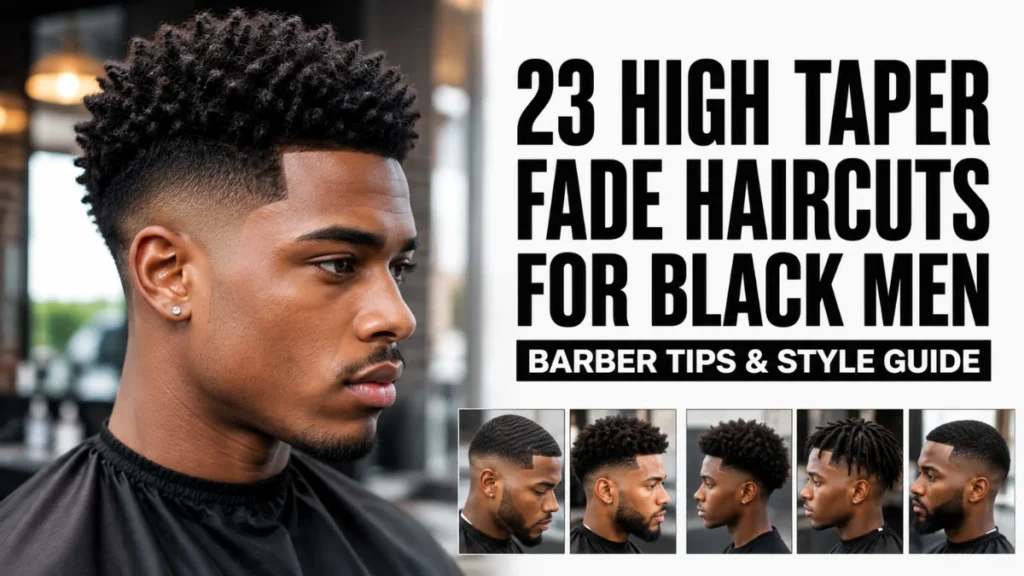
If you want a traditional, clean cut that lasts longer, go for a high taper. If you’re willing to keep up with trims and want a sharper, more contemporary style, go for a high fade. If you’re torn, a high taper fade gives you a bit of both, and it works especially well as a high taper fade for black men, since it flatters tight curls and coils while keeping the neckline crisp.
Whichever you pick, take a photo, use the exact words from this guide, and be clear about the top. That is the best preparation before any new cut, and it saves a lot of second-guessing in the mirror.