High Taper Haircut: A Complete Guide for Men

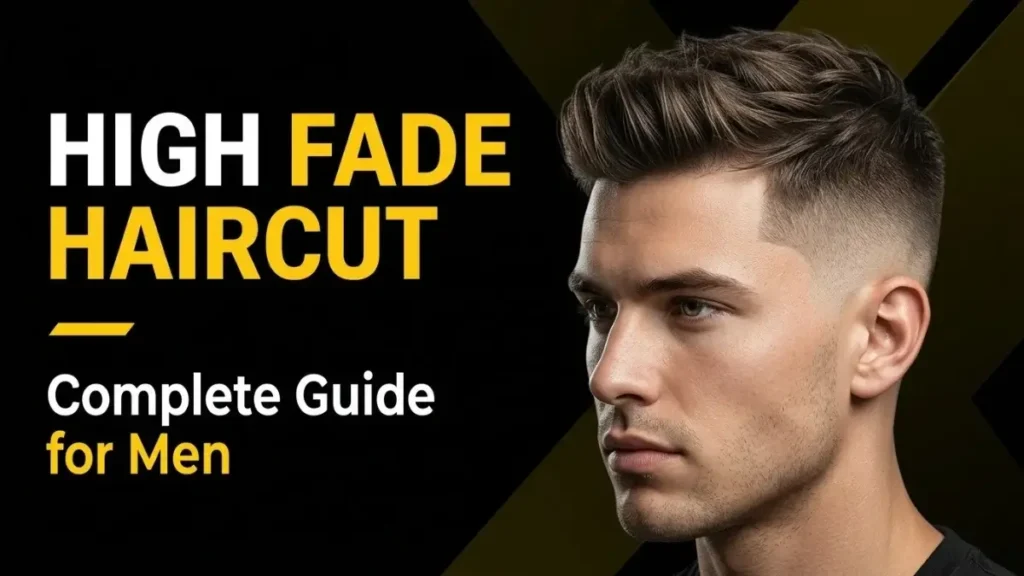
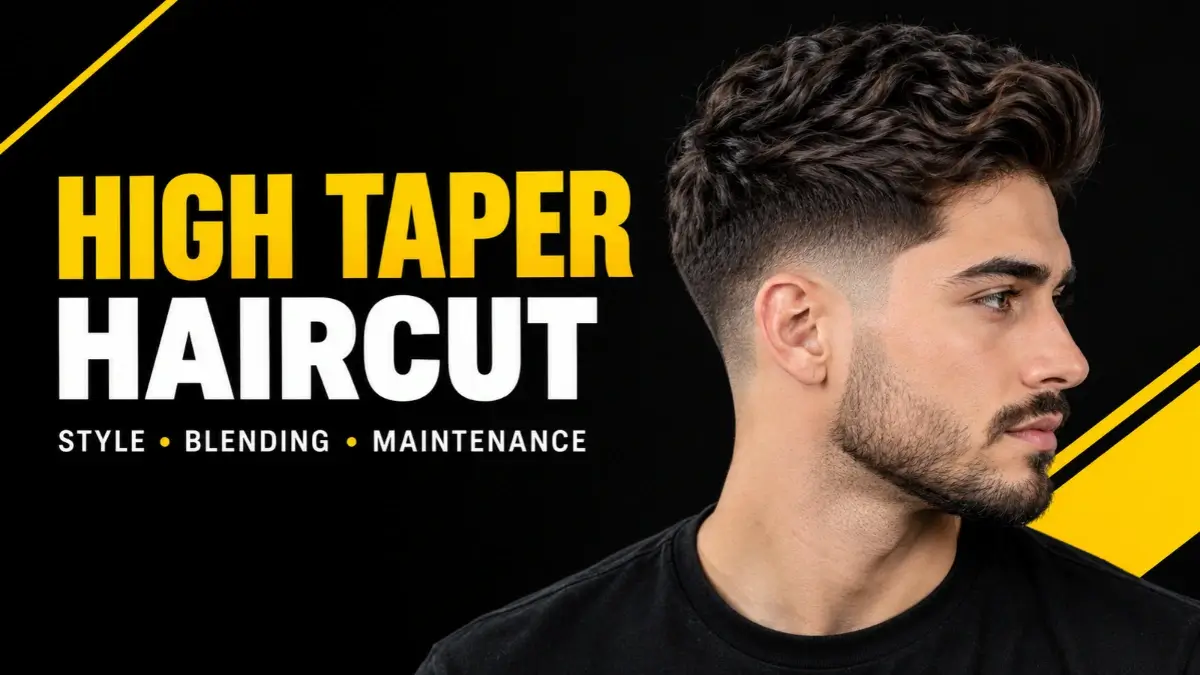
In a high taper haircut, your barber starts shortening the hair up near the temples and brings it down to a neat, close finish at the neckline. The top stays longer, so you can wear it with curls, a textured crop, a side part, or a neat brushed-back style. It gives the haircut a clean outline without removing as much hair from the sides as a full high fade might.
The best cut for you depends on three things: your hair type, the shape of your head, and how much length you want to keep on top. Knowing how the taper works will help you choose a style that suits you and explain exactly what you want when you visit your barber.
What Is a High Taper Haircut?
A high taper haircut is a men’s haircut in which the hair gradually gets shorter around the temples and the neckline, with the transition starting relatively high on the head. The hair above these areas remains longer, creating a clear difference between the sides and the top.
The high taper means the taper begins higher than it would in a low or mid taper. The barber blends the shorter hair into the surrounding length rather than cutting the entire side down to one short length. Depending on your preference, the finish can look subtle and natural or sharp and defined.
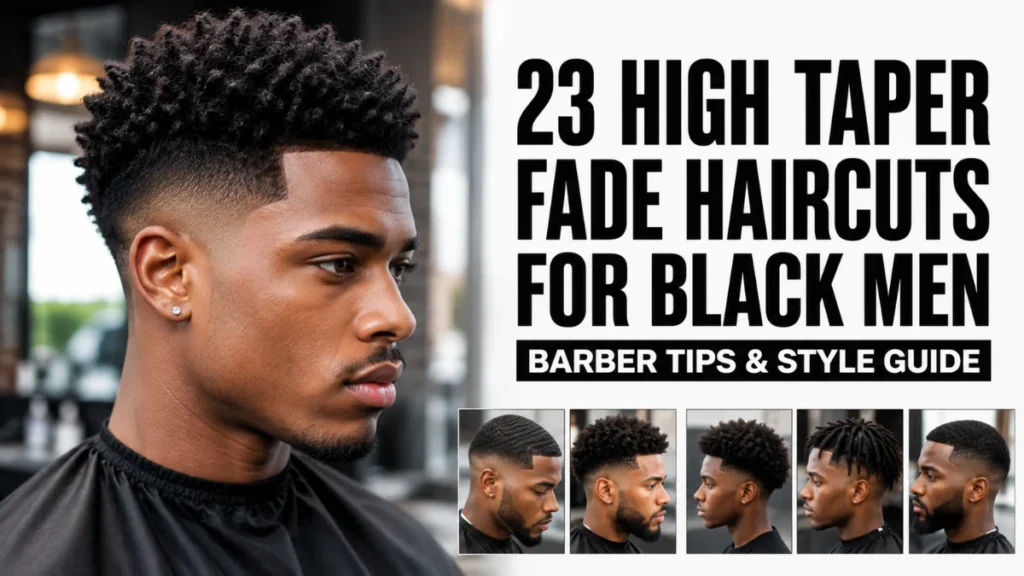
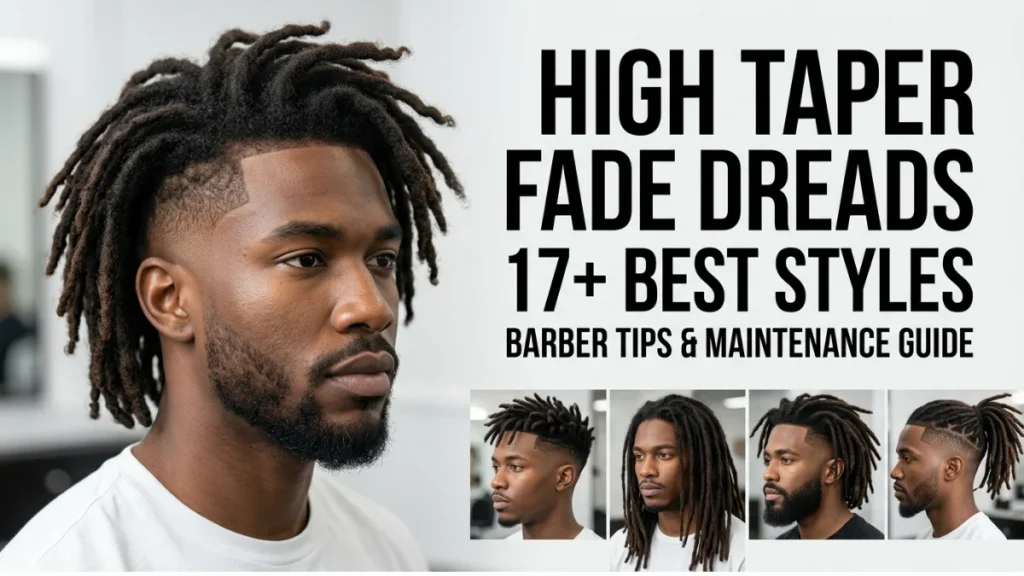
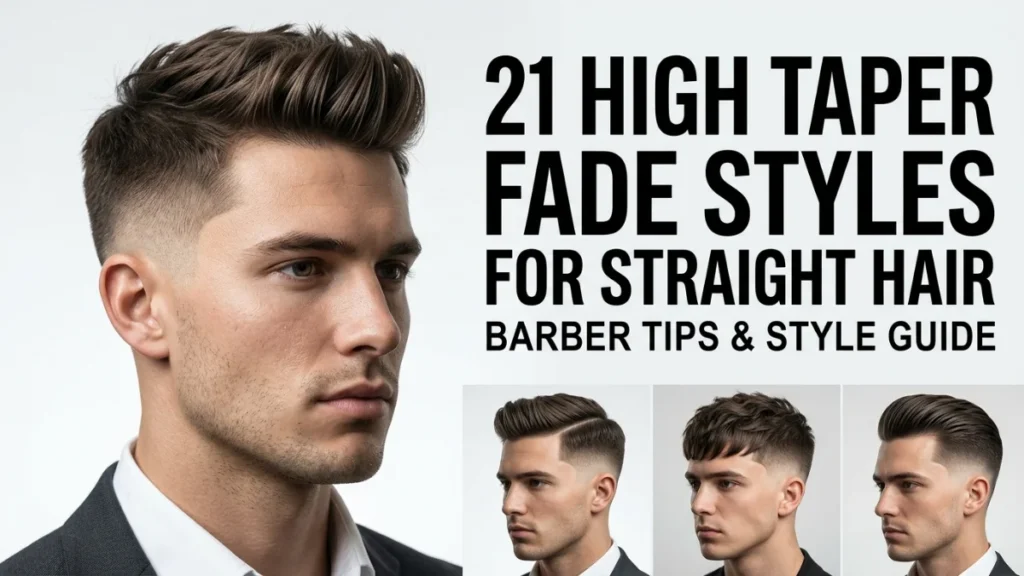
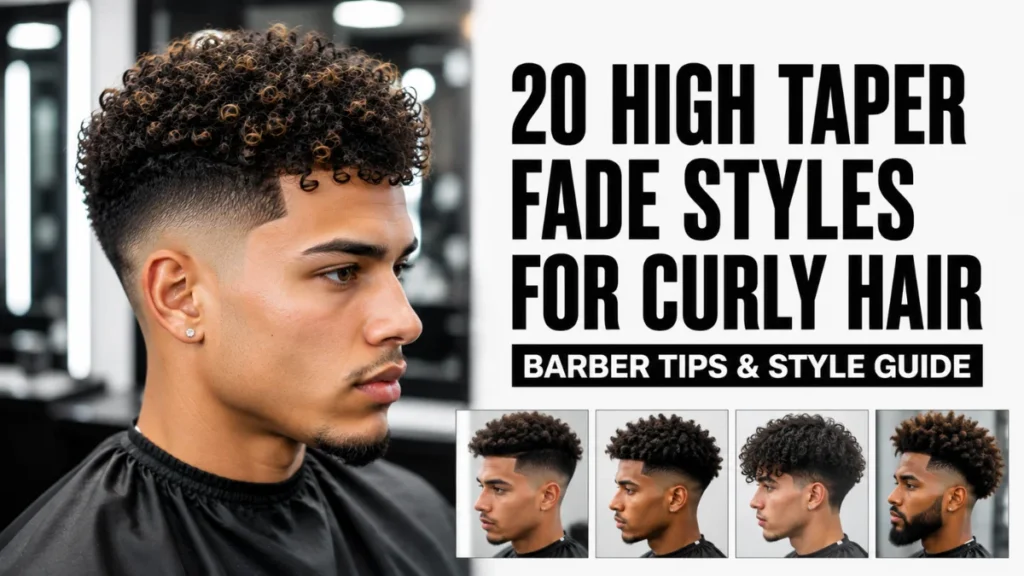
A high taper works with many haircut styles, including short textured hair, waves, quiffs, and longer styles with volume. High taper fade styles for naturally curly hair are especially popular because the short sides keep the shape tidy while the curls on top stay full and defined. For a sharper forehead and temple shape, you can also combine the cut with a line-up.
Key Features of a High Taper Haircut
The main feature of a high taper is the position of the transition. The shorter section doesn’t hug the ears or the base of the neck here. It begins higher, near the temples and across the back of the head.
Other features include:
- Gradual blending: The hair changes length in small steps to avoid a harsh line between the shorter and longer sections.
- Longer hair on top: You can keep curls, waves, a fringe, or extra length for styling.
- Clean temple area: The hair around the temples is shortened to create a neat outline.
- Tapered neckline: The hair at the back of the neck gets shorter toward the bottom.
- Flexible finish: You can choose a natural edge or a crisp line-up, depending on the look you prefer.
A high taper cut does not require the top to be short. Your barber can leave enough length for a textured fringe, a curly top, or a swept-back style while keeping the sides tidy.
Understanding High Taper Placement on the Sides and Back
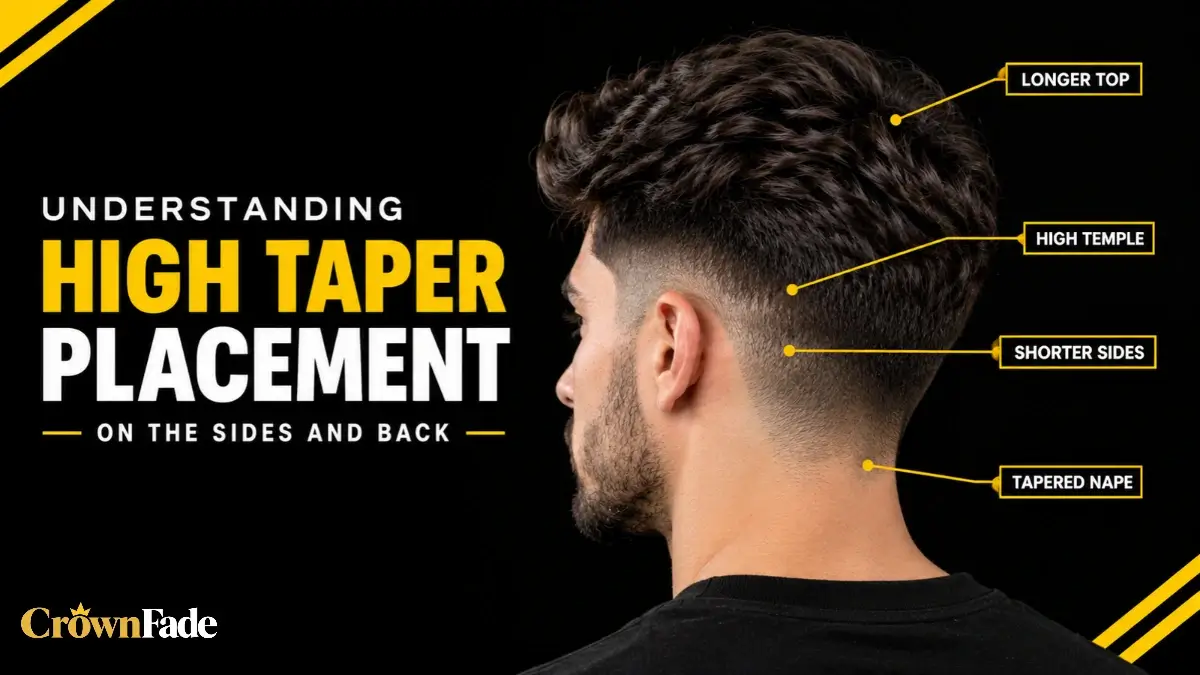
On the sides, the taper begins around the temple, roughly in line with the top of the ear. Above that line, the hair stays at full length and blends into the top. Below it, the hair steps down toward the sideburn and the area behind the ear.
At the back, the taper usually begins around the crown or a little lower, and shortens toward the nape. Some barbers leave the neckline natural, while others square it or round it. A natural neckline grows out more softly, which helps if you don’t want to visit the barber every two weeks.
Placement is the main thing that separates a high taper from other tapers. A higher start means more short hair and a bolder look. A lower start means more length on the sides and a quieter shape.
What Does a High Taper Haircut Look Like?
A good high taper cut looks tidy from every angle. From the front, you see short, close sides that frame the face. From the side, the hair fades into the top without a visible line where the clippers stopped.
The shortest hair sits around the ears and neck, so the cut still looks sharp on a day when the top is a bit messy. Many people like that. You can wear a textured crop, a quiff, a side part, or curls on top, and the sides still look controlled.
Who Should Get a High Taper Haircut?
For guys, a high taper hairstyle suits the majority of face shapes. It works particularly well on round and square faces because it makes the head appear taller. Men with long or narrow faces can ask for a slightly lower start to avoid making the face look longer.
It also works across hair types. Straight, wavy, curly, and coily hair can all take a taper. Thin hair looks fuller with this cut because the close sides draw the eye to the top.
The cut fits students, office workers, and athletes alike. It’s an excellent option if you want something tidy and quick every morning. If your hair is thinning at the temples, talk to your barber first, because a high start can make a receding line more obvious.
High Taper vs. Low Taper: Key Differences
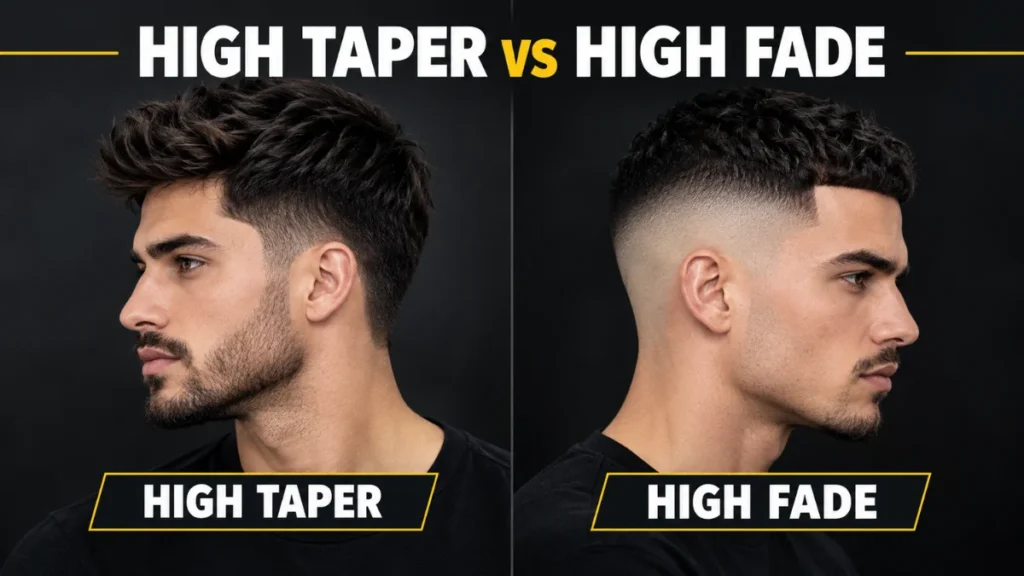
The main difference between a high taper and a low taper is where the hair starts getting shorter. A high taper begins around the upper temple area, while a low taper stays closer to the ears and the bottom of the neckline.
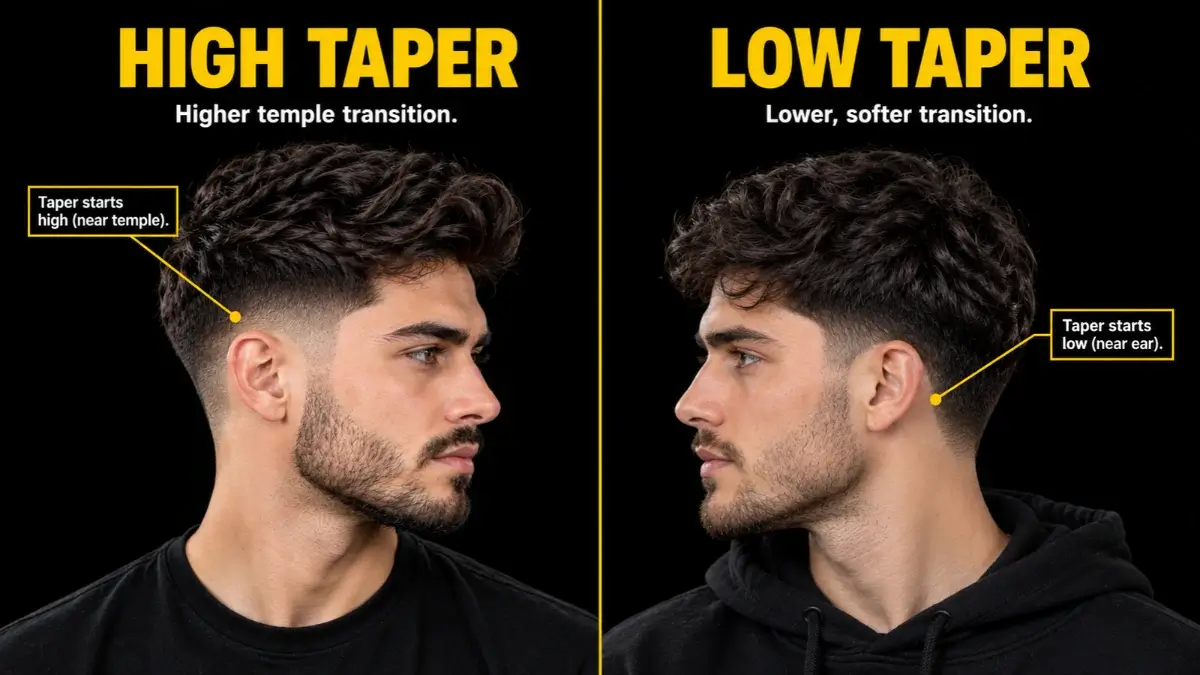
| Feature | High Taper | Low Taper |
|---|---|---|
| Starting Point | Higher around the temples | Lower near the ears and neckline |
| Overall Look | More contrast around the upper sides | Subtle, understated transition |
| Top Styling | Works with short or longer tops | Works with short or longer tops |
| Best For | Men who want a more noticeable taper | Men who prefer a quieter finish |
| Regrowth | The higher transition may become more noticeable as it grows | The lower transition can look less obvious as it grows |
Neither option is automatically better. If you want a sharper change around the temples, choose a high taper. If you prefer to keep more hair on the sides and have a softer outline, a low taper may be the better choice. Your barber can also suggest a mid taper if you want something between the two.
What to Tell Your Barber When Getting a High Taper?
Good barber instructions save you from a bad haircut. Photos help most, so bring two or three pictures that show the sides and the back. For various barbers, words can mean different things.
Here is what to cover:
- Say “high taper” and show a picture: This sets the starting point.
- Choose the ending length: Ask whether you want a skin finish or a short stubble finish at the bottom. The shortest part of a taper is often cut with a #1 or #0.5 guard, though your barber will adjust that to suit your hair.
- Describe the top: Give a length in inches or fingers, and say how you part or style it.
- Pick the neckline: Natural, rounded, or squared.
- Mention the sideburns and edge-up: Say if you want a sharp line at the forehead and temples.
If you’re unsure, ask your barber what suits your hairline and head shape. A good one will tell you honestly.
How to Style Your High Taper Haircut at Home?
Styling a high taper at home goes faster when you let your natural texture lead, whether it’s straight, wavy, or curly. Start with clean hair, remove excess water with a towel, and choose a product that suits your desired finish.
- For straight hair: Apply a small amount of lightweight styling cream or matte clay, depending on whether you want a soft finish or more hold. Use your fingers or a comb to shape the top. If you want a quiff or brushed-back look, use a blow-dryer on a moderate setting and direct the hair into place.
- For wavy hair: Use a light cream to control flyaways without flattening the waves. Let your hair air-dry for a natural result, or use a blow-dryer with a diffuser if you want to preserve the pattern.
- For curly hair: Apply a curl cream to damp hair and distribute it evenly with your fingers. Scrunch the curls gently and let them dry without repeatedly touching them. A diffuser can help dry the hair while keeping the curls defined.
- For short textured hair: Work a small amount of matte paste through dry or slightly damp hair. Use your fingertips to separate sections and create texture instead of combing everything into one uniform shape.
Start with minimal product and add more only as necessary. Too much can make the top greasy or weigh down curls, waves, and fine hair.
Tips for Maintaining a High Taper
Haircut maintenance for a taper mostly means keeping the edges clean. Because the sides are short, growth shows quickly.
- Visit your barber every 2 to 3 weeks for a clean-up: If you let it stretch to 4 weeks or more, the blend will look soft and uneven.
- Wash your hair 2 to 3 times a week with shampoo that suits your hair type: Overwashing dries out the scalp.
- Moisturize the scalp: Short sides show dryness and flaking more easily.
- Don’t trim it yourself with clippers: One slip can ruin the blend. If you must, only tidy the neckline lightly.
- Sleep on a clean pillowcase: It keeps the skin and hair fresher.
Maintenance gets easier if you ask for a natural neckline, since it grows out without a hard line.
Common Mistakes to Avoid
- Starting too high for your hairline: If your temples are receding, a high start can draw attention to it.
- Giving unclear instructions: “Short on the sides” can mean ten different things.
- Using too much product: A thick layer of gel or wax makes the hair feel heavy and look oily. Start with a pea-sized amount and add more only if you need it.
- Skipping barber visits: The cut loses its shape faster than a longer style.
- Ignoring hair type: Curly and straight hair need different products and techniques.
- Mixing up a taper and a skin fade: Be clear about whether you want skin showing at the bottom.
Top Hair Products to Use for a High Taper Haircut
The taper itself does not need much styling product because the barber creates its shape with clippers and scissors. The longer hair at the top is where most products are applied.
| Product | Best For | Finish |
|---|---|---|
| Matte Clay | Short crops and textured styles | Low shine, firm hold |
| Styling Cream | Straight or wavy hair | Soft, natural finish |
| Curl Cream | Curly and coily hair | Defined curls with less frizz |
| Sea Salt Spray | Fine or wavy hair | Added texture and a slightly rough finish |
| Lightweight Pomade | Side parts and slicker styles | More shine and control |
| Heat Protectant | Blow-dried styles | Helps reduce heat-related damage |
Choose a product based on your top style rather than the taper height. For example, matte clay can help separate a short textured crop, while curl cream is usually a better fit for preserving natural curls.
If you use a blow-dryer regularly, apply a heat protectant first and avoid using excessive heat. Wash out styling products when needed so buildup does not leave your hair or scalp feeling uncomfortable.
Pros and Cons
A high taper offers a clean outline and works with a wide range of top styles, but its appearance depends on the height and how closely it is maintained.
Pros
- Creates a clean, defined look around the temples and neckline.
- Works with straight, wavy, curly, and coily hair.
- Lets you choose your top length and try different styles without changing the taper.
- Can reduce excess bulk around the upper sides.
- Pairs well with a line-up, textured crop, curls, or a quiff.
Cons
- The higher placement may expose more of the temples.
- The shorter sections can lose their shape as the hair grows.
- A poorly blended cut may leave visible lines or uneven sections.
- It may not suit someone who wants the sides to look full and uniform.
- Frequent trims can add to the cost of regular haircut maintenance.
Consider how much contrast you want and how often you are willing to visit the barber before choosing the cut.
FAQ
1. Is a high taper the same as a high fade?
Not exactly. A high taper and high fade both start high, but a fade usually ends at or near skin, so the contrast is stronger. A taper keeps a bit more length at the bottom.
2. What guard number is used for a high taper?
There is no fixed number. Barbers blend through several guards, often from around a #3 down to a #1 or #0.5. The choice depends on your hair and the finish you want.
3. What hair types work well with a high taper?
All of them. Straight, wavy, curly, and coily hair can all carry the cut. Thick hair holds the shape well, and thin hair looks fuller on top. Just pair it with the right styling products for your texture.
4. What Is the Average Cost of a High Taper Haircut?
Prices vary by city and barbershop. In the US, many shops charge roughly $20 to $50, and higher-end shops cost more. Ask for the price before you sit down, and check whether a neckline clean-up or beard trim is included.
5. Is a high taper professional?
Yes. The sides are neat, and the edges are clean, so it works in offices, interviews, and formal events. Keep the top tidy with a side part or a short crop, and it looks polished anywhere.
Conclusion
A high taper haircut is a good option if you want shorter hair around the temples and neckline without going for a full high fade. It works with many top styles, from natural curls and waves to textured and brushed-back looks. If you are styling a high taper fade on straight hair, a small amount of matte clay or paste and some texture on top is usually enough.
Before your next barber visit, decide how high you want the taper, how much length to keep on top, and whether you prefer a natural finish or a sharp line-up. Bring a photo, give clear instructions, and book a trim every 2 to 3 weeks. That keeps the cut neat and easy to manage with your hair texture and daily routine.