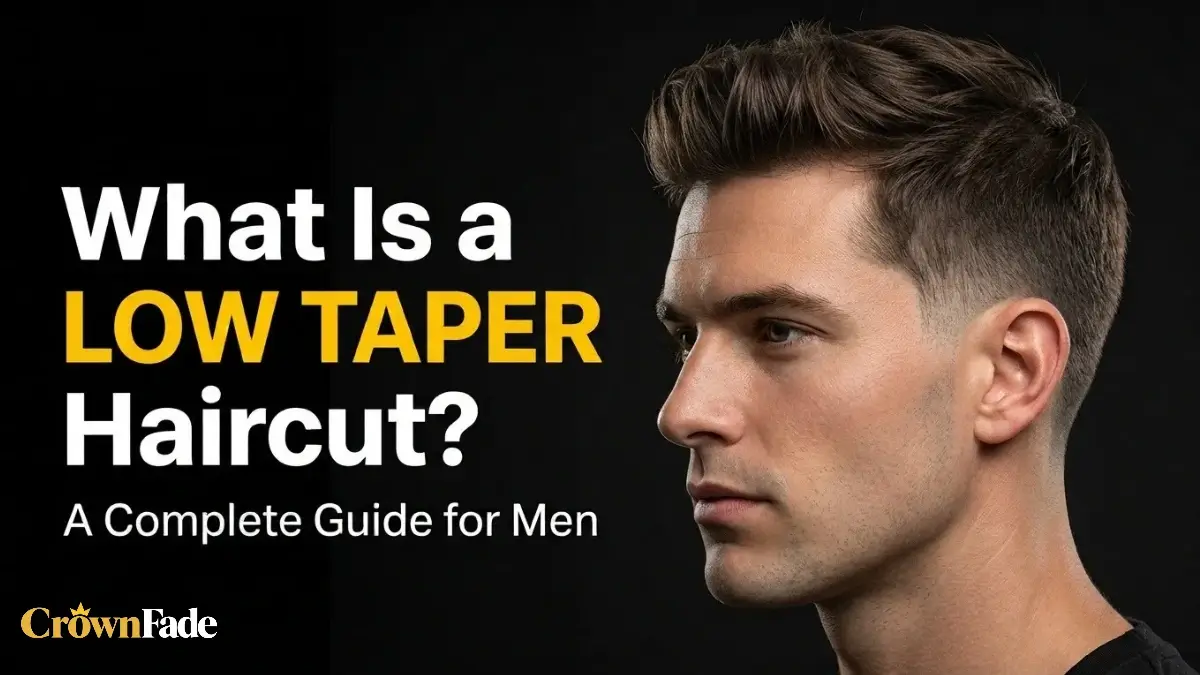
What Is a Low Taper Haircut? A Complete Guide for Men

If you have been scrolling through haircut photos and wondering what a low taper actually is, you are in the right place. It is one of the neatest and easiest short-back-and-sides styles, and it works for almost any hair type. This guide explains how the cut looks, where it starts and ends, and how it compares with a mid or high taper. You will also find simple tips for asking your barber, keeping the cut fresh, and avoiding common mistakes.
What Is a Low Taper Haircut?
A low taper haircut is a clean, short-back-and-sides style where the hair gets gradually shorter only around the sideburns and the neckline. The rest of the sides stay longer and natural. It is the most subtle option in the taper haircut family, which is why so many men ask for it when they want a neat finish without a dramatic change.
People often search for the meaning of ” low taper ” because the word “taper” gets mixed up with “fade.” Tapering simply means the hair length decreases in steps or in a smooth gradient as it moves toward the edge of the hairline. In a low taper cut, that shortening happens in a small area near the ears and the back of the neck.
This cut is flexible enough to work on nearly any type of hair. It sits well under a classic side part, a textured crop, a quiff, or a longer top. If you want a haircut that looks tidy at work and still relaxed on the weekend, this is a safe place to start.
What Does a Low Taper Look Like?
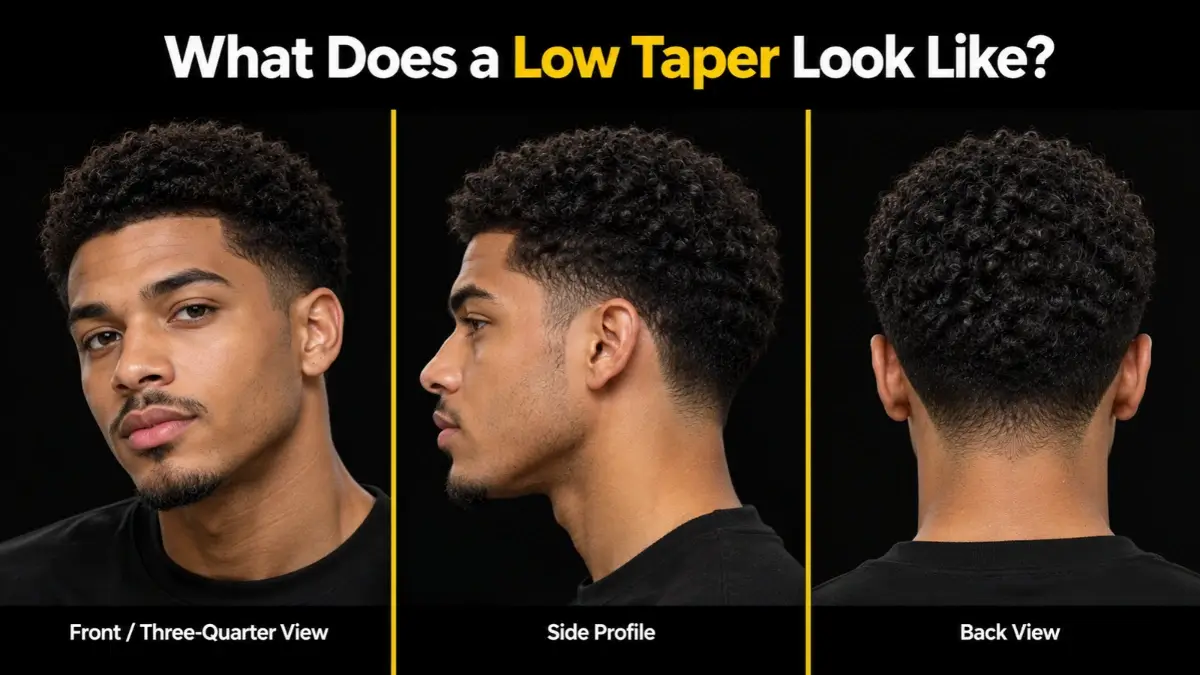
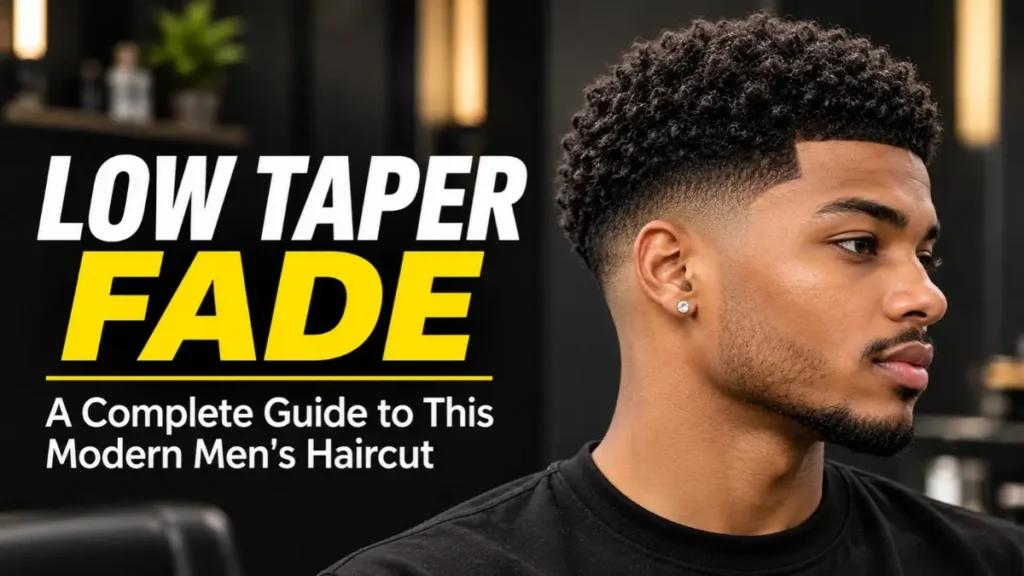
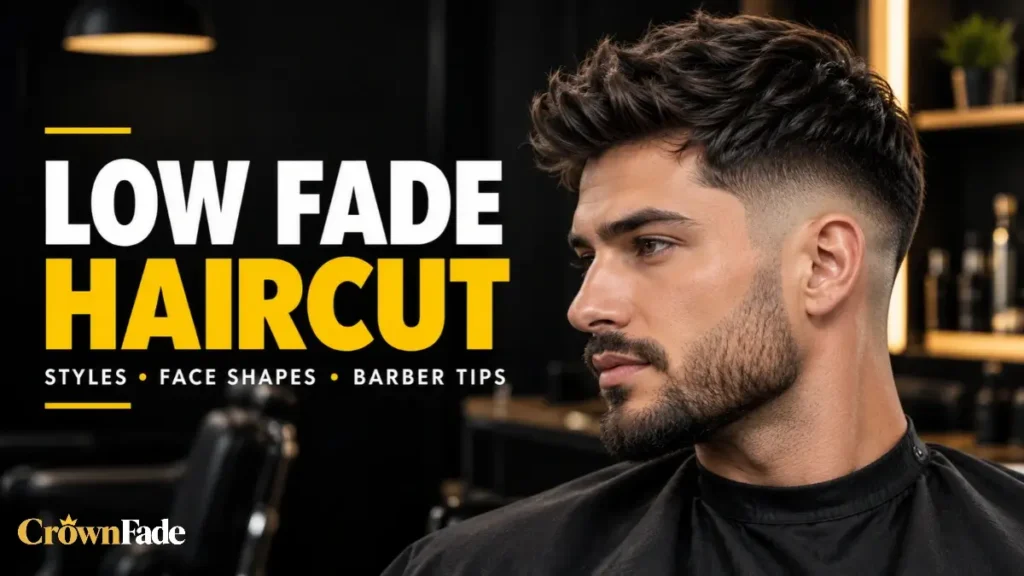
From the front, a low taper looks like a normal haircut with unusually clean edges. You will see short, tight hair along the sideburns that blends upward into the longer hair on the sides. Around the ears, the hair is trimmed close, and at the back the neckline fades down to a very short length.
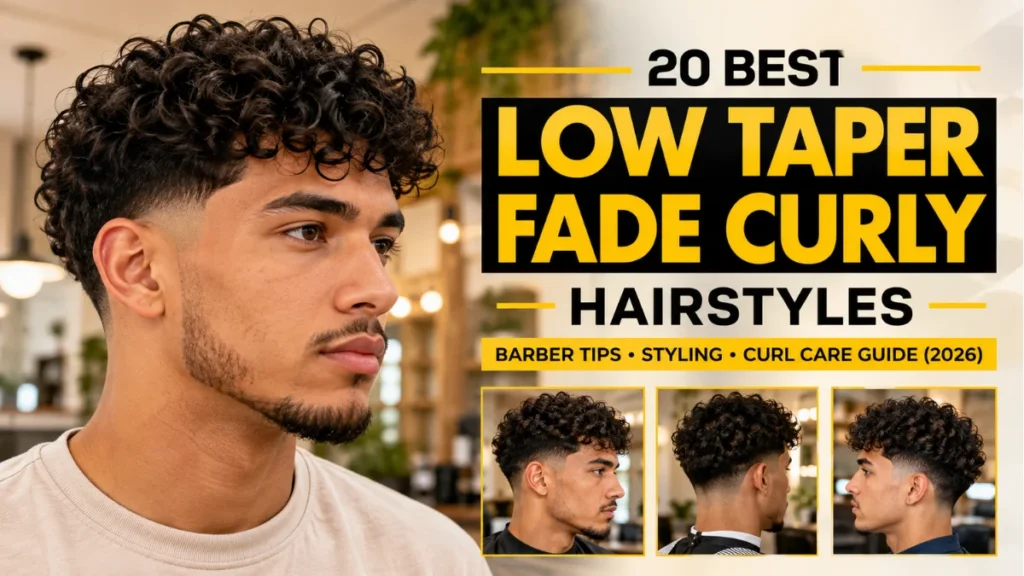
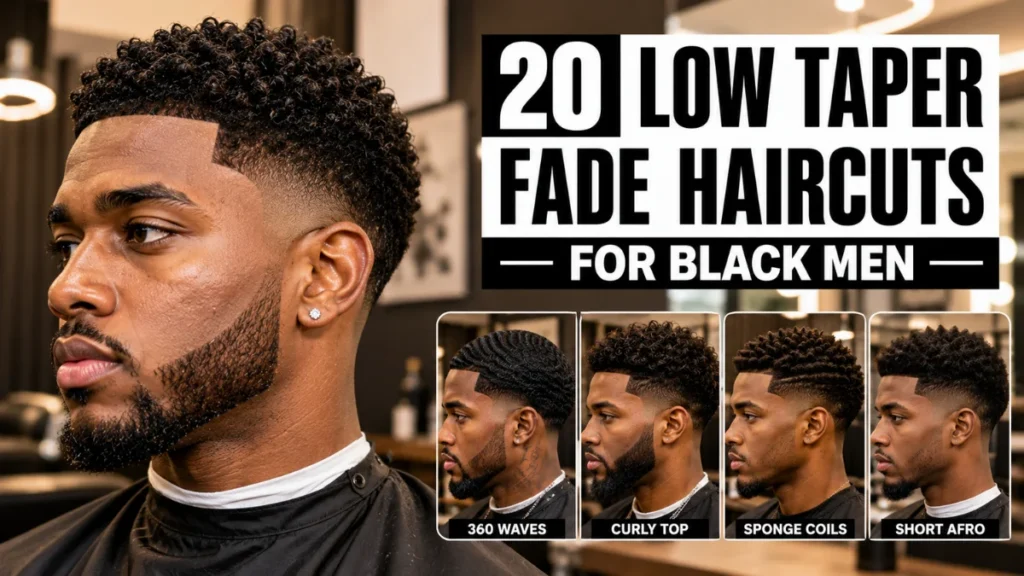
On straight hair, the gradient is easy to see because each length change shows clearly. On curly hair, the same taper gives you a soft, rounded shape, and low taper fade curly hairstyles often pair the tapered sides with defined curls or twists on top. On black men’s hair, a low taper keeps the hairline crisp and gives the cut a sharp outline, especially when the barber lines up the edges.
From the side, the shape looks like a gentle curve that follows the ear and drops down to the nape. The top part of the sides keeps its length, so the cut never looks too shaved or severe.
Where Does a Low Taper Start and End?
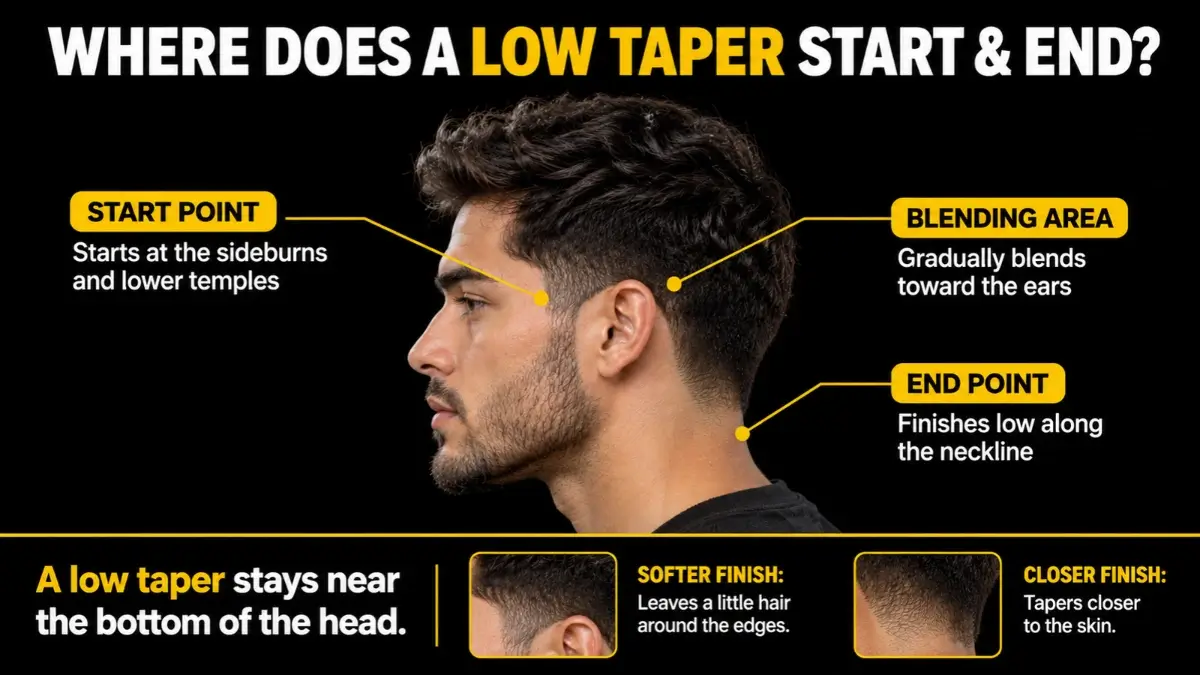
A low taper usually starts around the sideburns and the lower area near the temples. The barber gradually shortens the hair as it approaches the ears and neckline. At the back, the taper follows the natural shape of the hairline. It usually stays near the bottom of the head instead of extending high up the sides.
Some low tapers leave a little hair around the edges, while others create a closer finish near the skin. Tell your barber which option you prefer before the haircut begins.
Low Taper vs Mid Taper vs High Taper
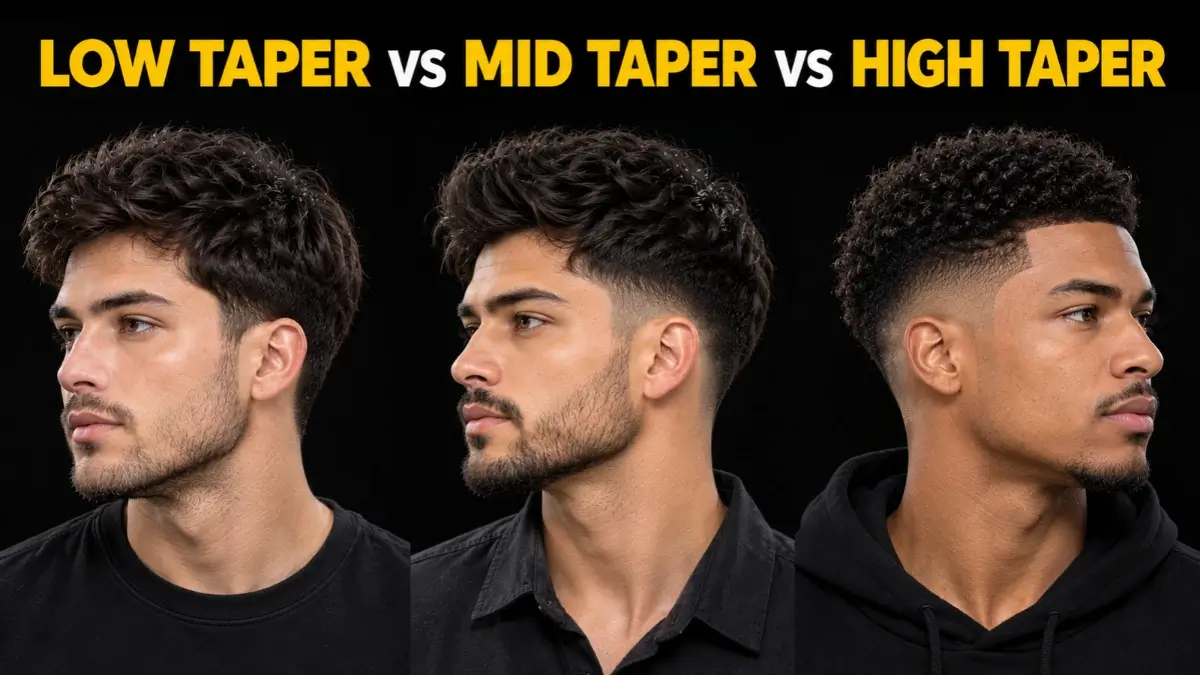
The main difference between a low taper vs mid taper vs high taper is how far up the head the shortening begins. A low taper starts near the ears and neckline. A mid taper begins around the middle of the sides, roughly in line with the temple. A high taper begins up near the top of the head, which leaves the sides noticeably shorter.
| Taper Type | Where It Starts | Overall Look | Best For |
|---|---|---|---|
| Low Taper | Around the ears and neckline | Subtle, classic, and neat | Office wear, longer tops, and first-time tapers |
| Mid Taper | Around the temples | Balanced with slightly bolder contrast | Men who want a more visible contrast |
| High Taper | Near the upper sides of the temples | Sharp with strong contrast | Short tops and bold hairstyles |
If you like a clean look that does not draw too much attention, the low version fits best. The mid option is a good middle ground for men who want the sides a little shorter without going extreme. The high one suits people who enjoy a sharper, more dramatic shape and are happy to visit the barber often.
Your face shape and hair texture also matter. A rounder face can look slimmer with a mid or high taper, while a low one feels softer. Your barber can show you how each height looks on you before you commit.
Who Should Get a Low Taper?
A low taper suits almost any man who wants a tidy look with very little fuss. It is a good starting point if you have never tried a tapered haircut and are worried about going too short. If you are growing your hair longer on top, this cut keeps the sides tidy during the in-between stage.
For men with thick or wavy hair, the style removes bulk around the ears and neck, which stops the hair from looking heavy. For curly hair, it keeps the curls looking defined while the edges stay sharp. On black men’s hair, it creates a clean frame around the face and pairs nicely with a line-up.
Men with straight hair benefit from the gradual blending, which smooths the transition from the sides to the top. If your hair is very fine or thin, the style still works, though you may want to keep the top slightly longer for volume.
It is also a sensible choice for work environments with a dress code, since the cut looks groomed without looking extreme. If you want a stronger contrast or a very short side, a higher taper or a fade might suit you better.
How to Maintain a Low Taper?
A low taper stays sharp for two to three weeks, so book a barber visit every three to four weeks.
- Visit your barber every 3 to 4 weeks. The neckline is usually the first part to look untidy.
- Wash your hair regularly. Keep the scalp and sides clean so the edges look fresh.
- Use a product that suits your texture. Matte paste or cream for straight hair; curl cream or leave-in conditioner for curly hair.
- Comb or brush the top daily. This keeps the shape neat.
- Clean up with a trimmer only if needed. Remove stray hairs at the neckline and sideburns, and go slowly.
- Leave the shaping to your barber. A crooked edge is harder to fix than to prevent.
- Moisturize after trimming or shaving. This keeps the skin around the edges calm and healthy.
How to Ask Your Barber for a Low Taper?
When asking your barber for a low taper, explain where you want the shorter sections to begin. Make sure they understand how much length you want to keep on top and around the sides.
You can say, “I want a low taper around my sideburns and neckline, with a natural blend and enough length on top.” This gives your barber a clear starting point.
If you want a skin finish, mention it before the cutting begins. If you prefer a softer look, ask the barber to leave some hair around the edges. A reference photo can also help you get the result you want. For curly hair or straight hair, explain how you plan to style the top so the barber can choose the right blending and cutting technique.
Pros and Cons of a Low Taper
Pros
- It looks clean and professional without being extreme.
- It suits many hair types, including straight, wavy, and curly hair.
- It grows out gently and does not look messy for long.
- It works with many top styles, from a short crop to longer, textured hair.
- It is a safe first taper if you are unsure about shorter sides.
Cons
- The edges lose their crispness within a couple of weeks.
- It needs regular barber visits if you like a sharp finish.
- The effect is subtle, so it will not give a bold contrast.
- A poor blend can show a harsh line, especially on straight hair.
For most men, the benefits outweigh the downsides. If you enjoy a modern, minimal look and don’t mind a monthly trim, the low taper is hard to beat.
Common Mistakes to Avoid
- Mixing up taper and fade. This gives you a cut shorter or sharper than you wanted. Bring a photo and say whether you want skin or a little length at the bottom.
- Letting the taper climb too high. A low taper that reaches the temples becomes a mid taper. Check the mirror early and speak up.
- Skipping the blend. A visible line between lengths means the blend needs more work.
- Choosing the wrong neckline. A squared neckline can look stiff on soft, curly hair; a natural one grows out better.
- Waiting too long between cuts. A low taper looks best fresh, so book your next visit before you leave the chair.
FAQ
Is a low taper the same as a low fade?
No, although the terms are sometimes used interchangeably. A low taper focuses on the sideburns and neckline, while a low fade often blends short hair across a wider area of the sides and back.
Are low tapers attractive?
Yes, many men like low tapers because they create a clean appearance without removing too much hair. The style can suit different hair textures and personal preferences.
Is a low taper professional?
Yes, a low taper is generally suitable for professional settings. Its subtle finish works well with classic hairstyles, curls, and neatly maintained facial hair.
Does a low taper go down to the skin?
Not always. A low taper can leave some hair around the edges or use a close-cutting technique for a skin-level finish. Tell your barber which look you prefer.
How long does a low taper last?
A low taper typically keeps its fresh appearance for around two to three weeks. The exact timing depends on your hair growth and how sharp you want the edges to remain.
Conclusion
A low taper is a simple way to look sharp without a big change. The shortening stays small and sits only at the sideburns and neckline, so you keep your length and your usual top style. Whether your hair is straight, wavy, or curly, it gives a tidy finish that suits both work and weekends.
The best results come from clear communication. Tell your barber where the taper should start, whether you want a skin finish or a softer edge, and how you plan to style the top. Pair that with a monthly visit and a basic grooming routine, and the cut will look fresh and intentional.
If you are new to tapers, this is the easiest one to try, and you can always go higher on your next visit if you want more contrast.