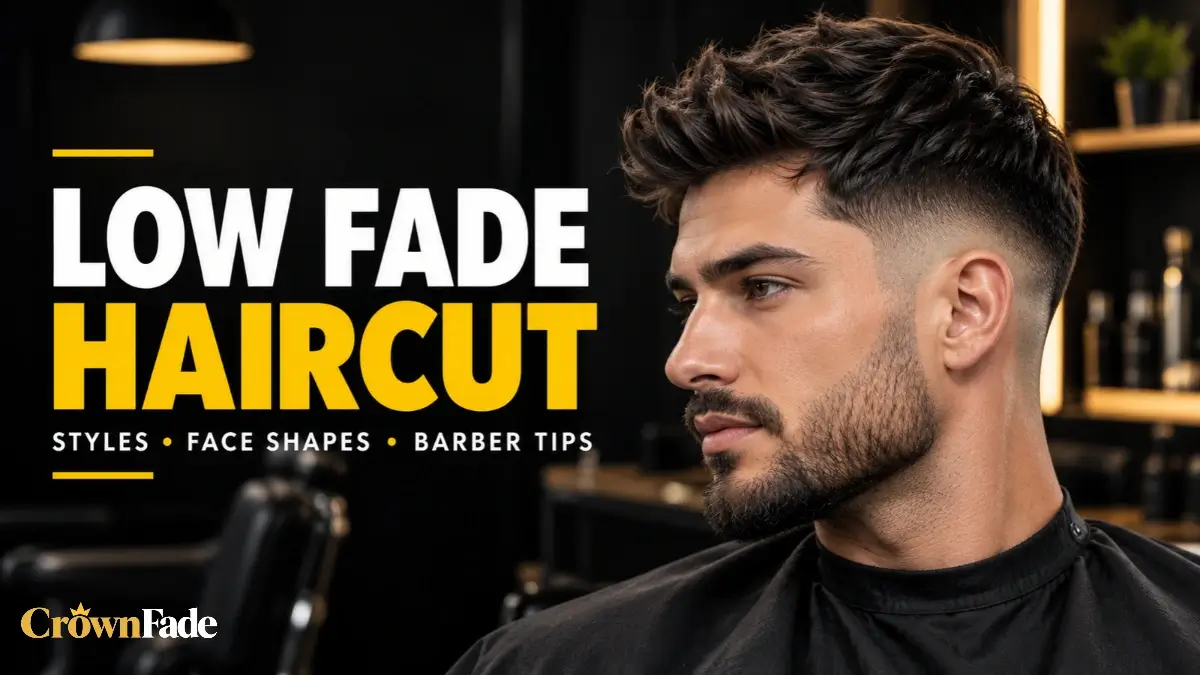
Low Fade Haircut for Men: Face Shapes, Styling Tips, & Maintenance Guide

A low fade keeps things short around your ears and the bottom of your head, with plenty of length left up top. The gradual change in length creates a clean finish without taking the sides too high. You can pair it with a textured crop, curly top, quiff, crew cut, or side part.
The cut works with straight, wavy, and curly hair. Your barber can adjust the fade line, clipper guard size, and top length to match your preferred look. Before booking your next appointment, learn how the cut works, which face shapes it suits, and what to tell your barber.
What Is a Low Fade Haircut?
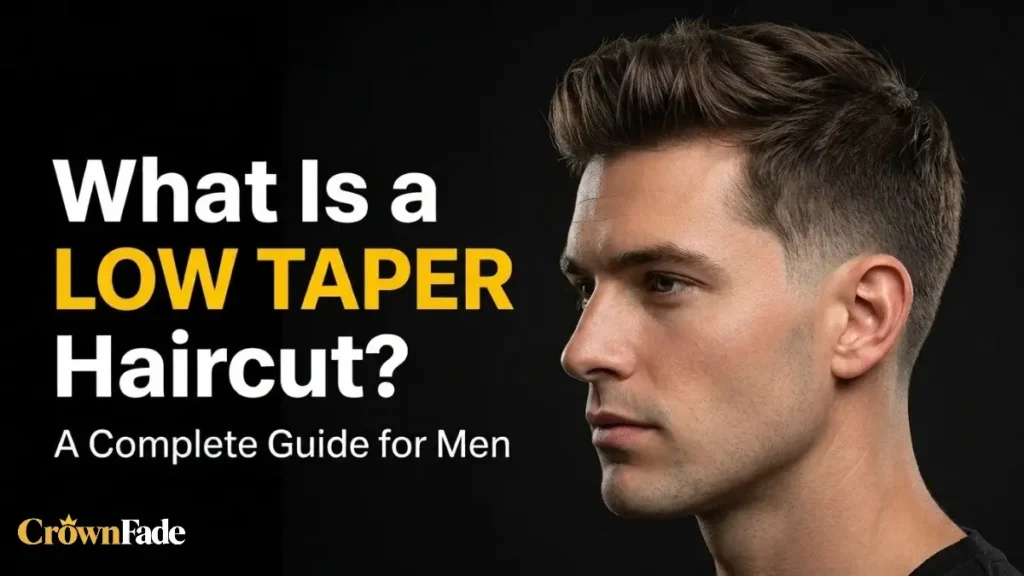
A low fade is a haircut in which the hair gradually gets shorter near the bottom of the head, starting just above the ears and around the neckline. The transition stays low rather than rising toward the temples or upper sides. This leaves more hair on the sides than a mid fade or high fade.
Your barber uses hair clippers with different guard sizes to blend the short hair into the longer section above. The blend can be subtle or sharp, depending on how much contrast you want. Some versions finish with skin at the bottom, while others leave a small amount of hair for a softer result.
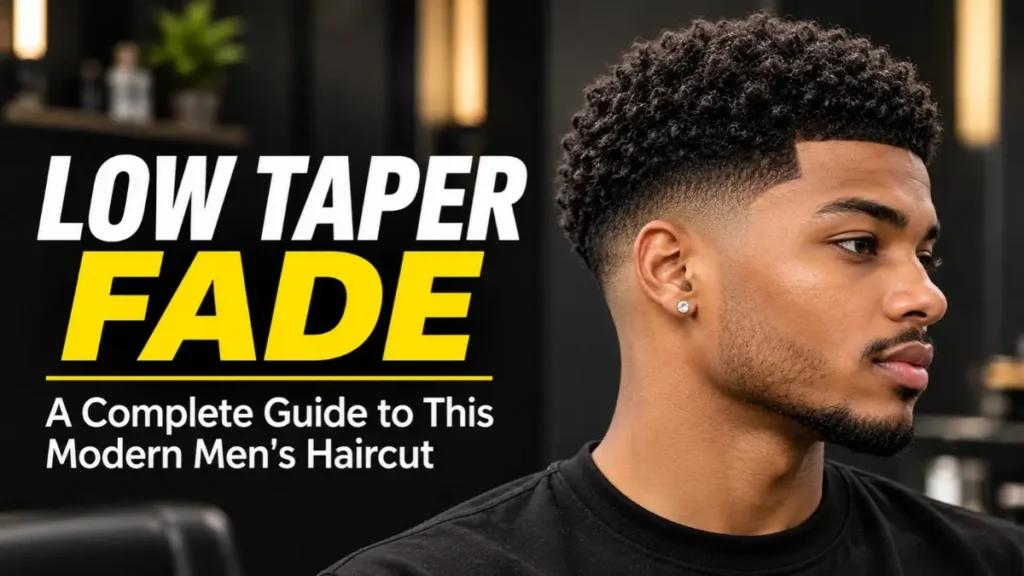
A low fade is pretty simple: the blend starts down low, right by your ears and the bottom of your neckline. The top can be short, medium, or long, so the cut works with several hairstyles. It is also different from a low taper fade, which usually focuses on smaller areas around the sideburns and neckline rather than fading a larger section of the sides.
What Does a Low Fade Look Like?
Look at it from the side, and you’ll notice just a thin strip of super short hair wrapping around the ear and down the back of the neck. Above that band, the hair grows slowly longer until it reaches the top. The spot where short hair turns into longer hair is called the fade line, and here it sits low.
Because the change is gentle, the low fade hairstyle looks neat without looking harsh. The sides stay close to the head, while the top keeps its length and shape. From the back, the neckline can be tapered, rounded, or squared off.
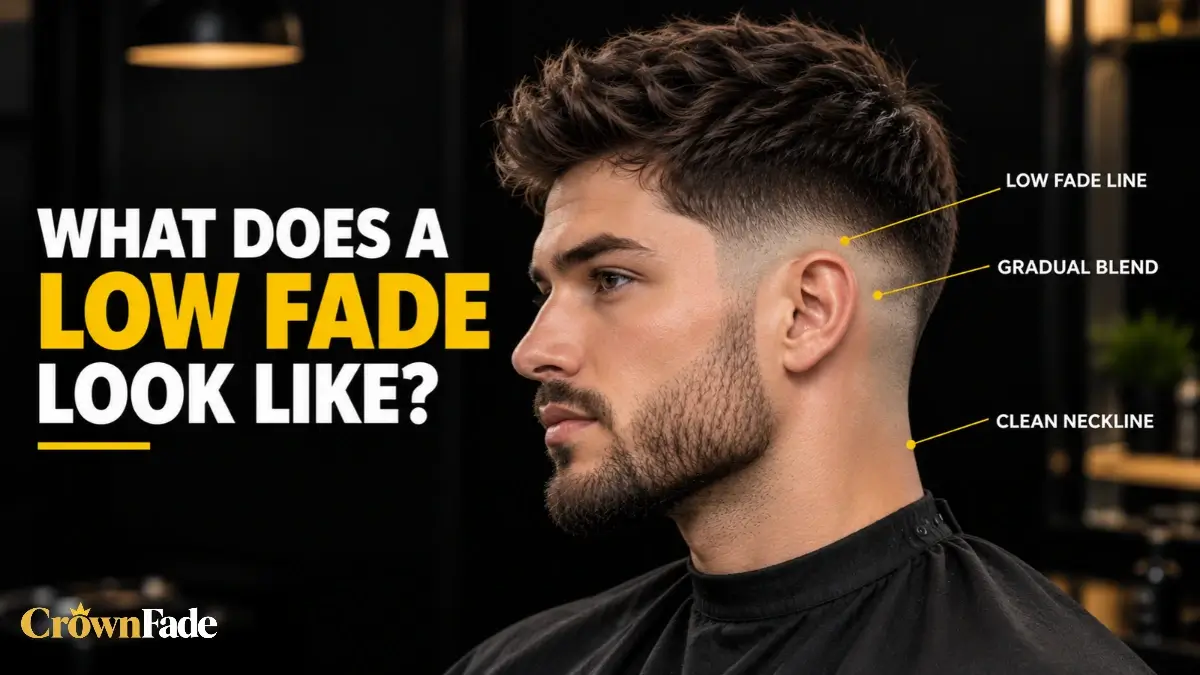
You can also choose how short the bottom goes:
- Skin fade (bald fade): The bottom goes down to bare skin for the sharpest look.
- Shadow or stubble finish: The bottom stays a little longer, so the blend looks softer.
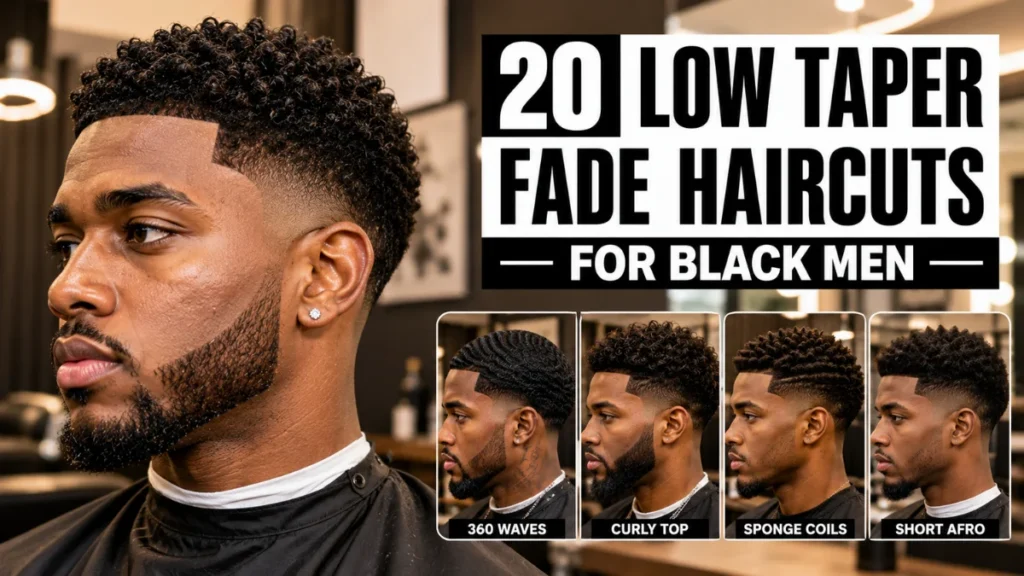
The top can be almost anything, such as a crew cut, textured crop, side part, quiff, or longer curls.
Low Fade vs Mid Fade vs High Fade
The big difference comes down to where the fade stops and the longer hair takes over. A lower fade keeps more of the sides covered, while a higher fade creates more contrast and exposes a larger area of the head.
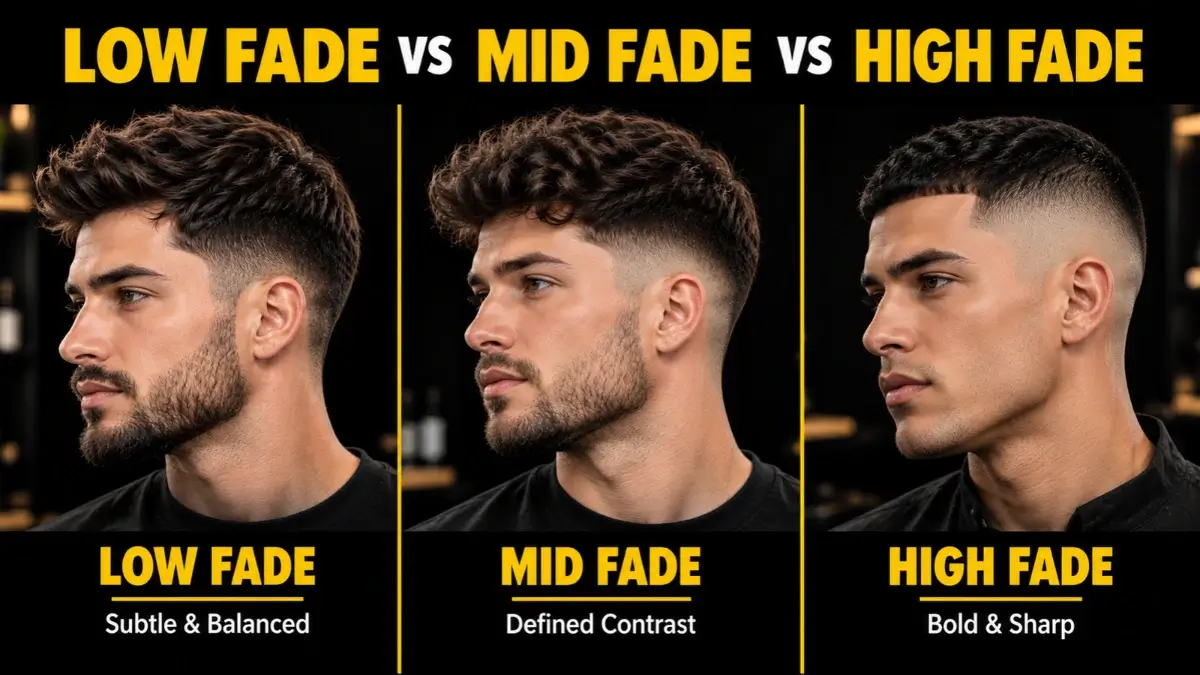
| Feature | Low Fade | Mid Fade | High Fade |
|---|---|---|---|
| Fade position | Near the ears and lower back | Around the middle of the sides | Near the temples and upper sides |
| Overall appearance | Subtle and balanced | Noticeable contrast | Bold and striking |
| Hair left on the sides | More | Moderate amount | Less |
| Suitable top styles | Crop, curls, quiff, side part | Crew cut, textured top, quiff | Short crop, buzz cut, textured top |
| Upkeep | Regular touch-ups | Regular touch-ups | Regular touch-ups |
A low fade is a good option if you want a clean cut without removing too much hair from the sides. A mid fade gives a more visible transition and can make the top stand out. A high fade contrasts really well, especially if you keep the top short.
Your choice should depend on the look you want, your hair density, and how much contrast you prefer. If you are unsure, ask your barber to start with a low blend rather than taking the fade higher than you expected.
Who Should Get a Low Fade Haircut?
A low fade for men can suit many ages, hair types, and personal styles. It works for someone who wants a tidy everyday cut as well as someone who prefers a longer, more styled top. The final result depends on how your barber blends the sides and shapes the hair above them.
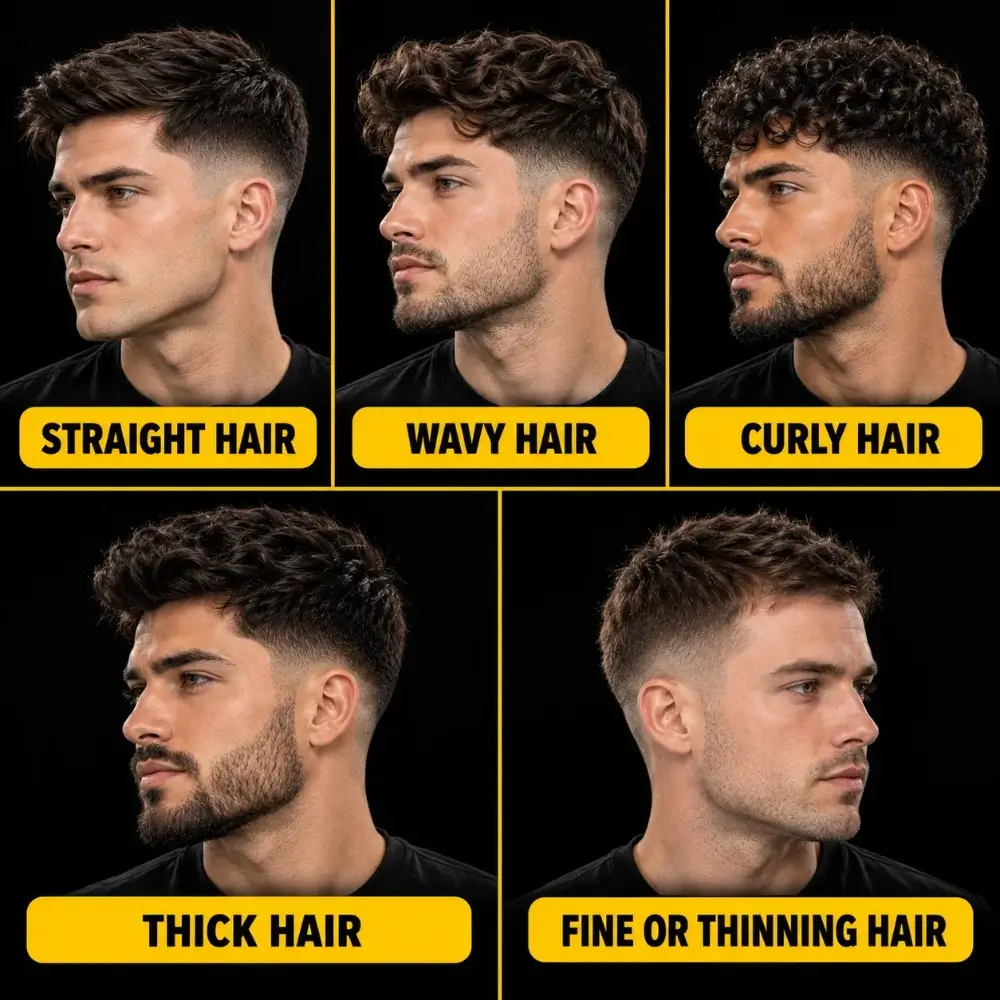
- For straight hair: A textured crop, side part, or quiff adds shape without making the sides look too heavy. If your hair lies flat, a small amount of matte clay can help create separation.
- For wavy hair: Keep enough length on top to show your natural movement. A loose quiff or brushed-back style can work well without requiring a perfectly smooth finish.
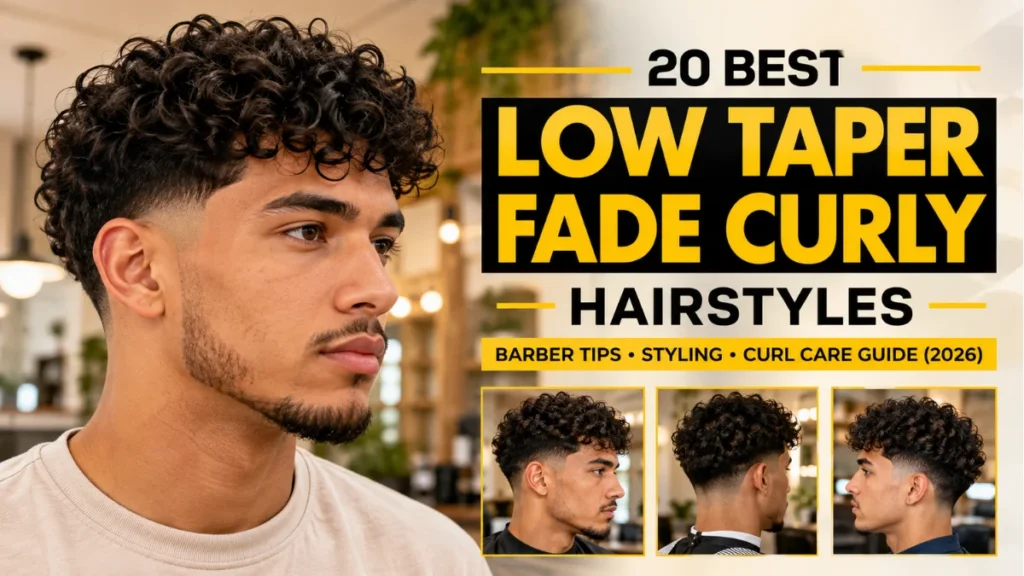
- For curly hair: The short sides make the curls on top more noticeable. Keep the curl length that suits your routine, and ask your barber to blend the sides without cutting into the shape of the curls.
- For thick hair: The fade removes bulk around the ears and lower sides. Your barber can also use scissors or texturizing techniques on top to reduce weight.
- For fine or thinning hair: A softer transition may help the sides look neat without creating too much contrast with the top. Tell your barber where your hair is thinning so the cut can be adjusted accordingly.
Which Face Shapes Suit a Low Fade Haircut?
Where the fade sits and how long you keep the top can change how balanced your face looks. There aren’t any hard rules here, but your face shape is a good place to start.
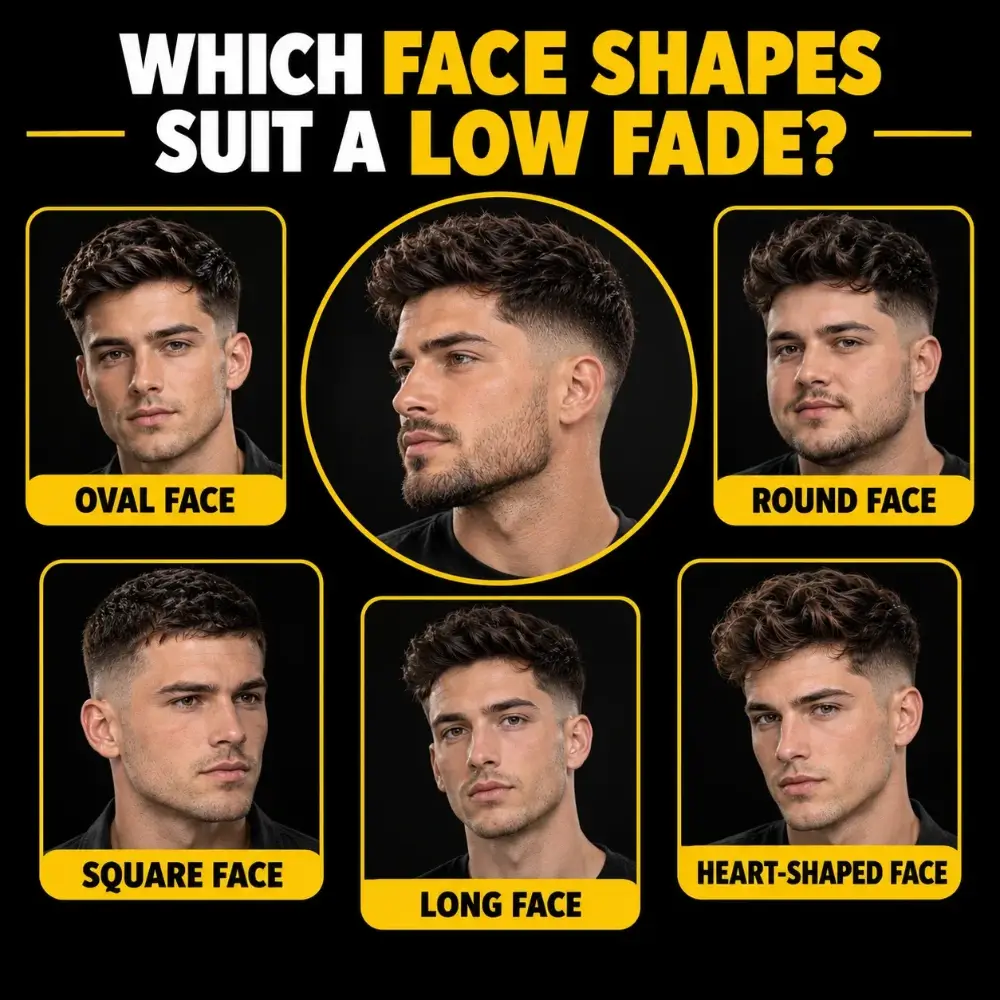
- Oval face: Most top styles work well, including a textured crop, quiff, and side part.
- Round face: Some extra height on top can create a longer-looking outline. Don’t add too much width at the sides if you don’t like that appearance.
- Square face: A short crop or crew cut can work with the strong angles of the jaw. The overall look is softened by a somewhat textured top.
- Long face: A shorter or moderately long top can keep the haircut balanced. A face that is too tall may appear longer.
- Heart-shaped face: A little texture and moderate volume can help balance a wider forehead with a narrower chin.
Think of these as handy starting points, not hard rules. Hair density, head shape, beard style, and personal preference also affect the result.
How to Choose the Right Low Fade Haircut for You?
Start by asking yourself three questions: how bold do you want to look, what is your hair type, and how much time will you spend styling?
Hair type matters first: Thick hair can feel heavy on top, so ask your barber to add texture or remove some weight. A shorter, textured top makes thin hair appear fuller. Curly hair needs enough length to form curls, usually 2 to 4 inches.
Next, pick a style: A classic low fade cut with a textured top suits most people and needs very little effort. If you want a sharper look, a low fade undercut keeps the top much longer than the sides, with a clear gap between the two instead of a smooth blend. You can slick that top back or push it to the side.
Finally, decide how short the bottom should be. A #1 guard is softer than skin, which provides a crisp, clean finish. A low taper fade is the gentlest option if your school or job has a strict dress code.
How to Ask Your Barber for This Cut?
The clearer you are, the better your barber can nail the look. Don’t just say “fade.” Tell them where it should start, how short you want the bottom, and how much length to leave on top.
You can say:
“I want a low fade that starts just over my ears and stays low at the back. Please blend the sides gradually, keep the top at its current length, and give me a natural neckline.”
Adjust the request to match your preferences:
- Instead of a mid or high fade, ask for a low fade.
- Bottom length: Specify whether you want a skin finish or some hair left at the base.
- Top length: Specify the amount of length you wish to maintain with your barber.
- Hairline: Describe your preference for a crisper lineup or a natural edge.
- Neckline: Choose a natural, tapered, or squared finish.
- Sideburns and beard: Ask for a clean connection if you have facial hair.
If at all possible, include one or two pictures that show the front, side, and back. A picture tells your barber the fade height and top shape way better than just saying the name of the cut.
Common Mistakes to Avoid
- Going too high on the first visit: A mid or high fade is hard to undo.
- Skipping the photo: The words “short on the sides” mean different things to different people.
- Ignoring cowlicks: Strong growth patterns at the crown or hairline change how the blend sits.
- Cutting curly hair too short on top: Length is necessary for curls to form; otherwise, the top appears flat.
- Waiting too long between cuts: The fade line disappears, and the cut looks grown out.
- Shaving the neckline at home with a razor: It is easy to push the line too high and ruin the shape.
How to Style a Low Fade?
Your top hair’s length and texture will determine how you style it. Most versions need only a few minutes, provided the haircut has the right shape.
- Start with clean hair: Wash it if it needs it, then pat it dry with a towel so it’s damp, not dripping.
- Pick a product that fits your look: Matte clay gives texture, a light cream keeps things natural, and pomade gives you more hold and shine.
- Grab the hair dryer if you need it: Blow the hair in the direction you want it to lie, and use a brush to lift the roots if you’re going for a quiff or side part.
- Shape the top: If you want it to look loose and disorganized, run your fingers through it; if you want it more tidy, use a comb.
- Finish with a light touch: A tiny bit of product tames flyaways without leaving your hair stiff.
If your hair is curly, grab a curl cream or whatever product works for your hair type. Work it into damp hair, then let your curls air-dry or use a diffuser on low heat. And skip the brush on dry curls, since it can wreck their natural shape.
How to Maintain This Haircut?
Schedule a touch-up with a barber every two to three weeks. In between, a few simple habits keep the cut looking clean:
- Wash your hair a couple of times a week, and add conditioner if it tends to run dry.
- Use a small trimmer to remove stray hairs on the neckline, but never go up into the fade.
- To keep the short sides smooth, use a gentle brush.
- If you get a skin fade, apply sunscreen to the exposed scalp.
- Avoid heavy, oily products on the short areas, as they can make the sides look greasy.
Recommended Hair Products for Low Fade Haircut by Dareen Veylo
The best styling product for a low fade depends on your hair type, hair length, and desired look. Hair wax adds texture, pomade gives a sleek finish, and matte clay creates a natural, textured style. Choose a product that holds your hair in place without making it greasy or stiff.
| Hair Product | Best For | Main Benefit |
|---|---|---|
| American Crew Fiber | Short crops and crew cuts | Adds texture and a firm hold with low shine |
| Ruffians Matt Clay | Textured tops and messy quiffs | Creates a matte finish with added definition |
| Blind Barber 101 Proof Classic Pomade | Side parts and slicked-back styles | Helps control hair and create a more defined shape |
| Curl-defining cream | Curly and coily tops | Helps define curls and manage frizz |
| Sea salt spray | Wavy hair and loose quiffs | Adds texture and grip for styling |
Pros and Cons
Before choosing this style, consider both its appearance and the work needed to keep it looking fresh.
Pros
- Works with many top styles, from a crew cut to a longer quiff.
- Keeps the hair neat around the neck and ears.
- Can suit straight, wavy, and curly hair.
- You can go for a soft, subtle blend or a sharper, skin-close finish.
- Pairs well with different beard lengths and shapes.
Cons
- Short sides show new growth relatively quickly.
- A skin finish may need more frequent touch-ups than a softer fade.
- Poor blending can leave visible lines or uneven patches.
- It can be challenging to keep the original shape at home.
- The final result depends on the barber’s technique and your hair’s natural growth pattern.
FAQ
Is a Low Fade the Same as a Taper?
Not exactly. A taper trims the hair gradually and keeps some length, mostly around the sideburns and neckline. A fade cuts shorter and can reach bare skin. A low taper style blends both for a soft, neat finish.
How Long Does a Low Fade Last?
A low fade usually looks fresh for one to two weeks. Most men get a touch-up every two to four weeks to keep the blend and edges neat.
Is a Low Fade Professional?
Yes. A low fade suits offices, interviews, and formal occasions. Pair it with a side part or short crop for a neat, professional look.
Can I Get a Low Fade with a Beard?
Yes. Your barber can blend the sideburns into your beard for a smooth transition. Keep the beard trimmed and the edges clean for a balanced look.
How Much Does a Low Fade Cost in the USA?
A low fade typically costs $20 to $40 in many US barbershops. Premium shops and big-city barbers may charge $40 to $60 or more. Tipping 15% to 20% is common.
Final Thoughts
A low fade allows you to select the top style that works best for you while keeping the sides and neckline short. You can pair it with curls, a textured crop, a quiff, a crew cut, or a side part without changing the basic fade position.
For the best result, choose a fade height that matches your preferred look, tell your barber how much length to keep, and consider how often you want to return for touch-ups. A clear reference photo and a few specific instructions can make it easier to get the finish you have in mind.