20 Best Low Taper Fade Fluffy Fringe Haircuts Barber Tips & Styling Guide (2026)

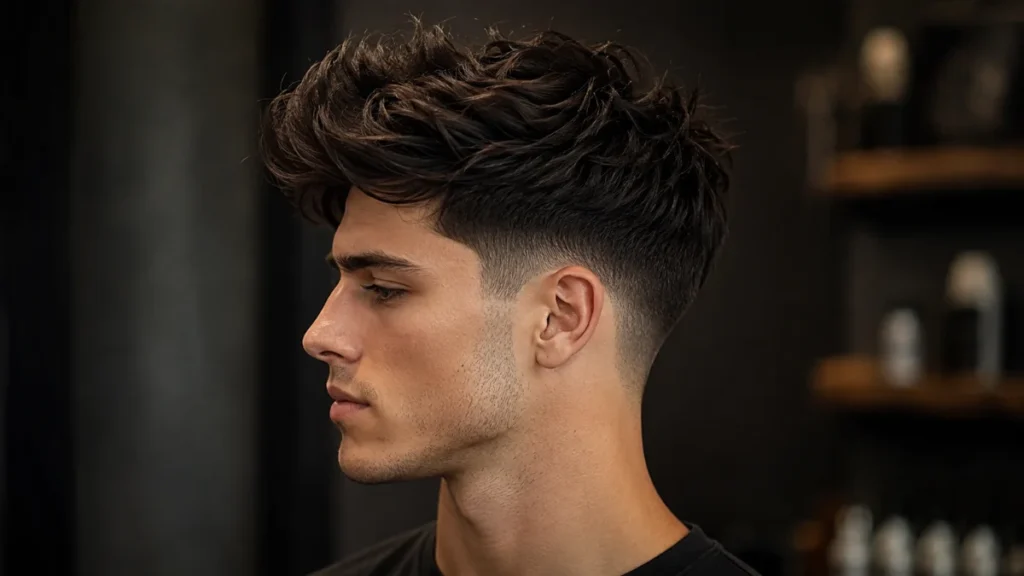
A low taper faded fluffy fringe combines a soft, voluminous top with a forward-moving fringe and a clean taper around the lower sides and neckline. Instead of cutting the top flat or forcing it into a rigid shape, the goal is to keep enough length for the hair to lift, separate, and fall naturally.
The appeal comes from the contrast. The fringe and top have movement and body, while the area around the ears and neckline stays controlled.
Getting the balance right is more important than simply asking for “fluffy hair.” Too little length will make the fringe fall flat, while too much uncontrolled bulk can make the sides look heavy and the top look disconnected.
What Is a Low Taper Fade Fluffy Fringe?
A low taper fade fluffy fringe is a men’s haircut where the taper stays relatively low around the sideburns, temples, and neckline while the top remains longer and airy. The front is shaped into a fringe that can sit forward, slightly split, or sweep naturally across the forehead.
The word fluffy refers more to the finish than to a specific cutting technique. The hair should have lift, softness, and separation rather than looking wet, greasy, or pressed tightly against the head.
The fringe is what gives the haircut its identity. It can be short and textured, longer and relaxed, rounded, parted, or slightly messy depending on your hair and the look you want.
The haircut usually has four defining elements:
- A low taper around the perimeter
- Longer hair through the top
- A forward or directional fringe
- Lightweight volume and natural movement
The exact shape should be adjusted for your hair texture, density, growth pattern, and forehead.
Why Is This Haircut Different From a Regular Fluffy Top?
A fluffy top by itself can become bulky around the sides and ears. Adding a low taper gives the haircut a controlled perimeter without forcing the entire haircut into a high-contrast fade.
The fringe also gives the volume somewhere to go. Instead of allowing the hair to expand randomly in every direction, the front is shaped to create a deliberate silhouette. That makes this style especially useful for men who want volume without looking unkempt.
What Makes a Fringe Look Fluffy?
Fluffy does not mean simply “long.”
A good fluffy fringe has enough length to move but enough structure that it does not collapse over the forehead. The hair should retain some separation between individual sections rather than forming one heavy curtain.
Several factors affect the result:
| Factor | What It Changes |
|---|---|
| Hair Density | Determines how much bulk needs removing |
| Hair Texture | Changes how the fringe bends and falls |
| Top Length | Controls volume and movement |
| Fringe Length | Determines forehead coverage |
| Hair Direction | Influences the natural fall |
| Product | Controls hold, separation, and softness |
| Blow-Drying | Can create lift and shape |
| Taper Height | Changes the overall silhouette |
This is why copying the exact length from somebody else’s haircut does not always produce the same result.
20 Trending Low Taper Fade Fluffy Fringe Styles for 2026
1. Classic Fluffy Fringe With Low Taper
The classic version keeps the top moderately long with a soft fringe that naturally moves toward the forehead. The taper stays restrained around the lower sides and neckline. This is the easiest version to adapt because it does not depend on a complicated design or extreme contrast.
Best for: Straight and slightly wavy hair
Finish: Soft, clean, natural
2. Textured Fluffy Fringe
A textured fringe has more separation between the ends instead of forming one solid front line. The top can be point-cut to create movement while retaining enough weight for volume. This works particularly well when your hair naturally becomes bulky or heavy at the front.
Best for: Thick straight or wavy hair
Finish: Choppy and relaxed
3. Messy Fluffy Fringe
The messy version is intentionally less structured. The fringe can fall in slightly different directions while the taper keeps the perimeter looking clean. The key is controlled messiness. If the entire top is allowed to expand without shaping, it can quickly look more bulky than textured.
Best for: Naturally thick hair
Finish: Casual and effortless
4. Long Fluffy Fringe
A longer fringe gives you more styling options. You can wear it forward, push it slightly to one side, or create a loose middle separation. The additional length is particularly useful if your hair tends to shrink or curl when it dries.
Best for: Medium-to-thick hair
Finish: Flowing and soft
5. Short Fluffy Fringe
A short fringe sits closer to the forehead and requires less styling. Keeping the top slightly fuller prevents the haircut from looking overly flat. The taper can remain subtle so the short fringe stays the main feature.
Best for: Straight and fine-to-medium hair
Finish: Compact and modern
6. Fluffy Fringe With Natural Hairline
Instead of creating an aggressively sharp line-up, the barber can preserve the natural front hairline. This gives the hairstyle a softer transition from the forehead into the fringe. It can also make the haircut easier to grow out because less of the natural hairline has been reshaped.
Best for: Men who prefer natural grooming
Finish: Soft and understated
7. Fluffy Fringe With Sharp Line-Up
For a more defined appearance, the front can be cleaned up with a line-up while the fringe remains textured behind the edge. The contrast between a precise hairline and loose volume can make the haircut look particularly crisp.
Best for: Dense hair and strong natural hairlines
Finish: Sharp and structured
8. Fluffy Fringe With Skin Taper
A skin taper takes the shortest section around selected areas of the perimeter extremely close. Keeping that transition low creates contrast without removing too much hair from the sides. This is a stronger variation than a shadow taper.
Best for: Men who want visible contrast
Finish: Clean and high-definition
9. Soft Taper With Airy Fringe
This version focuses on movement rather than a dramatic fade. The taper is blended softly, while the fringe remains light and lifted. It is especially suitable if you want a haircut that still looks natural several days after leaving the barbershop.
Best for: Straight and wavy hair
Finish: Airy and relaxed
10. Fluffy Fringe With Side Part
A side part gives the front a defined direction without eliminating the volume. Instead of forcing the fringe directly downward, the hair is encouraged to flow diagonally. This can be a useful option for men whose natural growth pattern already pushes the front toward one side.
Best for: Straight and wavy hair
Finish: Neat with movement
11. Fluffy Middle-Part Fringe
The front can also be separated loosely near the center, allowing the two sides of the fringe to fall away from the forehead. Unlike a rigid curtain style, the fluffy version keeps more lift and irregular texture.
Best for: Medium-to-long straight or wavy hair
Finish: Relaxed and flowy
12. Fluffy Fringe With Low Taper and Beard
A beard adds visual weight around the lower face, while the fringe creates volume above it. The low taper can help connect the haircut to the beard without creating a harsh break around the sideburn. The beard does not necessarily need a strong fade. A clean shape with a subtle transition can look more balanced.
Best for: Men with medium-to-full facial hair
13. Wavy Fluffy Fringe
Natural waves are excellent for this style because they create volume without requiring as much manipulation as completely straight hair. The barber should preserve the wave pattern instead of cutting the top so short that the texture disappears.
Best for: Wavy hair
Finish: Natural and textured
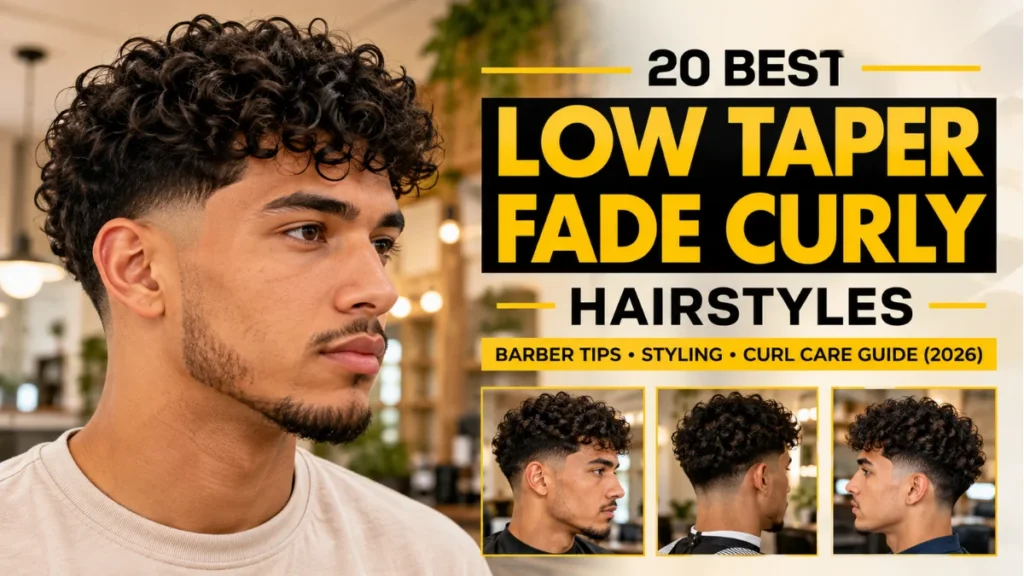
14. Curly Fluffy Fringe
Curly hair can create a fuller, more rounded fringe. The most important consideration is shrinkage: the hair may appear significantly shorter once completely dry. The taper should remain low enough to preserve the visual weight around the sides.
Best for: Loose-to-medium curls
Finish: Full and textured
15. Thick Hair Fluffy Fringe
Thick hair naturally creates the volume this haircut requires, but it can also become too dense. A skilled barber should remove enough internal weight to make the hair manageable without destroying the fullness that makes the style attractive.
Best for: Dense straight or wavy hair
Finish: Full but controlled
16. Fine Hair Fluffy Fringe
Fine hair can still be styled into a fluffy fringe, but the approach needs to be lighter. Heavy products or excessive layering can make the top look thinner. A blow dryer and lightweight volumizing product can help create lift without coating the hair.
Best for: Fine or low-density hair
Finish: Light and lifted
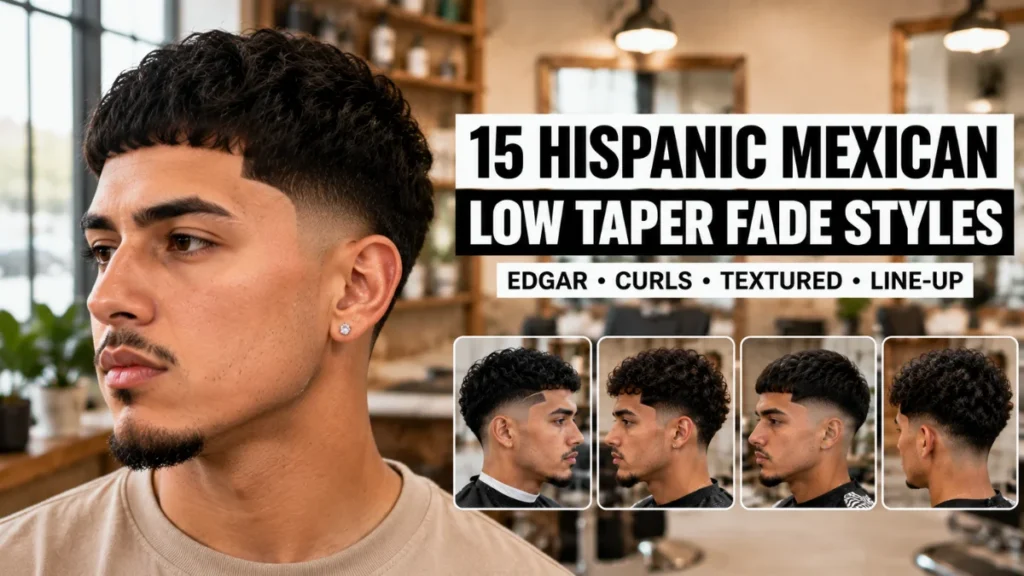
17. Fluffy Edgar-Inspired Fringe
This variation borrows the forward emphasis of an Edgar-style haircut while keeping the top softer and more voluminous. The front should not necessarily be cut into an extremely hard horizontal line. A textured edge can make the style feel less rigid.
Best for: Straight and thick hair
Finish: Bold and youthful
18. Fluffy Fringe With Textured Crop Shape
The top can be kept relatively compact while the fringe receives additional texture and separation. The low taper then cleans the lower perimeter. This is a good middle ground if you want the style without committing to a long, high-volume top.
Best for: Short-to-medium hair
Finish: Textured and practical
19. Blonde Fluffy Fringe With Low Taper
Color can make individual sections of the hair more visible, particularly when the top has natural movement. If you color the hair, remember that chemical processing can change how the hair feels and behaves, so the styling routine may need to be adjusted accordingly.
Best for: Straight and wavy hair
Finish: Bright and dimensional
20. Natural 2026 Fluffy Fringe
The most current approach is not necessarily the biggest or most exaggerated version. A softer fringe with visible movement and a low, understated taper creates a haircut that feels modern without appearing overworked. The goal is to make the hair look naturally full rather than artificially inflated.
Best for: Most hair types with sufficient top length
Finish: Modern, soft, and wearable
How Long Should Your Hair Be for a Fluffy Fringe?
There is no universal measurement because texture changes how much length is actually visible.
A straight-haired fringe can often sit forward with less length than a curly fringe. Wavy and curly hair may need additional length because the strands bend and contract instead of falling directly downward.
As a practical starting point:
| Desired Style | Approximate Top Length |
|---|---|
| Short Textured Fringe | Around 1.5–2 inches |
| Medium Fluffy Fringe | Around 2–3 inches |
| Fuller Fluffy Fringe | Around 3–4 inches |
| Long Flowing Fringe | 4 inches or more |
These are starting ranges rather than strict barber rules. Your barber should judge the actual hair instead of relying entirely on measurements.
Why Does Length Matter?
If the fringe is too short, it may stand upward or fall unevenly instead of creating the soft forward movement you want. If it is too long and dense, the front can become heavy and collapse over the forehead.
The ideal length is the point where your hair has enough weight to fall naturally but enough internal space to maintain lift.
Is a Low Taper or Low Fade Better for a Fluffy Fringe?
The difference comes down to how much side hair you want to preserve. A low taper keeps the transition concentrated around the perimeter. A broader low fade removes more of the side weight and creates a stronger contrast with the fluffy top.
| Feature | Low Taper | Low Fade |
|---|---|---|
| Side Fullness | More side fullness | Less side fullness |
| Contrast | Subtler contrast | Stronger contrast |
| Silhouette | Natural silhouette | More defined silhouette |
| Grow-Out | Easier soft grow-out | Fade becomes visible as it grows |
| Main Focus | Fringe remains the focus | Fade becomes more noticeable |
If your main goal is fluffy volume with a clean frame, keeping the taper low and conservative is usually the better starting point.
Who Should Get a Fluffy Fringe?
This haircut is especially suitable for people whose hair naturally has enough volume or can be lifted with relatively little styling.
It can work well if you have:
- Straight hair with natural body
- Slightly wavy hair
- Thick hair
- Medium-density hair
- Longer front hair
- A natural forward or diagonal growth pattern
That does not mean fine or flatter hair cannot wear it. You may simply need more styling assistance and a more carefully controlled cut.
Low Taper Fade Fluffy Fringe for Different Hair Types
Straight Hair
Straight hair gives you the most predictable fringe movement. The main challenge is creating lift without making the hair look stiff. Use a blow dryer to control the roots and finish with a light styling product.
Wavy Hair
Wavy hair naturally adds texture to the fringe. Avoid overworking the hair because excessive brushing can disturb the wave pattern. A lightweight cream or mousse can help keep the shape soft.
Curly Hair
Curly hair requires more attention to shrinkage and curl direction. The fringe may need additional length to achieve the same visual coverage as straight hair. Do not judge the final fringe only when the hair is wet.
Thick Hair
Thick hair can create excellent volume but may become bulky around the crown and temples. Strategic weight removal is more useful than simply taking the entire top shorter.
Fine Hair
Fine hair benefits from lighter products and controlled root lifting. Heavy waxes, oils, or excessive cream can make the hair separate too much and appear flatter. A textured but not overly layered fringe can help preserve visual density.
How to Ask Your Barber for This Haircut?
A good barber consultation should describe the shape, not just the trend name.
You could say:
“I want a low taper around the sideburns and neckline, keeping the taper low. Leave enough length on top for a fluffy fringe that falls naturally toward my forehead. I want volume and texture without making the front too heavy.”
Then explain the finish you prefer:
- Natural: Keep the hairline soft.
- Sharp: Add a clean line-up.
- Textured: Add separation through the fringe.
- Full: Preserve more weight on top.
- Light: Remove some internal bulk without making it thin.
- Messy: Keep the ends irregular and movement-focused.
A reference photo is still useful, but tell your barber what you like about the picture. The fringe length, taper height, top volume, and hairline are separate decisions.
How Should a Barber Shape the Fringe?
The fringe should be considered separately from the taper. First, the barber needs to understand how your front hair naturally falls. Some men have a strong forward direction, while others have a cowlick or a split pattern that changes how the fringe behaves.
The top can then be shaped to create the desired volume. Point cutting or other controlled texturizing methods can create movement, while excessive thinning can remove too much body.
The final edge should be checked against the natural fall of the hair rather than forcing every strand into a perfectly symmetrical line.
How to Get Fluffy Hair With a Fringe?
The haircut gives you the foundation, but styling creates the fluffy finish.
- Start With Damp Hair: After washing, gently towel-dry your hair until it is damp rather than dripping wet. Avoid aggressively rubbing the hair with a towel. That can create unnecessary frizz and disrupt the direction you want the fringe to take.
- Apply a Lightweight Pre-Styler: A volumizing mousse, lightweight styling cream, or appropriate pre-styler can provide support without making the hair heavy. Start with a small amount and distribute it evenly.
- Blow-Dry the Roots: Use your fingers to lift the roots while directing the fringe forward. For a softer finish, keep the airflow moderate and avoid pressing the hair flat against your scalp.
- Shape the Fringe: Once the roots have some lift, use your fingers to guide the front into the desired position. Do not repeatedly comb it flat if the goal is a fluffy texture.
- Finish Lightly: Use a small amount of matte cream, lightweight paste, or texture product if additional separation is needed. The finish should still feel movable. If the hair becomes stiff or greasy, you have probably used too much product.
How to Make a Fluffy Fringe Without Making It Look Puffy?
There is an important difference between volume and bulk. Volume gives the hair lift and movement. Bulk makes the hair occupy too much space without a controlled shape.
To avoid a puffy result:
- Keep the sides controlled.
- Remove unnecessary weight from dense areas.
- Maintain enough length through the fringe.
- Lift the roots rather than simply adding product.
- Avoid heavy products.
- Shape the top according to your head and hair density.
- Keep the taper low enough to support the top.
The objective is a rounded, intentional silhouette, not hair that simply sticks outward.
Best Products for a Fluffy Fringe
The best product depends on your hair rather than the haircut name.
| Product | Best Use |
|---|---|
| Volumizing Mousse | Fine or flat hair |
| Lightweight Styling Cream | Soft control |
| Matte Paste | Texture and separation |
| Texture Spray | Airy movement |
| Light Clay | Stronger matte definition |
| Curl Cream | Curly or wavy fringe |
| Heat Protectant | Frequent blow-drying |
Avoid automatically reaching for a heavy pomade. A fluffy fringe usually looks better when the hair retains movement.
How to Maintain the Haircut?
The fringe and taper grow at different visual rates. The top may continue looking good as it gets longer, while the taper loses its clean definition around the ears and neckline.
If you want the haircut to remain crisp, schedule a cleanup when the perimeter starts becoming noticeably heavy. If you prefer a softer appearance, you can allow more growth before returning to the barber.
Between Barber Visits
- Keep the fringe clean and conditioned according to your hair needs.
- Avoid excessive heat.
- Use lightweight styling products.
- Do not repeatedly cut the fringe yourself.
- Keep the sideburn and neckline area tidy.
- Refresh the volume with water rather than piling on more product.
- Sleep in a way that does not unnecessarily crush the hairstyle if volume is important to you.
Best Face Shapes for a Fluffy Fringe
- Oval Face: An oval face gives you plenty of flexibility. You can wear a shorter fringe, longer fringe, side-directed fringe, or fuller top.
- Round Face: A little controlled height can help create more vertical balance. Avoid making the fringe excessively wide at the sides.
- Square Face: A textured, softer fringe can complement strong facial angles. You can also keep the taper clean without making it excessively sharp.
- Long Face: A fuller forward fringe can visually reduce the amount of forehead and add width around the upper face.
- Heart-Shaped Face: A textured fringe can soften the forehead area while the low taper keeps the sides controlled.
Face shape is only a starting point. Your forehead height, hairline, density, and natural growth pattern can be more important when deciding the exact fringe.
Common Mistakes With a Fluffy Fringe
- Cutting the Fringe Too Short: If you want the fringe to fall forward, cutting it too short can eliminate the weight needed for that movement.
- Making the Taper Too High: A high fade can remove the side fullness that balances a fluffy top.
- Removing Too Much Bulk: Thinning the hair aggressively can make a thick top easier to manage initially but may also reduce the body needed for the fluffy finish.
- Using Too Much Product: Heavy product can turn soft volume into greasy or stiff hair.
- Ignoring the Cowlick: A cowlick can completely change how the fringe sits. Your barber should work with the natural direction rather than fighting it.
- Making the Fringe Too Perfect: A fluffy fringe generally benefits from some natural irregularity. An overly precise front can remove the relaxed character of the style.
- Forgetting the Crown: The fringe may look excellent from the front while the crown becomes bulky from the side. The entire top needs to be considered as one shape.
Low Taper Fade Fluffy Fringe vs. Textured Fringe
These styles overlap, but they are not identical. A textured fringe emphasizes separation and irregular movement. A fluffy fringe emphasizes airiness, volume, and softness.
You can have a fluffy fringe with texture, but not every textured fringe is fluffy.
| Feature | Fluffy Fringe | Textured Fringe |
|---|---|---|
| Main Goal | Volume and softness | Separation and movement |
| Appearance | Airy | Choppy or defined |
| Product | Lightweight | Matte texture products |
| Top Shape | Fuller | Often more controlled |
| Fringe | Soft and lifted | Separated and irregular |
Many modern cuts combine both characteristics.
Low Taper Fade Fluffy Fringe vs. Curtain Fringe
A curtain fringe generally separates around the center and falls toward both sides. A fluffy fringe can be worn forward without a central split.
If your natural hair wants to separate, a curtain-inspired version may require less manipulation. If it naturally falls forward, a traditional fluffy fringe may be easier.
FAQ
What is a low taper fade fluffy fringe?
It is a men’s haircut featuring a low taper around the lower sides and neckline with longer, voluminous hair on top and a fringe that falls toward the forehead. The fluffy finish comes from the top’s length, texture, and styling rather than from the taper itself.
How long should the fringe be?
It depends on your hair texture and desired result. Around 2–3 inches can provide a useful starting point for a medium textured fringe, while fuller or longer versions may need additional length.
Is a fluffy fringe good for thick hair?
Yes, but thick hair needs controlled weight management. The barber should preserve enough density for volume while removing unnecessary bulk so the top does not become oversized.
Does a fluffy fringe work with a receding hairline?
It depends on the hairline and how much coverage you want. A textured forward fringe can provide some forehead coverage, but the haircut should follow the existing hairline rather than attempting to disguise it unnaturally.
Can I style a fluffy fringe without a blow dryer?
Yes, especially if your hair naturally has volume. Apply a lightweight product to damp hair and shape it with your fingers. However, a blow dryer makes it easier to create root lift.
Does this haircut work for school or professional settings?
It can, depending on how it is finished. A controlled low taper with moderate volume and a natural fringe is easier to adapt to conservative settings than an exaggerated, heavily styled version.
Conclusion
The low taper fade fluffy fringe works because it balances two opposite qualities: controlled edges and relaxed volume. The taper cleans up the perimeter while the fringe gives the haircut personality.
The most important part is getting the proportions right. Your barber should consider your hair density, texture, forehead, natural growth pattern, crown, and the amount of styling you are realistically willing to do.
For a first appointment, ask for a low taper that stays low around the sideburns and neckline, enough top length for a forward fluffy fringe, and controlled texture without excessive thinning. That gives your barber a clear foundation while leaving room to adapt the haircut to your actual hair.
For 2026, the strongest version is not necessarily the biggest one. Soft volume, natural movement, a low controlled taper, and a fringe that looks touchable rather than stiff give this haircut a modern finish that can work beyond a single trend cycle.