Low Taper Fade Curly Hair for Men: 20 Best Styles, Barber Tips & Care Guide (2026)

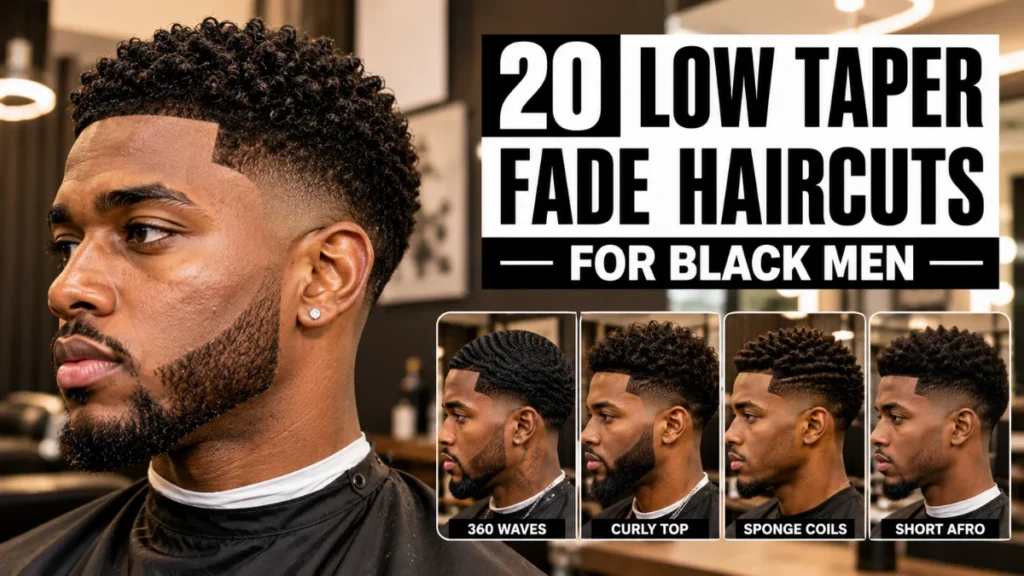
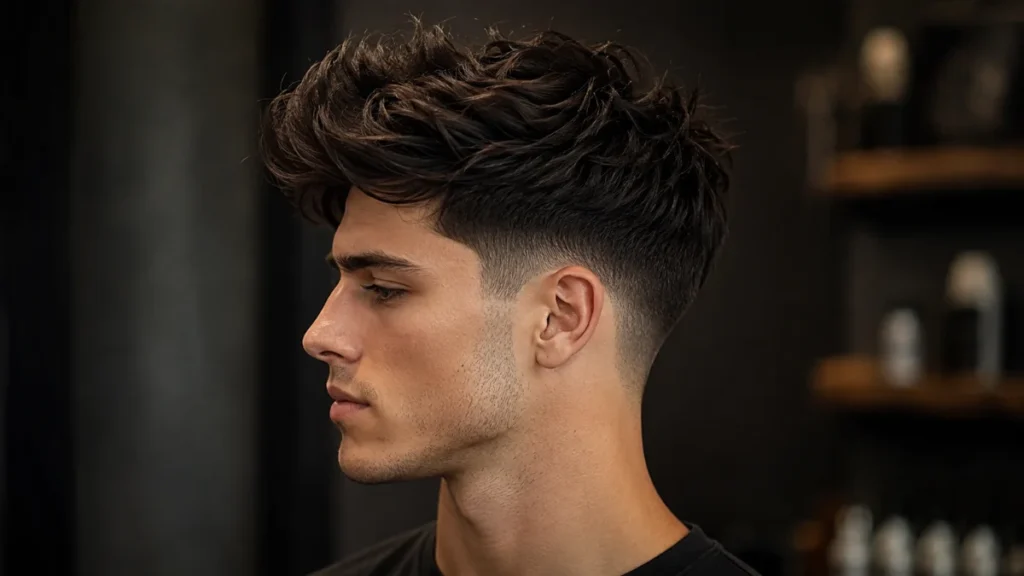
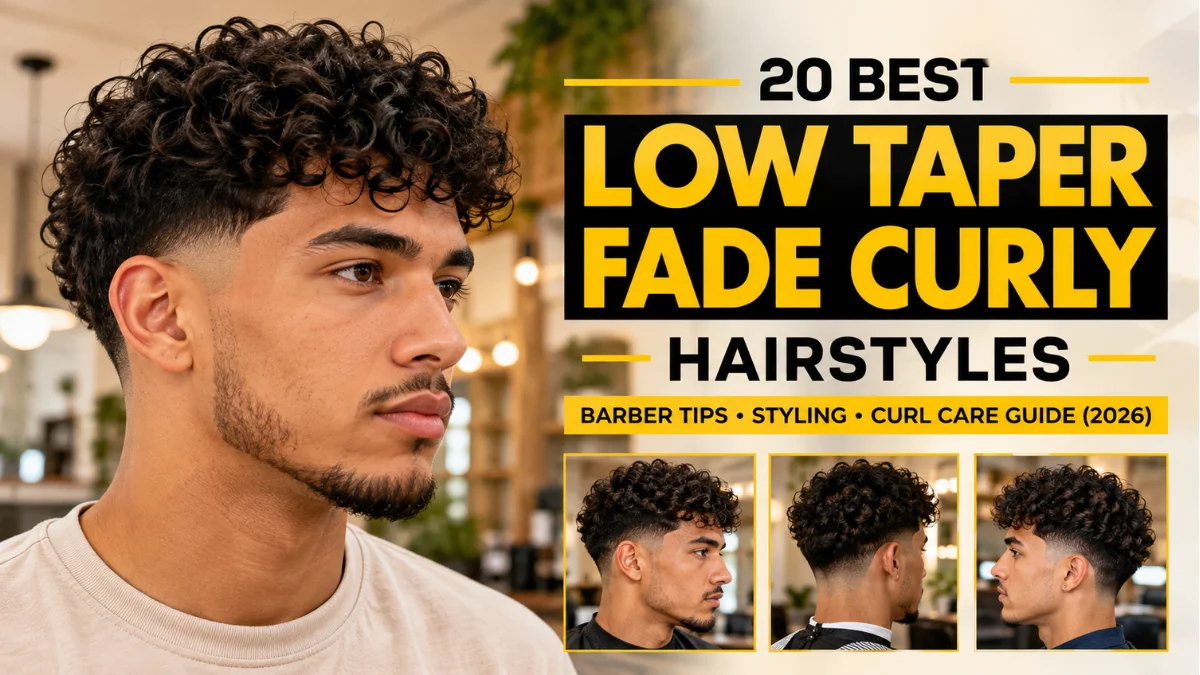
A Low Taper Fade Curly Hair haircut is a clean way to shape curly hair without taking away the texture that makes it distinctive. The taper stays low around the temples, sideburns, and neckline, while the curls on top keep their natural volume and movement.
That combination makes the haircut unusually flexible. You can wear short curls, a textured fringe, longer ringlets, a curly crop, a rounded top, or even a curly mullet while keeping the perimeter neat.
The key is not simply asking for “a low taper.” Curly hair shrinks, expands, and changes shape as it dries, so the barber needs to consider your curl pattern, density, growth direction, and desired length before deciding how much to remove.
What Is a Low Taper Fade With Curly Hair?
A low taper gradually reduces the hair around the lower temple area, sideburns, and neckline while leaving more of the surrounding side hair intact. With curls on top, this creates a controlled frame without removing the natural fullness that gives curly hair its shape.
Unlike a higher fade, the transition does not need to travel far up the side of the head. That matters because removing too much side weight can change the way curls sit and may make the top appear disproportionately large.
The finished haircut can be subtle or high-contrast depending on how short the taper gets. You can have a soft clipper taper, a close taper, or a skin-level finish while keeping the same low placement.
The Main Characteristics
- Low taper around the temples and neckline
- Curly or wavy texture preserved on top
- More side weight than a mid or high fade
- Optional line-up
- Optional beard blend
- Flexible top length
- Minimal styling on the sides
- Natural texture as the main feature
The best result comes from shaping the curls rather than simply cutting them shorter.
Why Curly Hair Works So Well With a Low Taper?
Curly hair already has movement and volume. The taper gives that volume a cleaner boundary without forcing the entire haircut into a highly structured shape.
The low placement is also useful when you want to keep fullness around the sides. A higher fade removes more of that surrounding weight, which can make the curl mass look more separated from the head.
Another advantage is styling flexibility. You can wear the curls forward, upward, loosely to one side, or naturally rounded without changing the basic taper.
Current 2026 men’s grooming coverage is also leaning toward more natural, textured finishes rather than overly polished hair that looks heavily constructed.
20 Trending Low Taper Fade Curly Haircuts for 2026
1. Classic Curly Low Taper
This is the foundation of the style: natural curls on top, a controlled taper around the perimeter, and no unnecessary design elements. Keep enough length for the curls to form properly. The barber can clean the temple and neckline while preserving the natural shape through the sides.
Best for: Most curl patterns
Finish: Natural and versatile
2. Low Taper With Short Curly Top
A shorter curly top is easier to manage while still showing texture. This works especially well if you want a haircut that needs little morning styling. Your barber should leave enough length for the curl pattern to remain visible after drying.
Best for: Short curls and dense hair
Maintenance: Low
3. Low Taper With Curly Fringe
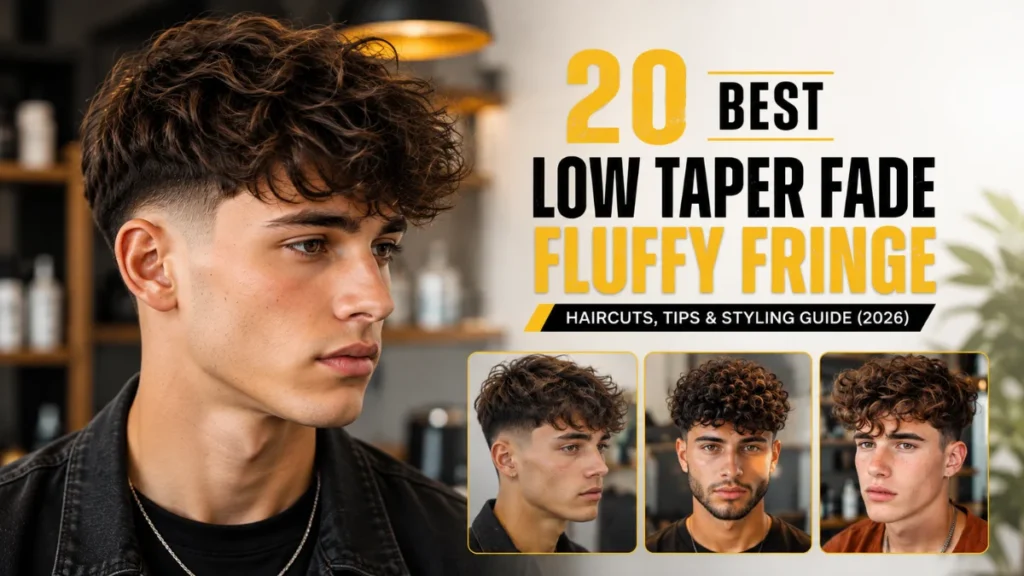
A curly fringe brings the texture forward toward the forehead. It can create a relaxed, youthful appearance without requiring the sides to be heavily faded. Determine the fringe length with shrinkage in mind. A curl that looks long when wet may sit considerably higher once completely dry.
Best for: Loose and medium curls
Face shapes: Oval, diamond, heart
4. Low Taper With Defined Ringlets
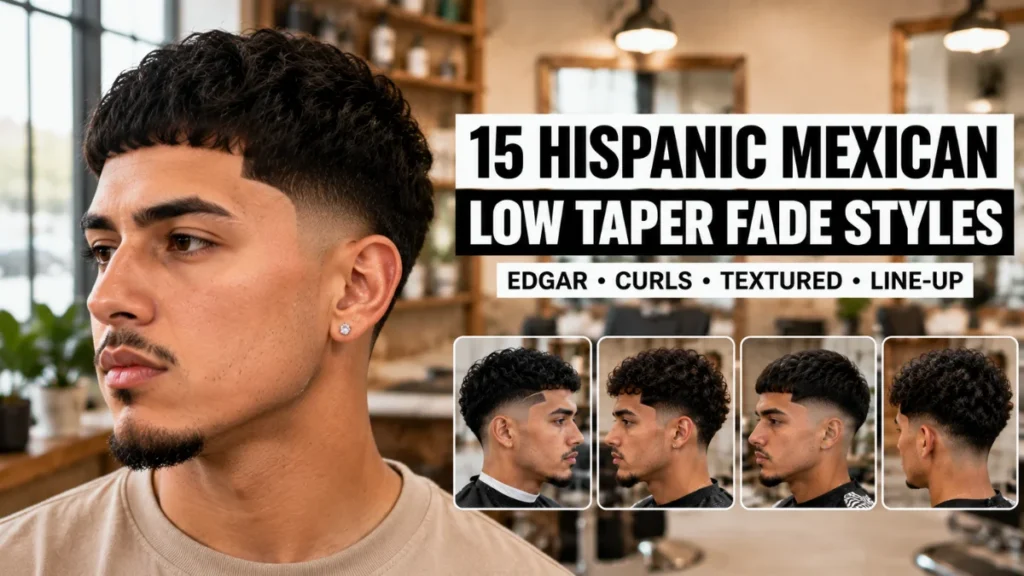
Defined ringlets need enough length to complete their natural curl pattern. Cutting too much from the top can turn individual curls into a shorter, less defined texture. The taper should therefore remain secondary to the curl pattern.
Best for: Defined 3A–3C-type curls
Styling: Curl cream and gentle drying
5. Low Taper With Textured Curly Crop
The curly crop keeps the top relatively compact while using texture to create movement. The low taper makes the sides look controlled without turning the haircut into a dramatic fade. This is a strong choice if you want something modern but practical.
Best for: Short-to-medium curls
Finish: Textured and casual
6. Low Taper With Voluminous Curls
If your hair naturally creates significant volume, there is no reason to flatten it to achieve a clean haircut. A low taper can frame the volume while allowing the curls to expand naturally. The barber should shape the overall silhouette rather than aggressively thinning the curls.
Best for: Dense curly hair
Finish: Full and natural
7. Low Taper Curly Fringe With Line-Up
Combining a textured fringe with a defined line-up creates a stronger contrast between the soft curls and sharp edges. The line-up should follow your actual hairline. Pushing it too far backward can make the haircut look unnatural as it grows out.
Best for: Thick curls
Finish: Sharp but textured
8. Low Taper With Curly Caesar
The curly Caesar keeps the top short and forward while maintaining enough texture to avoid looking completely uniform. A low taper adds definition around the temples and neckline without making the sides excessively bare.
Best for: Short, dense curls
Maintenance: Easy
9. Low Taper Curly Blowout
A curly blowout emphasizes volume and height rather than compact definition. The taper creates a clean foundation around the lower sides while the top expands upward and outward. Use a diffuser or controlled drying technique if you want to maintain volume without creating unnecessary frizz.
Best for: Medium-to-long curls
Finish: High volume
10. Low Taper With Curly Top and Beard
A beard can make a curly taper feel more connected from the temples through the jawline. The transition can be subtle rather than requiring a heavily faded beard. Your barber should match the taper to your beard density so the sideburn area does not look noticeably thinner than the rest of the facial hair.
Best for: Medium-to-full beards
11. Low Taper With Curly Slick Back
A slick-back does not have to eliminate the natural curl pattern. With enough length, curls can be directed backward while maintaining their texture. Use a lightweight styling cream for a softer finish or a stronger product if you need more control.
Best for: Longer curls
Finish: Polished but textured
12. Low Taper With Curly Side Part
A natural side part can give curly hair more direction without making it look rigid. The curls can fall toward one side while the taper keeps the lower perimeter clean. A hard part is optional, but the natural version usually requires less maintenance.
Best for: Loose-to-medium curls
13. Low Taper With Curly Mohawk
A curly mohawk gives the haircut a stronger silhouette by concentrating volume through the center. A low taper keeps the overall cut less aggressive than a high or burst fade. This works best when your curls have enough density to maintain a central shape.
Best for: Dense curls
Finish: Bold and expressive
14. Low Taper With Curly Mullet
The curly mullet keeps additional length toward the back while the low taper cleans the temples and neckline. The transition between the sides and back needs careful planning because the taper should not accidentally remove the length that creates the mullet silhouette.
Best for: Medium-to-long curly hair
Finish: Retro-inspired with a modern shape
15. Low Taper With Curly High Top
A high curly top creates noticeable vertical volume. The low taper gives the bottom of the haircut a cleaner boundary while leaving the upper shape prominent. The barber should consider the width of the curls as well as their height so the haircut does not become excessively top-heavy.
Best for: Dense, high-volume curls
16. Low Taper With Long Curly Top
Longer curls give you considerably more styling options. You can wear them loose, pushed backward, directed forward, or gathered into a different style. The taper can remain very subtle so the haircut continues to look like a longer curly style rather than a fade-dominated haircut.
Best for: Medium-to-long curls
17. Low Taper With Curly Undercut-Inspired Top
This variation creates more separation between the curly top and shorter sides without moving the taper excessively high. It works best when the contrast is intentional. Ask your barber to preserve the weight necessary to connect the top and sides naturally.
Best for: Thick curls
Finish: Defined contrast
18. Low Taper With Messy Natural Curls
Not every curly haircut needs perfectly separated ringlets. A slightly undone texture can create a more relaxed and contemporary finish. This direction fits the broader 2026 preference for natural-looking texture rather than overly controlled styling.
Best for: Naturally textured curls
Finish: Relaxed and effortless
19. Low Taper With Curly Afro Texture
A fuller curly or coily top can be shaped into a rounded silhouette while the low taper cleans the lower perimeter. The barber should focus on maintaining the desired top shape rather than simply taking bulk away.
Best for: Dense curls and coils
Finish: Full and natural
20. Soft Low Taper With Natural Curls
This is the understated version. The taper remains soft, the natural hairline is preserved, and the curls receive most of the attention. It is a good choice if you want the haircut to grow out without immediately looking disconnected from the sides.
Best for: Men who prefer subtle grooming
Finish: Natural and low contrast
Which Curl Type Works Best With a Low Taper?
There is no single curl pattern that “works best.” The haircut can be adapted to loose waves, defined ringlets, tight curls, and coily textures, but the top length and cutting approach should change with the hair.
Loose Waves and Wavy-Curly Hair
Keep enough length for the natural wave to form. A textured top, fringe, side part, or brushed-back style can work particularly well.
Loose to Medium Curls
These textures provide enough definition for ringlets, curly fringes, crops, and medium-length styles. Avoid cutting the top so short that the curl loses its shape.
Tight Curls
Tighter curls can create excellent density even at shorter lengths. The barber should pay attention to shrinkage and avoid assuming that the wet length represents the final dry shape.
Coily Hair
A low taper can frame coily texture without removing the fullness from the top. Depending on length, you can build anything from a short textured crop to a fuller natural shape.
How Much Length Do You Need on Top?
The answer depends on the curl pattern and the hairstyle you want. For a short curly crop, you can work with considerably less length than you would need for defined ringlets or a curly fringe. Longer styles need enough hair for the curls to bend, separate, and fall into their intended direction.
Instead of choosing a number based solely on a chart, show your barber your target hairstyle and explain how much length you are willing to lose. A useful rule is simple: the more specific the curl shape you want, the more important top length becomes.
Low Taper Fade vs. Low Fade for Curly Hair
The distinction matters because curly hair can become visually larger when the surrounding side weight is removed.
A low taper generally concentrates the shortest area around the perimeter. A low fade can reduce more of the sides and back, creating a stronger transition.
| Feature | Low Taper | Low Fade |
|---|---|---|
| Taper/Fade Area | More localized | Broader |
| Side Fullness | More preserved | More reduced |
| Curl Silhouette | Softer | Stronger contrast |
| Grow-Out | More subtle | More noticeable |
| Overall Character | Natural | Sharper |
| Good For | Preserving texture | Strong fade contrast |
If your goal is to keep your curls looking full while simply cleaning up the edges, the low taper is usually the more conservative option.
Best Low Taper Curly Hair by Face Shape
Round Face
Consider a little extra height or directional movement on top. A curly quiff, textured top, or slightly taller curl shape can add vertical balance.
Oval Face
You have plenty of flexibility. Short curls, medium ringlets, fringe, slick-back curls, and fuller tops can all be adapted.
Square Face
A low taper with a defined hairline can emphasize the natural angles of a square face. Softer curls can also reduce the need for an overly sharp finish.
Long Face
Be careful about adding excessive height. A curly fringe or medium-width top can help keep the proportions balanced.
Diamond Face
Moderate volume through the top can work well, while excessive width near the cheekbone area may not be as flattering.
Face shape is only one consideration. Hair density, forehead shape, curl direction, and personal preference can change the best approach.
How to Ask Your Barber for a Low Taper Fade With Curly Hair?
Do not stop at “I want a low taper with curls.” Give your barber enough information to understand the shape you actually want.
Try this:
“I want a low taper around the temples and neckline. Keep the taper low and leave the sides fairly full. I want to keep my curls on top at about this length, and I want the curl pattern preserved. Keep the hairline [natural/sharp] and the neckline [natural/clean].”
Then show your reference photo.
Tell Your Barber:
- How much length you want on top
- Whether you want the curls defined or natural
- How low you want the taper
- Whether you want a skin or shadow finish
- Whether you want a line-up
- Whether you want a beard blend
- Whether you want the neckline natural or tapered
If your hair has significant shrinkage, tell your barber how much it changes when dry.
Barber Tips for Cutting Curly Hair
Curly hair should not be approached exactly like straight hair. The final shape depends on how individual curls contract and group together.
- Don’t Remove Too Much Length: Taking too much from a curly top can destroy the shape you were trying to create. If the goal is defined curls, length is part of the haircut, not excess hair that automatically needs to be removed.
- Be Careful With Thinning: Aggressive thinning can sometimes disrupt curl grouping and make the finished hair look less uniform. Weight removal should be intentional and based on the desired silhouette.
- Check the Hair Dry: Curly hair can look very different after drying. A shape that appears balanced when wet may contract unevenly once the curls return to their natural state.
- Follow the Growth Pattern: The curls may not point in the same direction across the entire head. Your barber should work with those changes instead of forcing everything into one direction.
- Use the Taper to Frame the Curls: The taper should support the top rather than compete with it. If the fade becomes the most noticeable part of the haircut, the taper may have been taken too high or too aggressively for your desired style.
Styling Low Taper Fade Curly Hair
The haircut creates the shape, but your styling routine determines how the curls actually look day to day.
- Start With Damp Hair: After washing or refreshing your curls, gently remove excess water. Avoid rough towel drying because excessive friction can disturb the curl pattern and increase frizz.
- Apply a Lightweight Product: Use a curl cream, leave-in conditioner, mousse, or gel depending on the level of definition and hold you need. Start with a small amount. You can always add more, but too much product can make curls heavy or stiff.
- Shape the Curls: Use your fingers to encourage the existing curl pattern. Scrunching can help bring out definition in many curl types.
- Let Them Dry: Air drying can create a softer finish. A diffuser can provide more volume and speed up drying when used with appropriate heat and airflow.
- Avoid Constant Touching: Once the curls are set, repeatedly running your hands through
How to Maintain Curly Hair Between Barber Visits?
The taper and the curls need different types of maintenance. The taper mainly needs visual cleanup as it grows. The curls need appropriate cleansing, conditioning, moisture, and styling depending on the individual’s hair and scalp.
Simple Routine
- Cleanse according to your scalp and hair needs.
- Condition regularly enough to keep the hair manageable.
- Use a curl-friendly styling product.
- Avoid excessive product buildup.
- Detangle gently when needed.
- Minimize unnecessary friction while drying.
- Protect longer curls during sleep if that works for your routine.
- Avoid repeatedly reshaping the hairline at home.
Curly hair does not need to be overloaded with products to look defined. Often, the better approach is using fewer products and learning how much your hair actually needs.
How Often Should You Get a Low Taper Cleanup?
There is no universal schedule because hair grows at different rates and people have different standards for sharpness.
If you like crisp temples and a clearly defined neckline, you will probably notice the need for a cleanup sooner. If you prefer a softer, natural appearance, you can allow more growth.
The advantage of keeping the taper low is that the grow-out can be relatively subtle when compared with a more extensive high-contrast fade.
2026 Trends for Low Taper Fade Curly Hair
The strongest 2026 direction is natural texture with controlled structure. Current men’s grooming coverage highlights less rigid, more relaxed texture, including curls that look intentionally imperfect rather than heavily sculpted.
For curly hair, that means the taper does not need to be the star of the haircut. The cleaner approach is to use the taper as a frame while allowing the natural curls to determine the character of the top.
Common Mistakes to Avoid
- Cutting Curly Hair Too Short: Shortening the top excessively can remove the length needed for curls to form properly.
- Fading Too High: A high transition can strip away the side weight that helps frame a curly top.
- Thinning Without a Clear Reason: Removing too much internal weight can change how curls group together. Ask your barber what they are removing and why if thinning is being considered.
- Ignoring Shrinkage: Always remember that the dry haircut is the haircut you will actually wear.
- Overusing Product: More product does not necessarily mean better curls. Too much can weigh down the hair or make it feel coated.
- Using a Straight-Hair Reference: A straight-haired reference does not always communicate how a curly haircut should be shaped. Whenever possible, show a photo with a similar curl pattern and comparable length.
- Cutting Your Own Taper: The top may be relatively easy to maintain with clippers, but blending the temples and neckline evenly is much harder. Uneven taper work is especially visible when the top is curly, and the perimeter is meant to be clean.
Pros and Cons
| Pros | Cons |
|---|---|
| Preserves natural curl volume | Requires correct curl-aware cutting |
| Cleans the perimeter | Curls can hide uneven blending |
| Works with many curl lengths | Shrinkage can make length difficult to judge |
| Easy to customize | Very short tapers require more frequent cleanup |
| Supports natural styling | Excessive thinning can disrupt the curl pattern |
| Works with beards and line-ups | Product choice matters for definition |
FAQ
Is a low taper fade good for curly hair?
Yes. A low taper can clean up the temples and neckline while leaving the curly top relatively full. It is especially useful when you want to preserve natural texture rather than remove large amounts of side weight.
What length should curly hair be for a low taper?
There is no single required length. Short curls can work with a compact crop, while ringlets, fringes, and high-volume styles require more length. Choose the length based on the curl shape you want.
Does a low taper work with tight curls?
Yes. Tight curls and coils can pair very well with a low taper. The barber should account for shrinkage and avoid taking away more top length than the desired style requires.
Is a low taper better than a high fade for curly hair?
It depends on the desired silhouette. A low taper preserves more surrounding fullness, while a high fade creates greater contrast and removes more side weight.
Does a low taper make curls look better?
The taper does not change the curl pattern itself. It can make the overall haircut look more defined by cleaning the surrounding areas and creating contrast around the natural texture.
What product is best for curly low taper hair?
There is no universal best product. Curl cream, leave-in conditioner, mousse, or gel can all be useful depending on the curl pattern and desired hold. Start with a lightweight product and adjust based on how your hair responds.
Final Thoughts
A Low Taper Fade Curly Hair style works because it solves two different problems at once: it gives the perimeter a clean shape while allowing the curls to remain the main feature.
The best haircut is not necessarily the one with the sharpest fade. It is the one where the taper height, top length, curl pattern, density, hairline, and face shape work together.
If you are getting the haircut for the first time, show your barber a reference with a similar curl pattern and explain how much length you want to keep. For a natural 2026 look, keep the taper low, preserve your curl structure, avoid unnecessary thinning, and let the texture do the talking.