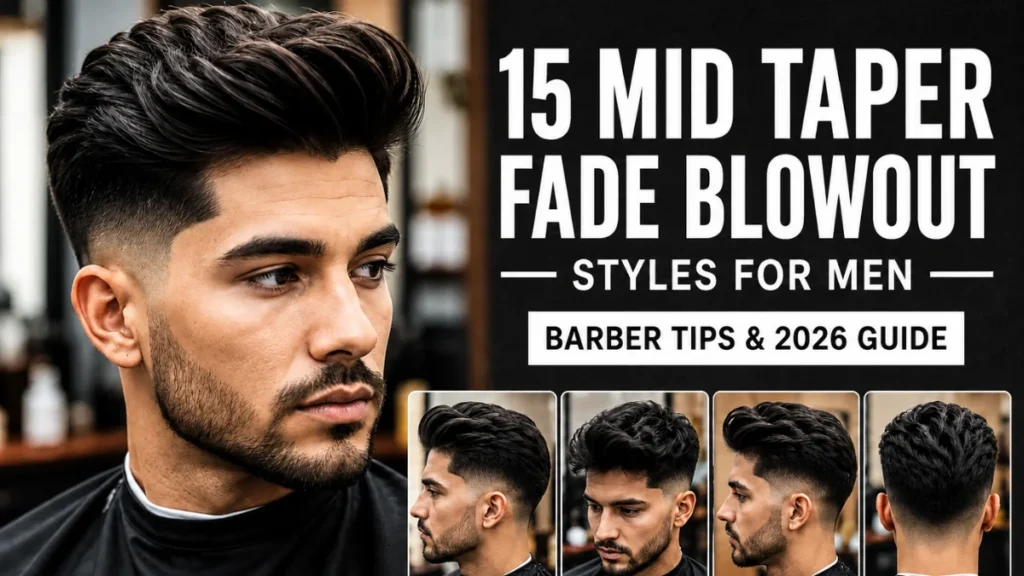
Mid Taper Fade With Textured Fringe: 20 Trending Styles & Complete Barber Guide

A mid taper fade with textured fringe combines a controlled taper around the temples and neckline with a forward-moving top that has separation, uneven movement, and natural-looking texture. Instead of making the entire haircut extremely short, the barber keeps enough length toward the front to create a fringe that can be shaped around the forehead.
This combination works because the two parts serve different purposes. The taper keeps the perimeter clean and structured, while the fringe adds personality through length, direction, and texture.
In 2026, fringe-based men’s haircuts are receiving strong attention, with current barbering coverage emphasizing flexible lengths, natural movement, and personalized finishes rather than one rigid version of the style.
What Is a Mid Taper Fade With Textured Fringe?
A mid taper gradually reduces the hair around the temple and sideburn area while keeping more of the surrounding side structure than a broad fade. The transition continues toward the neckline, creating a cleaner outline without necessarily removing most of the side panel.
The textured fringe is the longer front section that falls toward the forehead. Texture can come from the way the barber cuts and removes weight from the top, as well as from how the hair is styled afterward.
The key distinction is that texture doesn’t mean messy hair. A good textured fringe has intentional separation and movement while still maintaining an overall shape.
Why This Haircut Works?
The haircut creates contrast without relying entirely on a skin-tight finish. The sides look controlled, but the front retains enough length to frame the face.
It is also highly adaptable. The same basic haircut can be made shorter and cleaner, longer and more relaxed, or more heavily textured depending on your hair type and styling preference.
Another advantage is that the fringe can change the visual proportions of the face. The length can be worn close to the eyebrows, slightly above them, or more irregularly across the forehead depending on the desired effect.
Mid Taper vs. Mid Fade
The terms are often used interchangeably, but they can describe different amounts of hair removal.
A mid taper usually concentrates the shortening around the temples, sideburns, and neckline. A mid fade generally carries the graduated transition farther through the side panel.
| Feature | Mid Taper | Mid Fade |
|---|---|---|
| Main Area | Temples, sideburns, neckline | Larger side panel |
| Side Fullness | More preserved | More reduced |
| Contrast | Controlled | Stronger |
| Fringe Compatibility | Excellent | Excellent |
| Overall Appearance | Balanced | More dramatic |
| Grow-Out | Often softer | More visible |
If you want the textured top to remain the main feature, tell your barber how much side coverage you want preserved instead of assuming the terminology means the same thing at every barbershop.
20 Mid Taper Fade Haircuts With Textured Fringe Styles
There is no single correct way to wear this haircut. The most useful approach is to choose the fringe length, texture level, and taper intensity according to your actual hair rather than copying a reference exactly.
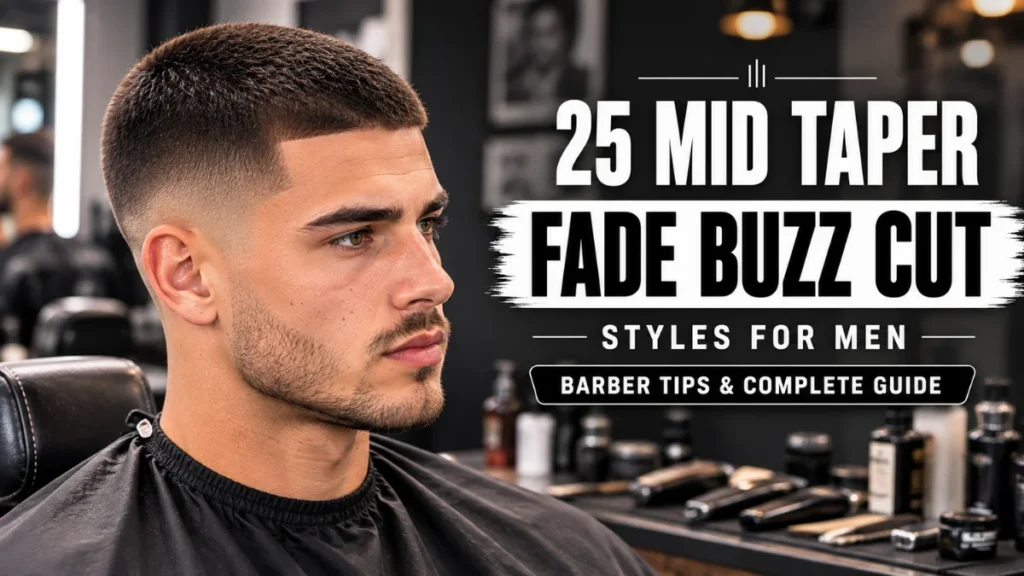
1. Mid Taper With Messy Fringe
The top can be deliberately tousled while the taper remains clean. This contrast gives the haircut a relaxed appearance without making the entire style look unkempt. Use a light matte product and your fingers rather than trying to create identical sections.
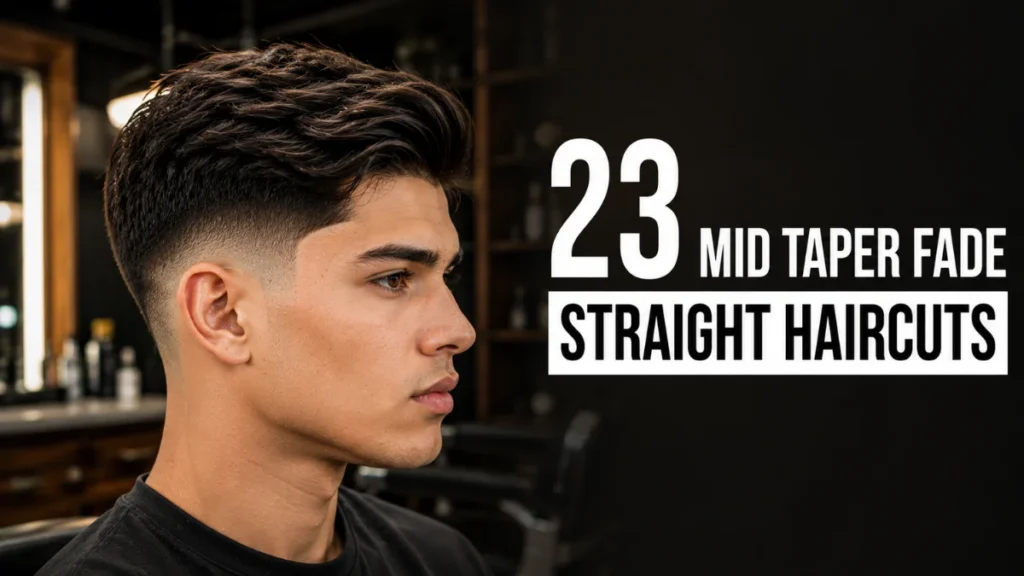
2. Mid Taper With Straight Textured Fringe
Straight hair benefits from added separation because it can otherwise fall into one uniform layer. Strategic texturing gives the front more movement and prevents a heavy, flat appearance. This version is particularly easy to redirect with a blow dryer.
3. Mid Taper With Wavy Fringe
Natural waves give the fringe movement without requiring as much artificial styling. Keep enough length for the wave pattern to form rather than cutting the front too short. A lightweight curl or texture product can enhance the existing pattern.
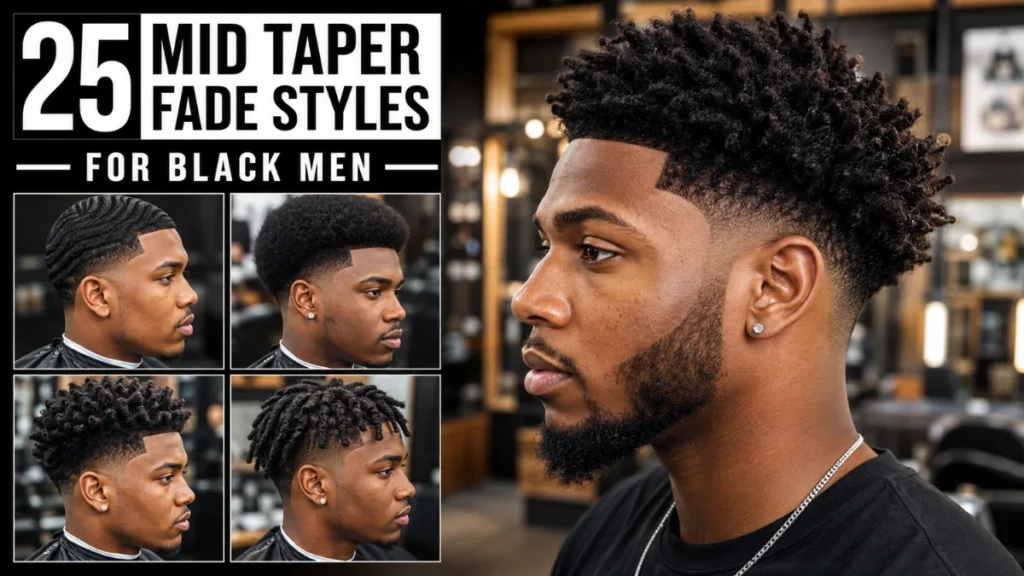
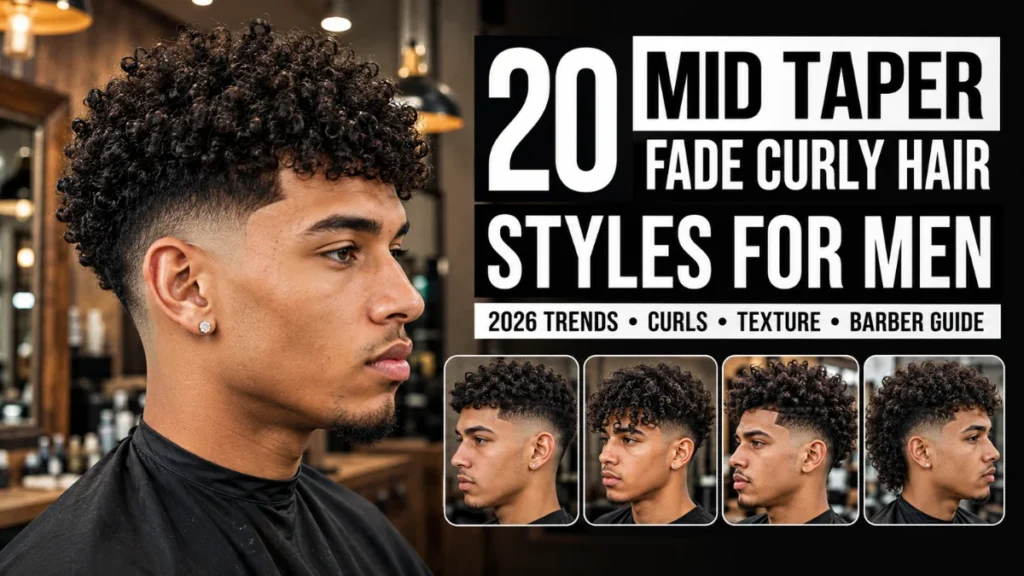
4. Mid Taper With Curly Fringe
Curly hair creates a more rounded, dimensional fringe. The barber should account for shrinkage before deciding the final length because the hair can spring upward or backward once dry. The taper can remain relatively controlled while the curls become the dominant feature.
5. Mid Taper With Thick Fringe
Thick hair can create an impressive fringe, but too much weight can make the front appear heavy. The barber should remove enough internal bulk to allow movement without stripping away the density that gives the haircut its shape. This is where professional judgment matters more than simply using a thinning tool throughout the top.
6. Mid Taper With Fine Textured Fringe
Fine hair requires a different approach. Over-texturizing can make the fringe appear sparse, so the barber should focus on creating separation while preserving enough density. A lightweight matte product can give the hair structure without weighing it down.
7. Mid Taper With Low-Volume Fringe
Not everyone wants a large, lifted top. A low-volume fringe follows the head more closely and produces a cleaner profile. This is a good option for conservative workplaces or anyone who wants texture without significant height.
8. Mid Taper With Voluminous Fringe
For thicker hair, the front can be lifted slightly before being directed forward. This creates more depth around the crown and upper forehead. The key is controlled volume. Excessive height can change the haircut’s proportions and make the taper appear smaller by comparison.
9. Mid Taper With Textured Crop Fringe
A crop-inspired fringe is shorter and more structured than a longer textured front. The hair sits toward the forehead while the taper keeps the sides visually clean. This version is practical if you want a modern shape with limited daily styling.
10. Mid Taper With French-Inspired Fringe
A short, forward fringe can be paired with a tapered perimeter for a more defined crop silhouette. Rather than making the front perfectly blunt, adding subtle separation gives it a more contemporary finish. This works especially well on straight or slightly wavy hair.
11. Mid Taper With Fringe and Beard
The beard changes the overall balance of the haircut by adding visual weight around the lower face. A textured fringe can balance that weight by keeping attention toward the upper portion of the face. The sideburn transition should be planned alongside the beard rather than treated as an afterthought.
12. Mid Taper With Fringe and Line-Up
A sharp edge-up can make the haircut look more polished. The contrast between a crisp hairline and textured front creates a strong combination. However, the line-up should follow your natural hairline. Moving the edge backward simply to make it appear straighter can hurt the long-term appearance of the haircut.
13. Mid Taper With Natural Hairline
A natural hairline gives the style a softer finish. The textured fringe already provides plenty of character, so you do not necessarily need an extremely sharp front edge. This approach also fits the current preference for personalized, less rigid men’s grooming.
14. Mid Taper With Disconnected Texture
For a more fashion-forward result, the top can retain noticeable weight while the taper creates a cleaner lower perimeter. The effect should still have a deliberate connection between sections rather than looking accidentally uneven. This variation works best when the barber understands how your hair naturally sits.
15. Mid Taper With Textured Quiff Fringe
The front can be lifted first and then directed slightly forward, creating a hybrid between a quiff and fringe. This adds height without completely exposing the forehead. It is a useful choice for medium-length straight or wavy hair.
16. Mid Taper With Side-Swept Fringe
Instead of sending the entire fringe directly forward, sweep it slightly across the forehead. This creates a softer face-framing effect and can make the haircut feel more traditional. A side-swept fringe is also easier to transition into a side-part style as the top grows.
17. Mid Taper With Layered Fringe
Layers can help thick or longer hair move more naturally. The barber should create enough variation to reduce heaviness while maintaining the density needed for a full-looking fringe. This is especially useful for clients growing their hair beyond a short crop.
18. Mid Taper With Spiky Texture
Short straight hair can be pushed upward and forward into separated points. The fringe remains forward-facing, but the ends have more lift. A matte clay or paste is usually more appropriate for this finish than a high-shine product.
19. Mid Taper With Soft Fringe
A soft fringe has less obvious separation and follows the forehead more naturally. It is a good middle ground between a structured crop and a longer messy fringe. This style can work well when you want a modern cut without an exaggerated fashion finish.
20. Mid Taper With Textured Fringe and Highlights
Subtle color variation can make individual pieces of the fringe more visible. The effect is strongest when the haircut already has natural separation. Color should complement the haircut rather than become the only source of contrast.
How to Choose the Right Fringe Length?
Fringe length changes more than appearance. It affects styling time, face framing, eye visibility, and how much weight remains at the front.
- Short Fringe: Choose a short fringe if you want a cleaner, more compact haircut. It generally requires less manipulation and works well for clients who prefer a structured appearance.
- Medium Fringe: A medium fringe provides the most flexibility. You can wear it forward, slightly separated, or swept to one side.
- Long Fringe: Longer fringe creates a softer and more dramatic face frame. It requires more styling and can become difficult to control if the hair is thick or grows strongly in another direction.
The right length should be determined by your natural hair movement and the finished style you want, not by a universal measurement.
Best Hair Types for Mid Taper Fade Textured Fringe
Straight Hair
Straight hair makes texture particularly important because the strands can otherwise sit together in a uniform layer. Point cutting, layering, or other controlled techniques can create movement.
Fine straight hair should not be excessively thinned, while thick straight hair may need selective weight removal.
Read More: Mid Taper Fade Straight Haircuts for Men
Wavy Hair
Wavy hair naturally creates movement through the fringe. Preserve enough length for the wave to develop rather than cutting it so short that the pattern disappears. A lightweight styling cream can enhance the natural shape.
Curly Hair
Curly fringe needs to be cut with shrinkage in mind. The dry length can be significantly different from the length seen when the hair is wet or stretched. The taper should complement the curl volume rather than competing with it.
Thick Hair
Thick hair can support dramatic texture, but weight management is essential. Removing too little can leave the fringe bulky, while removing too much can make the front look uneven.
Fine Hair
Fine hair needs visual density. Use texture selectively and avoid creating excessive separation that makes the fringe appear thin.
Mid Taper Fade With Textured Fringe for Different Face Shapes
The fringe changes the upper portion of the face, while the taper influences the sides. Combining those two elements gives the barber several ways to adjust the overall silhouette.
| Face Shape | Fringe Approach | Taper Approach |
|---|---|---|
| Oval | Most fringe lengths work | Keep proportions balanced |
| Round | Textured, slightly lifted fringe | Preserve some controlled height |
| Square | Short or medium textured fringe | Clean, moderate taper |
| Oblong | Fuller or longer fringe | Avoid excessive vertical height |
| Diamond | Side-swept or layered fringe | Keep balanced side weight |
| Heart | Medium fringe with movement | Avoid excessive crown height |
These are guidelines, not restrictions. Hair density and personal preference can easily make one variation more suitable than another.
Does a Textured Fringe Suit a Receding Hairline?
A forward fringe can reduce how much forehead is visually exposed because some of the top hair falls toward the front. That can make it a useful styling option for someone who does not want to emphasize the hairline.
However, a haircut cannot reverse hair loss or change the underlying hairline. If your hairline is changing, the barber should work with the areas where hair naturally remains rather than forcing an artificial edge.
A softer fringe can often look more believable than aggressively pushing the front forward.
How to Ask Your Barber for the Haircut?
Do not stop at “mid taper with textured fringe.” Your barber needs more information about the taper height, fringe length, top density, and finish.
Explain:
- How high you want the taper around the temples.
- How much side hair you want preserved.
- Where you want the fringe to sit.
- Whether you want the texture subtle or highly separated.
- Whether the hairline should remain natural or receive an edge-up.
- How you normally style the top.
- Whether you want the fringe forward or slightly swept.
A clear request could be:
“Keep the taper around the middle of the temple and sideburn area, but don’t take it too far into the side panel. Leave enough length in front for a textured fringe that sits naturally toward my forehead. I want separation and movement rather than a heavy, blunt front.”
Then show a reference photo that resembles your hair density and texture. The most useful reference is one that demonstrates the shape, not simply a celebrity or model whose hair behaves completely differently.
How Barbers Create the Texture?
The texture should be designed around the hair’s density and movement.
- Point Cutting: Point cutting can break up the visual weight at the ends and create more separation. It can be useful when the fringe looks too solid.
- Scissor-Over-Comb: This technique can help refine the relationship between the longer top and shorter side sections. It is particularly useful when the barber needs control without removing large amounts of hair.
- Texturizing Shears: Texturizing shears can reduce bulk, but they should be used carefully. Excessive thinning can make certain hair types look weak, frizzy, or uneven.
- Razor Texture: Razor work can create a softer, more feathered effect on suitable hair. It is not automatically appropriate for every texture, especially when the hair is prone to frizz or splitting.
The technique should always match the hair rather than the trend.
Styling a Mid Taper Fade With Textured Fringe
The styling method should match the finish you want.
For a Natural Finish
Start with damp hair and apply a small amount of lightweight styling cream. Use your fingers to guide the fringe forward while allowing individual sections to settle naturally.
For a Matte Textured Finish
Apply a small amount of matte clay or paste after the hair is mostly dry. Pinch or separate selected sections instead of coating every strand.
For More Volume
Use a blow dryer at the roots before applying product. Lift the front slightly, then direct the fringe forward as it cools.
For a Messier Finish
Rough-dry the hair and use your fingers to create irregular separation. Avoid repeatedly combing the front because excessive uniformity defeats the purpose of the textured finish.
For a More Polished Finish
Use a brush or comb to establish the general direction, then soften the result with your fingers. This produces a controlled style without making the fringe look rigid.
Best Products for the Fringe
| Desired Finish | Product Type | Best Use |
|---|---|---|
| Natural | Styling cream | Light control and softness |
| Matte Texture | Clay | Separation and stronger hold |
| Flexible Texture | Paste | Movement with moderate control |
| Lightweight Volume | Mousse | Lift without heavy residue |
| Loose Definition | Sea salt spray | Adds texture before styling |
| High Shine | Pomade | Structured, polished finishes |
Fine hair usually benefits from lighter products. Thick hair may require more hold, but adding excessive product can make even dense hair look flat.
Maintenance Guide
The taper and fringe have different maintenance needs.
The perimeter becomes visibly grown out as the temple and neckline gain length, while the fringe may continue looking good even as it gets longer. That means you can sometimes clean up the taper without taking significant length from the top.
How frequently you need a haircut depends on your growth rate, taper closeness, and personal preference. A softer taper can tolerate more growth than an extremely close finish.
Between Barber Visits
- Wash and condition according to your hair’s needs.
- Avoid applying heavy styling products every day.
- Keep the fringe from becoming overloaded with residue.
- Use a suitable brush or comb for your hair type.
- Avoid repeatedly cutting the front yourself.
- Protect longer hair from unnecessary friction while sleeping.
- Refresh the texture with a small amount of water and product when needed.
How Long Does the Haircut Stay Fresh?
There is no single maintenance interval that applies to everyone.
A close taper will show new growth sooner than a softer one. The fringe can also continue looking intentional for longer if it was cut with enough room to grow.
Instead of booking around an arbitrary number of days, judge the haircut by when the taper loses its shape, and the fringe stops behaving the way you want.
Common Barber Mistakes to Avoid
- Making the Taper Too High: A taper that climbs too far can remove the side structure that makes the haircut balanced. Be specific if you want the taper concentrated around the temple and neckline.
- Cutting the Fringe Too Blunt: A heavy, uniform front can make the haircut look more like a traditional crop than a textured fringe. The ends should have enough variation to create movement.
- Over-Texturizing: Texture should not mean removing as much hair as possible. Excessive thinning can create weak areas, especially on fine hair.
- Ignoring Hair Growth Direction: A fringe will not always fall where you want it to. Cowlicks, strong growth patterns, and natural partings can change the finished shape.
- Making the Hairline Too Sharp: A crisp line-up can look good, but it should not require pushing the hairline backward. Refinement is better than artificial straightening.
- Removing Too Much Top Length: If you want a longer fringe, make that clear before the cutting begins. Once the front has been shortened, there is no quick styling trick that can restore the missing length.
Mid Taper With Textured Fringe vs. Textured Crop
These styles overlap, but they are not necessarily identical.
A textured crop generally has a shorter, more compact top and a clearly forward-oriented front. A textured fringe can retain more length and movement, allowing the front to be styled in several directions.
| Feature | Textured Fringe | Textured Crop |
|---|---|---|
| Front Length | Short to long | Usually shorter |
| Styling Flexibility | Higher | More structured |
| Movement | More pronounced | More compact |
| Face Framing | Strong | Moderate |
| Grow-Out Potential | Better | More limited |
| Overall Feel | Relaxed to modern | Clean and compact |
Your barber can also create a hybrid version that sits between both styles.
Mid Taper With Textured Fringe vs. Low Taper
The taper height changes the visual balance.
A low taper keeps the transition closer to the ear and neckline, producing a subtler result. A mid taper creates more visible definition around the temple while still preserving more side hair than a broad fade.
If you want the fringe to stand out without making the sides disappear, the mid position provides a useful middle ground.
Pros and Cons
| Advantages | Considerations |
|---|---|
| Strong face-framing effect | Fringe needs regular shaping |
| Works across several textures | Poor texturing can ruin the silhouette |
| Taper keeps the perimeter clean | Close tapers show growth quickly |
| Many styling options | Longer fringe requires more styling |
| Can work with natural hairlines | Hair growth direction affects the result |
| Easy to personalize | Fine hair can be over-thinned |
FAQ
Is a textured fringe the same as bangs?
They overlap, but the terms are not always used in the same way. “Fringe” generally describes hair worn toward the forehead, while “textured” describes how that section is cut and styled.
Is a mid taper better than a low taper for a textured fringe?
It depends on the look you want. A mid taper creates more definition around the temple, while a low taper produces a softer and more understated perimeter.
What hair type works best?
Straight and wavy hair makes the texture easy to see, but curly and coily hair can also be adapted. The barber needs to adjust the fringe length and cutting method according to the hair’s natural behavior.
How long should the fringe be?
There is no universal ideal length. The right length depends on your face shape, hair texture, growth direction, styling preference, and how much forehead coverage you want.
How do I style a textured fringe?
Start with damp hair, establish the direction with your fingers or a blow dryer, and finish with a small amount of matte styling product. Separate selected sections rather than trying to texture every strand individually.
How often should I get a taper cleanup?
It depends on your growth rate and how sharp you want the perimeter. Watch the temples, sideburns, and neckline rather than following a fixed schedule.
Conclusion
A mid taper fade with textured fringe works because it combines a clean perimeter with a top that is allowed to move. The taper gives the haircut structure, while the fringe provides the shape that people notice first.
The best result comes from matching the cut to your actual hair density, texture, growth direction, face shape, and styling routine. A textured fringe should have controlled variation rather than random unevenness, and the taper should be placed where it complements the top instead of overpowering it.