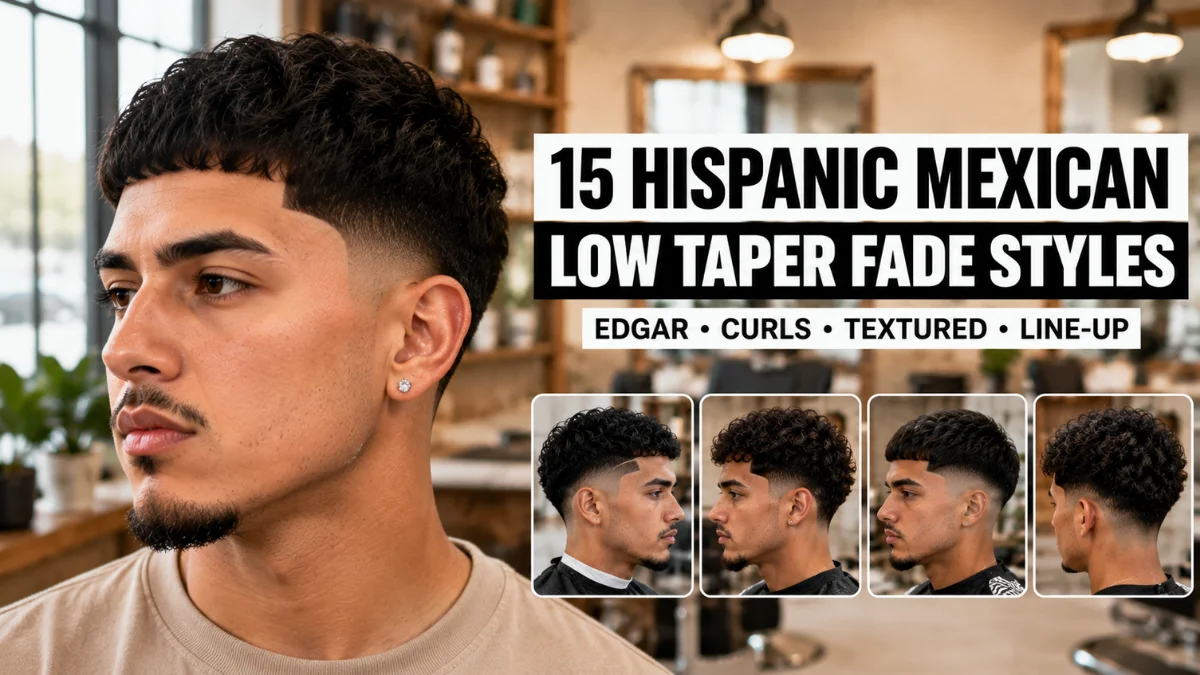
15 Best Hispanic Mexican Low Taper Fade Hairstyles For Men In 2026

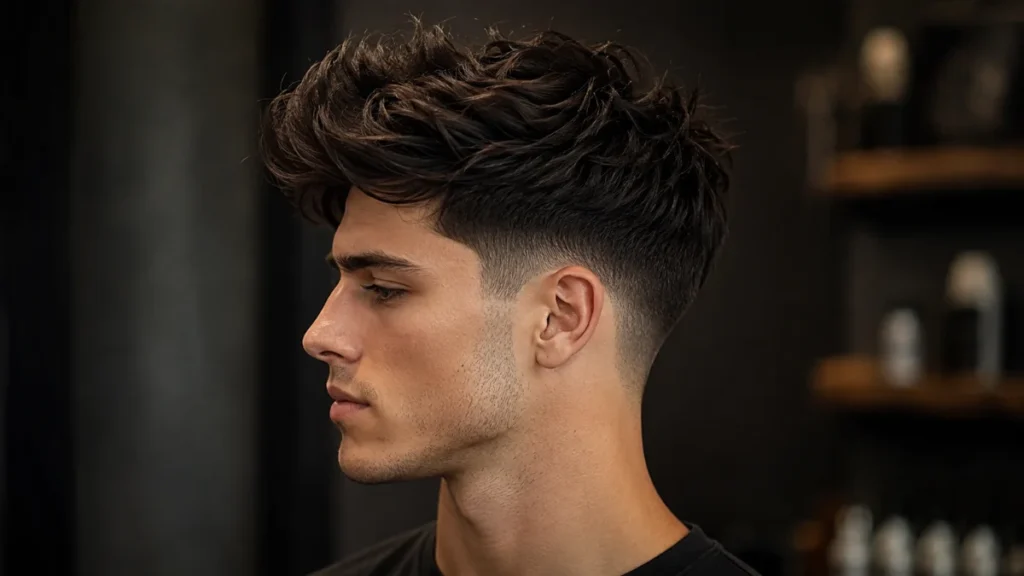
The Hispanic Mexican Low Taper Fade has turned into one of those search terms everyone types in when they want a clean, low-maintenance cut that still leaves room to show off some texture on top. The idea behind it is pretty straightforward: keep the taper low around the temples and neckline, and leave enough length and weight up top for the hair’s natural character to actually come through.
You’ll see this cut worn with straight, wavy, curly, and thick hair alike, paired with everything from a textured fringe to a slick back, an Edgar-inspired top, natural curls, or a comb-over. Depending on what you ask for, the finished look can sit soft and natural or come out much sharper with a crisp line-up.
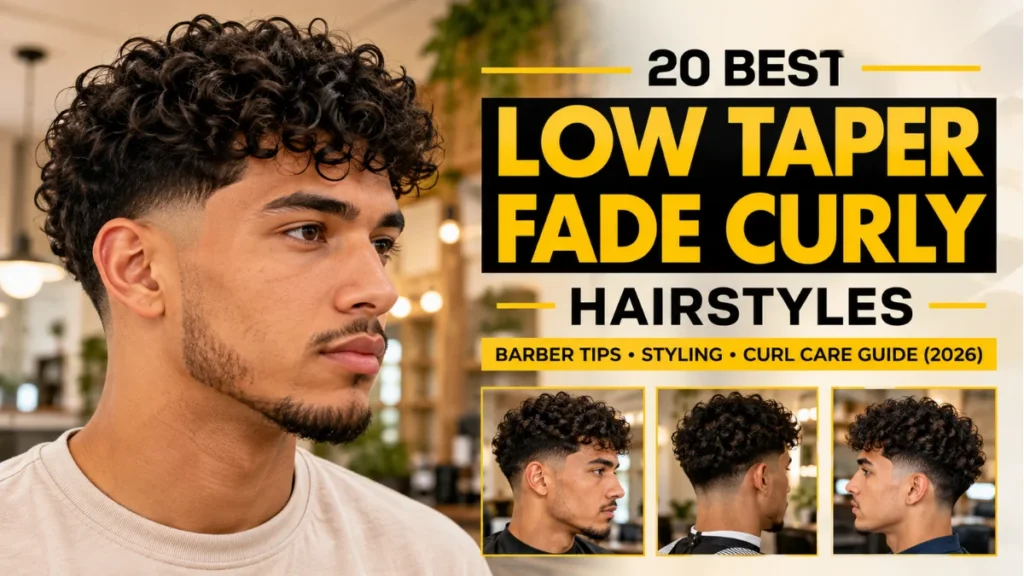
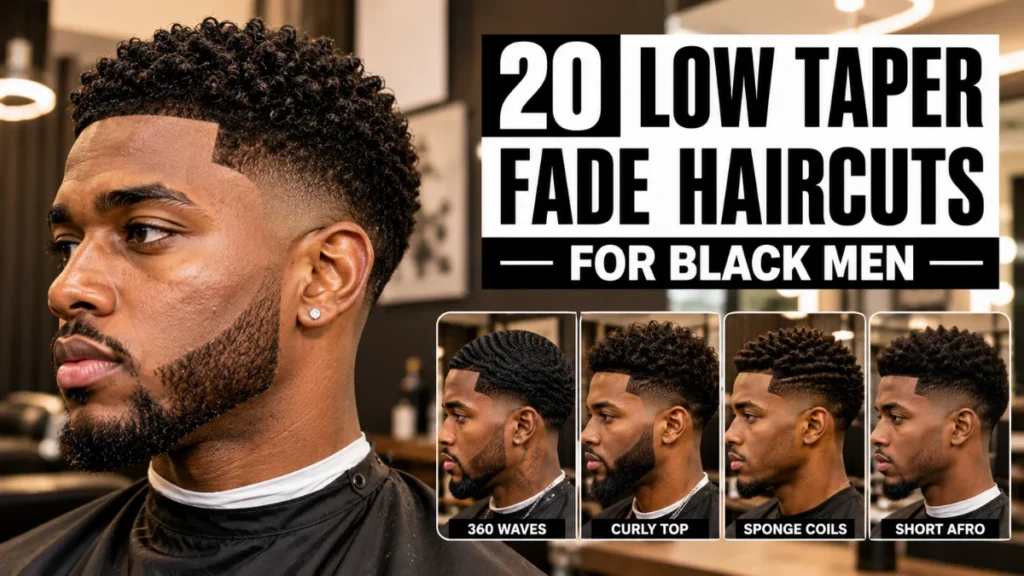
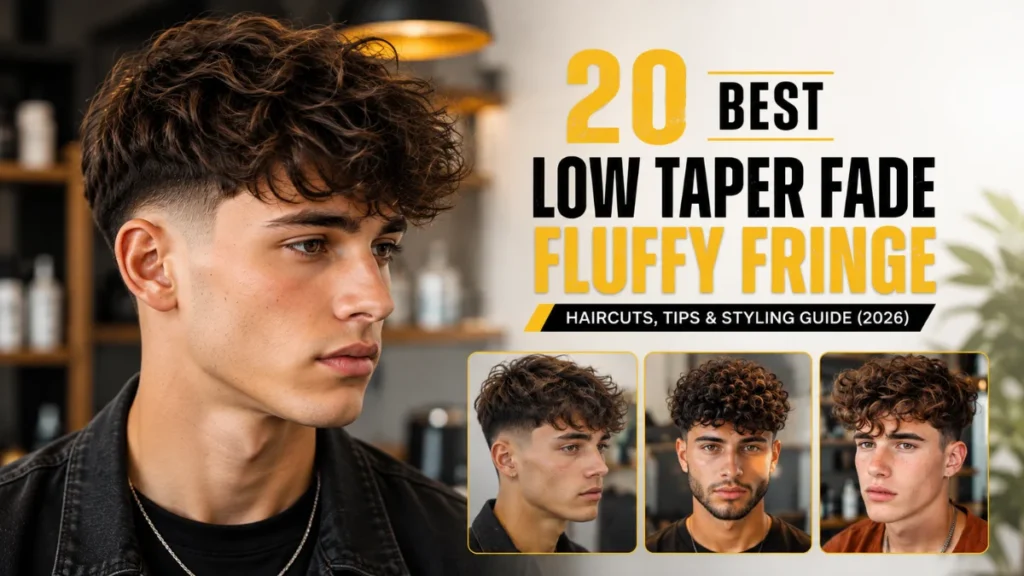
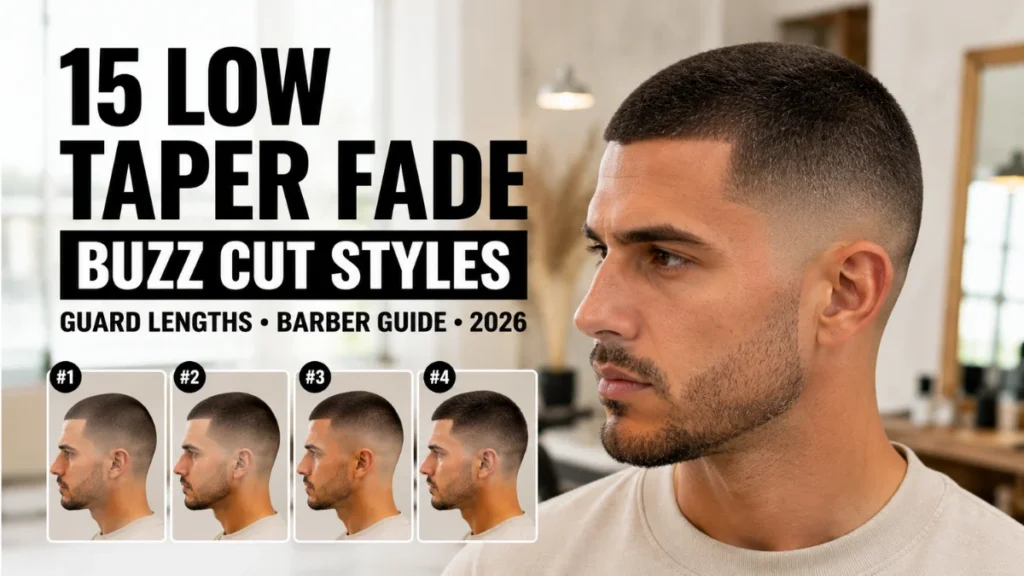
First, it’s important to clarify that “Hispanic” and “Mexican” are not recognized haircut categories with their own set of technical guidelines. Online, the phrase is basically shorthand for a family of low-taper looks tied to Latino and Mexican-American barbering preferences. So really, the haircut itself should be judged on taper placement, top shape, texture, and finishing work, not on the label attached to it.
What Is a Hispanic Mexican Low Taper Fade?
A Hispanic Mexican Low Taper Fade keeps the shortest part of the cut concentrated down around the lower temples, sideburns, and neckline, then moves gradually into longer hair from there. That leaves noticeably more weight on the sides than you’d get with a mid or high fade.
The top is where things get personal. You can leave it textured and natural, push it forward into a fringe, brush it back, shape it into something Edgar-inspired, or keep enough length for waves and curls to do their thing.
And the taper doesn’t have to be a skin fade. Depending on what you’re after, your barber might leave a bit of shadow at the shortest point, or take certain areas right down close to the skin with clippers or a trimmer.
The Main Characteristics
- Low taper around the temples and neckline
- Gradual transition between lengths
- More side weight than a high fade
- Natural or defined top texture
- Optional line-up
- Optional beard blend
- Works with straight, wavy, curly, and dense hair
- Can be styled conservatively or pushed bolder
The best version of this cut is the one that works with your natural growth pattern not the one that copies a photo down to the last detail.
Is There Really a Difference Between Hispanic and Mexican Low Taper Fades?
Not in any technical sense, no. There’s no barbering standard out there that lays out a separate “Hispanic fade” and “Mexican fade” with different clipper placement or guard lengths written into the rules.
Some style guides will describe the Hispanic version as softer and the Mexican version as sharper, especially around the line-up and finishing details. That can be a useful way to picture what people are searching for, but don’t take it as some strict cultural rule carved in stone.
A Mexican barber might hand you a soft, natural taper one day, while another barber down the street builds an extremely crisp line-up with heavy detail work. What actually matters more is your hair texture, your personal taste, the barbering culture in your area, and the reference photo you bring in.
So if you’re searching “Hispanic Mexican Low Taper Fade,” it helps to think of it as a style direction rather than one rigid formula everyone follows.
15 Best Hispanic Mexican Low Taper Fade Styles for 2026
1. Classic Low Taper With Textured Top
If you want a modern cut without going overboard on the fade, this is the easiest place to start. The taper stays low while the top holds onto enough length to build some natural texture.
For thick or slightly wavy hair, a barber can work the top with scissors or texturizing shears instead of stripping out bulk with clippers. That keeps things flexible enough to wear casually or dress up when you need to.
- Best for: Straight, thick, or wavy hair.
- Finish: Natural and versatile.
- Good for: School, work, and everyday wear
2. Low Taper With an Edgar-Inspired Top
This version adds more structure up front. A defined fringe gives it that recognizable Edgar shape, while the low taper cleans up the temples and neckline without pushing the sides too high.
The front needs to be shaped around your actual hairline and hair density not forced into a template. If your hairline grows in unevenly, pushing for a dead-straight edge tends to look rougher once it starts growing out.
- Best for: Straight, thick, or coarse hair
- Finish: Structured and bold
- Maintenance: Needs regular edge cleanup
3. Curly Hispanic Low Taper Fade
Curly hair brings its own movement and texture to this cut. The low taper handles the perimeter while the curls stay the main event on top.
Don’t let your barber take too much weight off the curls unless you’re specifically going for something shorter. Keeping enough length means the curl pattern still shows once the hair dries and shrinks back up.
- Best for: Curly hair
- Styling: Curl cream or a lightweight leave-in
- Tip: Have the top shaped around your natural curl pattern, not against it.
4. Wavy Low Taper Fade
Wavy hair is almost made for this cut, since it brings natural movement without demanding a whole styling routine. Instead of cutting it too short, leave enough length on top for the waves to truly form. A matte cream or a light styling product will bring out the texture without slicking everything down.
- Best for: Wavy hair with a thick or medium texture
- Finish: Relaxed and textured
- Face shapes: Oval, square, and diamond
5. Low Taper With a Sharp Line-Up
The line-up changes the whole personality of the cut. A clean outline around the forehead and temples makes the low taper look sharper without needing to push the fade any higher. The key here is restraint: the line should follow your actual hairline instead of getting pushed back to fake a sharper-looking forehead.
- Best for: Short, thick, straight, or textured hair
- Finish: Crisp and defined
- Maintenance: More frequent edge touch-ups
6. Low Taper With a Beard Blend
A beard blend ties the haircut and the facial hair into one continuous shape. Done right, it can make a low taper look especially polished, particularly when there’s decent density around the sideburns.
Your barber can keep the transition subtle or make it stand out more, depending on how your beard grows in. And just to be clear, getting a low taper doesn’t automatically mean you need a beard fade too.
- Best for: Medium or full beards
- Finish: Clean and masculine
- Tip: Tell your barber upfront whether you want the beard blended in or kept separate.
7. Low Taper With a Slick Back
A slick-back top gives the whole cut a more grown-up look. The low taper keeps the sides controlled while the longer top gets brushed straight back.
This one works best when there’s enough length for the hair to actually move where you want it. A lightweight pomade gives you control, or go with a matte product if you’d rather skip the shine.
- Best for: Straight and wavy hair
- Finish: Polished and classic
- Good for: Formal occasions and professional settings
8. Low Taper With a Textured Fringe
A textured fringe lets the front fall toward the forehead naturally instead of forcing a rigid, straight edge. It gives the whole cut a younger, more relaxed feel. The fringe can stay short and controlled or run longer with more separation; it just depends on how much your hair naturally wants to move forward.
- Best for: Wavy, straight, and slightly curly hair
- Finish: Casual and textured
9. Low Taper With a Side Part
The side-part version blends old-school grooming with a modern taper. Keeping the taper low stops the cut from looking too aggressive, while the part adds real structure on top.
You can keep the part natural by working with your existing growth direction, or ask your barber for a defined shaved part if you want more contrast.
- Best for: Straight and wavy hair
- Finish: Clean and professional
- Styling: Comb plus a light pomade or cream
10. Low Taper With Natural Curls
If your curls already have good definition on their own, you don’t need anything complicated happening on top. Keep the natural curl pattern intact and let the taper handle the edges.
The one thing to watch for is a barber treating curly hair like straight hair. Cutting it dry, or at least accounting for how much it’s going to shrink up, gives a far more predictable result.
- Best for: Medium and tight curls
- Finish: Natural and textured
- Product: Lightweight curl-defining cream
11. Low Taper With a Comb Over
A comb-over doesn’t have to feel old-fashioned. Pair it with a low taper, some texture on top, and a controlled finish, and it turns into a genuinely modern short-to-medium cut. Just don’t go overboard on product; a natural matte finish tends to look more current than a heavily greased-down top.
- Best for: Straight or wavy hair
- Finish: Refined but relaxed
12. Low Taper With a Quiff
A quiff builds height up front while the low taper keeps the sides looking controlled underneath. It’s a solid pick if you want more volume without going anywhere near a high fade.
How much height you go for should line up with your hair density and face shape; piling on too much vertical volume can make a longer face look even longer.
- Best for: Thick, straight, or wavy hair
- Finish: Voluminous and modern
13. Low Taper With a Caesar
The Caesar keeps the top short and pushed forward, which makes it a practical choice if you don’t want a long styling routine every morning. The low taper adds a cleaner transition around the edges.
This one works especially well with thick hair, since a short top gives a barber more control to shape it into something clean.
- Best for: Short, dense hair
- Finish: Simple and structured
- Maintenance: Fairly easy to keep up
14. Low Taper With a Hard Part
A hard part adds a deliberately shaved line into the cut. Paired with a low taper, it creates contrast without needing to fade the sides any higher. Line it up with your hair’s natural direction, and keep in mind that a shaved part grows out so it needs more upkeep than a regular part does.
- Best for: Straight and thick hair
- Finish: Sharp and graphic
15. Natural Low Taper With Medium-Length Hair
You don’t have to go extremely short to get a clean taper. Leaving medium length on top opens up more styling options, from loose texture to a brushed-back finish.
This version works especially well if you’re growing your hair out but still want the temples and neckline to look intentional along the way.
- Best for: Medium-length straight, wavy, or curly hair
- Finish: Natural and adaptable
Which Hair Types Work Best With a Low Taper?
Part of why the Hispanic Mexican Low Taper Fade is so adaptable is that the taper itself doesn’t dictate what happens on top. Straight, wavy, curly, and thick hair can all be shaped around the same basic perimeter.
The real difference comes down to how your barber handles the top.
| Hair Type | Recommended Top | Barber Consideration |
|---|---|---|
| Straight | Slick back, side part, fringe | Control bulk and direction |
| Thick Straight | Edgar, crop, quiff | Remove weight carefully |
| Wavy | Textured top, fringe, side part | Preserve natural movement |
| Curly | Curly top, fringe, natural curls | Account for shrinkage |
| Coarse/Dense | Caesar, textured crop, short top | Avoid excessive bulk |
| Medium Length | Slick back, loose texture | Keep enough length for styling |
There’s no need to force your hair into a category just because a certain style is usually associated with a different texture. A good haircut works with the way your hair actually grows, not against it.
Best Face Shapes for a Hispanic Mexican Low Taper Fade
The low taper stays flexible because most of the customization happens above it. You can play with height, volume, fringe, and top shape without changing the perimeter much at all.
- Round Face: Look for some height or directional movement on top. A textured quiff, a controlled fringe, or a taller top can add some visual length.
- Oval Face: You’ve got a lot of room to work with here. A classic taper, curls, a side part, a textured top, or a slick back can all be adapted to suit an oval face.
- Square Face: A square jaw already brings strong structure to the table. A sharp line-up and clean low taper can play that up, or a textured top can soften things out a bit if that’s more your speed.
- Long Face: Try not to pile on extra height automatically. A medium-length textured top or a fringe usually gives better visual balance.
- Diamond Face: A controlled top with moderate volume complements the cheekbones nicely without adding unnecessary width around the sides.
Treat all of this as a set of guidelines, not strict barbering law. Hair density, growth direction, forehead shape, and your own taste matter just as much as face shape does.
Low Taper vs. Low Fade: What’s the Difference?
These two get mixed up constantly, mostly because both involve a short transition somewhere around the lower sides.
A taper generally focuses on reducing hair around specific areas: the temples, sideburns, and neckline. A fade usually creates a bigger transition across the sides and back, and can take the hair all the way down to the skin.
If keeping more side weight is the priority, say that outright to your barber.
| Feature | Low Taper | Low Fade |
|---|---|---|
| Main Focus | Temples and neckline | Broader sides and back |
| Side Weight | More retained | More removed |
| Overall Effect | Subtle | More noticeable |
| Styling Flexibility | High | Moderate to high |
| Best For | Natural, versatile looks | Stronger fade contrast |
How to Ask Your Barber for This Haircut?
Don’t rely on the phrase “Hispanic Mexican low taper” doing all the work for you. Barber terminology shifts from shop to shop, and your barber might picture something different than what’s actually in your head.
Instead, break the haircut down by placement, length, texture, and finish.
Try something along these lines:
“I want a low taper around the temples and neckline. Keep the sides fairly full and don’t let the taper climb too high. Leave the top at [your preferred length] and keep my natural texture. I want the hairline [natural/sharp] and the neckline [natural/clean].”
Then hand over a reference photo.
Tell Your Barber These Five Things
- Taper height: Keep it low around the temples and neckline.
- Top length: Short, medium, or longer say which.
- Side weight: Fuller sides or tighter spell it out.
- Hairline: Natural edges or a defined line-up.
- Neckline: Natural, rounded, or sharper finish.
A reference photo showing the front, side, and back beats a single front-facing shot every time.
How Barbers Build a Clean Low Taper?
The exact technique changes from barber to barber and hair type to hair type, but the underlying goal stays the same: build a gradual transition without letting the taper creep up too high.
- Establish the Taper Area: The barber figures out how low the taper should sit around the temples and neckline. This is arguably the most important step, since moving the taper up or down changes the entire character of the cut.
- Remove Excess Bulk: Necessary weight comes off while enough surrounding hair stays in place to keep the transition smooth.
- Blend the Transition: Different clipper guards, lever positions, and sometimes shears come into play to soften any visible steps between lengths.
- Detail the Edges: The line-up, temples, sideburns, and neckline get refined according to whatever finish you asked for.
- Shape the Top: The top gets cut or textured to work with its natural movement and whatever final style you’re going for.
That last step gets overlooked more often than it should. Even a perfect taper can’t save a top that’s shaped poorly.
Line-Up or Natural Hairline?
This decision has more impact on the final look than almost anything else.
- Sharp Line-Up: A sharp line-up creates a crisp, deliberate finish around the forehead and temples. It pairs well with more structured styles; think Edgar-inspired tops, a Caesar, a textured crop, or short thick hair.
- Natural Hairline: A natural hairline stays closer to your existing growth pattern. It usually gives a softer look and skips the artificial reshaping of the forehead altogether.
Neither one is automatically the better choice. It comes down to what your hairline actually looks like and how often you’re willing to maintain the cut.
2026 Trends: How the Style Is Evolving
Men’s haircuts in 2026 keep leaning toward texture, personalization, and cuts you can wear naturally instead of ones that depend on a rigid styling routine every single day. A lot of current haircut coverage is echoing that same shift toward adaptable cuts and softer, more individual finishes.
That’s exactly what makes the low taper such a solid foundation. Rather than treating it as a finished hairstyle on its own, barbers can use it to frame your natural texture while letting the top change however you like.
For Latino and Mexican-American styles specifically, that could mean a textured fringe, an Edgar-inspired top, curls, a slick back, a side part, or medium-length hair left to move naturally.
Three Trends Worth Watching
- Natural texture: Let waves and curls keep their movement instead of controlling every single strand.
- Personalized line-ups: A crisp edge can still feel modern, but it should be shaped around your own hairline, not a template.
- Lower, cleaner tapers: Keeping the taper close to the perimeter leaves more character in the sides and top while still giving the cut a fresh outline.
The direction in 2026 isn’t about finding one haircut for everyone to copy; it’s about taking a familiar foundation and shaping it around the individual.
How Often Should You Maintain a Low Taper?
There’s no single maintenance schedule that fits everyone. Your hair-growth rate, how sharp you want things to look, taper length, and hairstyle all decide how quickly the cut starts looking grown out.
If you’re after extremely crisp temples and a defined line-up, you’ll probably want more frequent cleanups. If a softer look is more your thing, you can go longer between visits.
Rather than sticking to a fixed number of days, just judge the haircut on whether the taper and hairline still hold the shape you want.
Between-Cut Maintenance
- Keep the scalp clean based on your hair and scalp needs.
- Use products suited to your hair texture.
- Avoid letting product build up over time.
- Protect longer hair while you sleep when it makes sense.
- Don’t keep pushing your natural hairline backward.
- Skip the complicated at-home taper repairs.
- Get back to your barber once the perimeter starts losing its shape.
Common Mistakes to Avoid
- Asking for a Low Taper but Showing a High Fade Photo: Your barber can only work off what you actually hand them. Double-check that the photo shows the taper placement you’re really after.
- Taking the Taper Too High: This is probably the fastest way to lose that low-taper look altogether. If you want the sides to stay fuller, say so clearly; don’t leave it to guesswork.
- Overdoing the Line-Up: A line-up should sharpen the shape you already have, not completely redraw your hairline. Keep the edge realistic to how your hair actually grows in.
- Ignoring Hair Shrinkage: Curly hair can end up noticeably shorter once it dries out. A good barber accounts for that before taking length off.
- Using Too Much Product: Heavy gel or pomade buries the natural texture that makes this cut interesting in the first place. Start light and add more only if you actually need it.
- Copying a Haircut Without Considering Your Hair: The same haircut looks completely different depending on whether it’s sitting on straight, wavy, or curly hair. A good barber adapts the shape to you instead of copying someone else’s cut exactly.
Pros and Cons
| Pros | Cons |
|---|---|
| Keeps more side weight | Can lose its crisp look as it grows out |
| Works with many top styles | Sharp line-ups need regular maintenance |
| Adaptable to different textures | Poor blending shows around the temples |
| Can look professional or bold | Reference photos can confuse if taper height differs |
| Easy to customize | Very long tops may need more daily styling |
FAQ
What is a Hispanic Mexican Low Taper Fade?
It’s a low-taper haircut style people commonly search for in connection with Latino and Mexican-American grooming looks. Generally, it keeps the taper low around the temples and neckline while leaving more length and texture up top.
Is a Hispanic Mexican Low Taper Fade different from a regular low taper?
The barbering concept underneath is usually the same. The “Hispanic Mexican” wording mostly points to a desired look think textured top, crisp line-up, fuller sides, or styles commonly tied to Latino barbering.
Is a Mexican low taper the same as a Hispanic low taper?
There’s no universally accepted technical split between the two. Some style guides use “Hispanic” for softer finishes and “Mexican” for sharper line-ups, but those are style descriptions, not official haircut categories.
Is a low taper professional?
It absolutely can be, especially when the top and edges stay controlled. A natural taper with a moderate top reads more conservative than a heavily designed or extremely sharp version.
How long does a low taper last?
That depends on how fast your hair grows and how precise you want it to stay. Some people like frequent edge cleanups; others are happy letting the taper grow out naturally.
Conclusion
The Hispanic Mexican Low Taper Fade is best thought of as a flexible style direction rather than one fixed haircut with a single formula. Its appeal really comes down to pairing a low, controlled taper with a top that can be customized to work with straight, wavy, curly, or thick hair.
If you want something clean but still versatile, start by deciding how much side weight you actually want to keep. From there, pick your top textured, curly, slicked back, fringed, Edgar-inspired, side-parted, or natural and tell your barber exactly how you want the hairline and neckline finished.
Heading into 2026, personalization is really the whole game. Keep the taper low, work with your natural texture instead of against it, and choose a finish that actually fits how you live in and maintain your hair day to day.