13 Best Low Taper Fade Blowout Haircuts, Barber Tips & Styling Guide (2026)

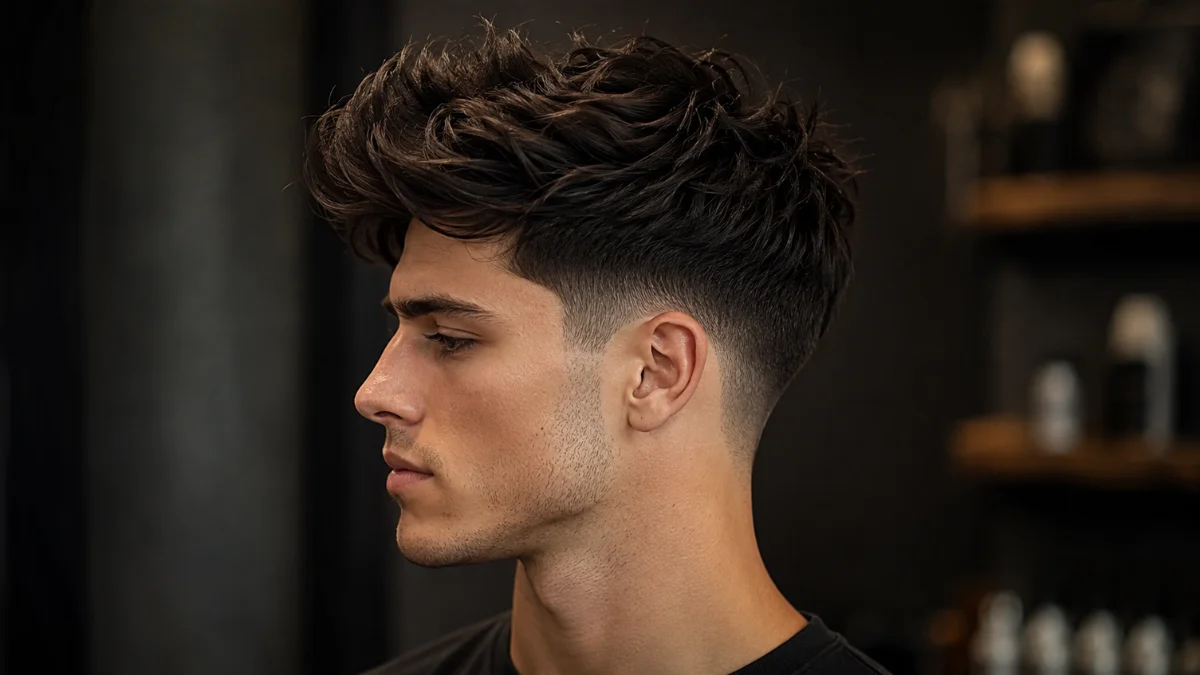
A low taper fade blowout combines a controlled taper around the lower temples and neckline with a fuller top that is styled upward and outward. The result is clean around the edges but noticeably bigger through the top, giving the haircut its signature lifted shape.
What makes this haircut different from a standard taper is the blowout silhouette. The sides are not simply shortened and blended; the hair above the taper is left with enough weight and length to create height, width, and movement.
The best version is tailored to your hair texture and density. Straight, wavy, curly, and coily hair can all work with this shape, but the cutting and styling approach should change according to how the hair naturally behaves.
What Is a Low Taper Fade Blowout?
A low taper fade blowout keeps the shortest section close to the lower temple, sideburn, and neckline areas while leaving the upper sides and top fuller. The hair is then styled away from the head to create a rounded, lifted appearance.
The taper provides the clean perimeter. The blowout provides the volume.
Unlike a high fade, the low placement preserves more of the side profile, which helps the top transition into the fuller sides instead of creating an abrupt separation.
Key Features of the Haircut
- Low taper around the temples
- Tapered or cleaned-up neckline
- Fuller sides above the taper
- Voluminous top
- Outward or upward styling
- Natural or textured finish
- Adjustable length for different hair types
The exact amount of volume depends on your hair’s natural density, length, and styling ability.
Why Is the Low Taper Blowout So Popular?
The haircut gives you two things at once: a clean perimeter and noticeable volume. A conventional short fade can make the haircut feel very tight around the head. A blowout leaves more room for texture and movement, so the finished style has a larger silhouette.
It is also versatile. You can make the blowout subtle for everyday wear or push the volume higher for a more dramatic look.
Low Taper Fade vs. Blowout Taper
These terms are sometimes used interchangeably, but the haircut shape can differ. A low taper fade describes where the hair is reduced. A blowout describes how the remaining hair is shaped and styled.
| Feature | Low Taper Fade | Low Taper Blowout |
|---|---|---|
| Main Focus | Clean taper | Volume + taper |
| Top | Flexible | Usually fuller |
| Side Volume | Moderate | More pronounced |
| Styling | Optional | Usually important |
| Silhouette | Controlled | Rounded and expanded |
| Best Feature | Clean perimeter | Height and movement |
In other words, a blowout can be built around a low taper, but the styling and top shape are what make it a blowout.
13 Modern Low Taper Fade Blowout Haircuts for Men 2026
1. Classic Low Taper Blowout
The classic version keeps the top and upper sides full while the taper stays low around the perimeter. The hair is pushed upward and outward to create a balanced, rounded shape. This is a good starting point if you want the blowout effect without an exaggerated silhouette.
Best for: Straight, wavy, and curly hair
Finish: Full and balanced
2. Textured Low Taper Blowout
Texture gives the blowout more separation and prevents the top from looking like one solid mass. A matte styling product can emphasize individual sections while maintaining the airy appearance.
Best for: Thick hair
Finish: Messy and textured
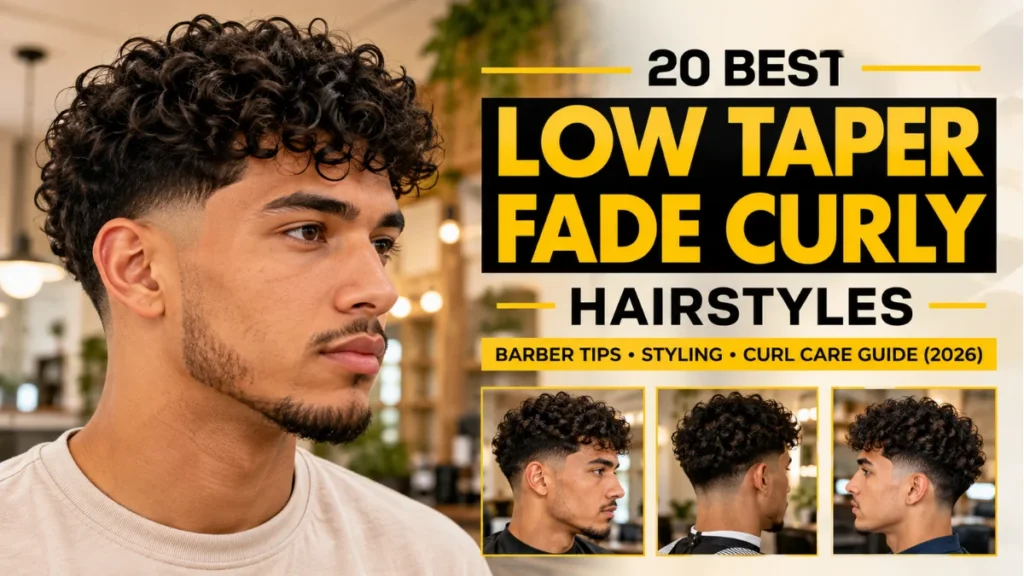
3. Curly Low Taper Blowout
Curly hair naturally creates the expansion that defines a blowout. The taper simply frames that volume around the lower sides and neckline. The top should be shaped around the curl pattern rather than forced into a straight blowout silhouette.
Best for: Loose to tight curls
Finish: Full and natural
4. Wavy Low Taper Blowout
Wavy hair is particularly useful for creating a softer blowout because the texture adds movement without requiring extremely strong styling. Let the waves determine the direction of the top rather than brushing everything into one uniform shape.
Best for: Wavy hair
Finish: Relaxed and flowing
5. Low Taper Blowout With Quiff
A quiff concentrates more height toward the front while the sides remain fuller. This variation is useful if you want a blowout with a stronger front profile rather than equal volume across the entire top.
Best for: Straight and wavy hair
Finish: Lifted and polished
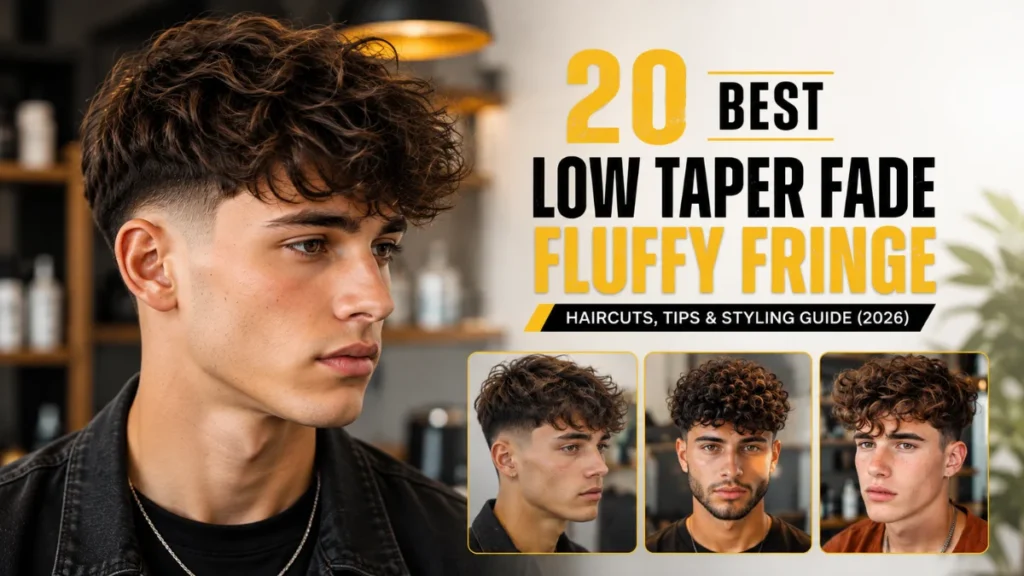
6. Low Taper Blowout With Fringe
A fringe introduces forward movement into an otherwise outward-styled haircut. The front can be textured, rounded, or slightly separated depending on your hairline and preferred finish.
Best for: Medium-to-thick hair
Finish: Youthful and textured
7. Low Taper Blowout With Line-Up
A line-up creates a stronger contrast against the loose volume of the blowout. Keep the line-up aligned with the natural hairline. A sharp edge should improve the shape, not artificially change it.
Best for: Dense hair
Finish: Crisp and defined
8. Low Shadow Taper Blowout
A shadow taper leaves a little more visible hair in the shortest section. This creates a softer transition than a skin-level finish. It is an excellent choice if you want the blowout to feel more natural and less dramatic.
Best for: Most hair textures
Finish: Soft and understated
9. Low Taper Blowout With Curly Top
This version focuses on keeping the curl pattern prominent rather than brushing the hair into a traditional straight blowout. A curl cream or lightweight styling product can help define the top while preserving its natural volume.
Best for: Curly and coily hair
10. Low Taper Blowout With High Volume
If your hair naturally has plenty of density, you can build a much larger silhouette. The important part is maintaining proportion. Excessive height without enough side balance can make the haircut look top-heavy.
Best for: Thick, dense hair
Finish: Dramatic
11. Low Taper Blowout With Side Part
A side part gives the volume a clear direction. Instead of expanding evenly, the top flows diagonally away from the part. This is a useful variation for men who want volume without a messy finish.
Best for: Straight and wavy hair
12. Low Taper Blowout With Messy Texture
The messy version uses irregular texture to create a less polished appearance. The key is keeping the perimeter clean while allowing the top to remain imperfect. That contrast makes the haircut look intentional rather than unfinished.
Best for: Thick and wavy hair
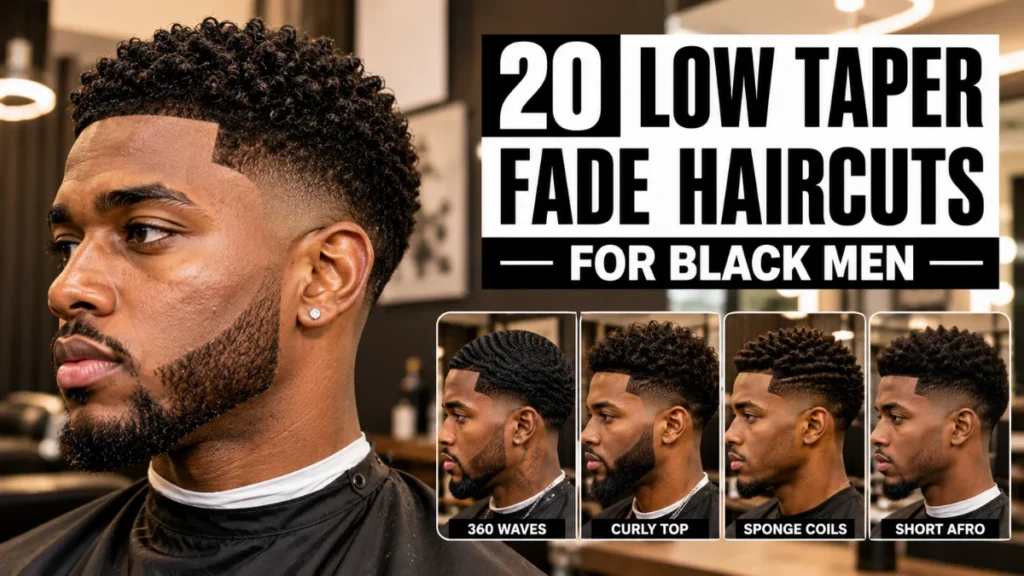
13. Low Taper Blowout Afro
Coily and tightly textured hair can produce a naturally expansive shape. The low taper cleans the lower perimeter while the top remains full. The barber should work with the natural density rather than attempting to flatten the texture.
Best for: Coily and dense hair
Finish: Full and natural
How Long Should Your Hair Be for a Blowout?
The right length depends on the amount of volume you want and how your hair behaves. Straight hair generally needs enough length to lift and bend away from the scalp. Curly and coily hair may require less visible length because the natural texture creates volume more easily.
As a general starting point:
| Desired Result | Approximate Top Length |
|---|---|
| Short Blowout | 2–3 inches |
| Medium Blowout | 3–4 inches |
| Fuller Blowout | 4–5 inches |
| Long Blowout | 5+ inches |
These measurements are only guidelines. Your barber should judge the actual density, texture, and growth pattern before choosing the final length.
How to Ask Your Barber for a Low Taper Fade Blowout?
A simple request like “give me a blowout taper” can leave too much room for interpretation. Tell your barber exactly where you want the taper and how much volume you want to keep.
You can say:
“I want a low taper around the temples, sideburns, and neckline. Keep the taper low and leave the upper sides and top full enough for a blowout. I want the hair styled upward and outward with natural movement rather than a flat, tight fade.”
Then specify:
- Your preferred top length
- How much volume you want
- Whether you want a skin or shadow taper
- Whether you want a line-up
- Whether you want a natural or sharp neckline
- Whether you want the top textured
- Whether you want the sides kept especially full
A reference photo is useful, but explain what part of the reference you want. One picture may show the taper you like while another better represents the amount of volume you want.
How Should a Barber Build the Shape?
The blowout is a shape, not simply a longer haircut. The barber first needs to establish the desired top length and overall silhouette. The sides should retain enough weight above the taper to connect the top with the lower perimeter.
Removing too much from the upper sides can make the haircut look disconnected. Leaving too much weight in the wrong areas can make the shape look bulky rather than voluminous. The final goal is controlled expansion.
Best Hair Types for a Low Taper Blowout
Straight Hair
Straight hair can create a clean, smooth blowout, but it often needs deliberate root lifting. A blow dryer is usually more important here because straight strands do not automatically create as much expansion as textured hair.
Wavy Hair
Wavy hair naturally adds movement and width. It can produce a softer, less rigid blowout with relatively little manipulation. Avoid brushing the waves completely flat if texture is part of the desired finish.
Curly Hair
Curly hair already has plenty of volume potential. The main task is shaping the curl mass so it expands in a flattering direction. Use curl-supporting products instead of trying to force curls into a straight blowout.
Coily Hair
Coily hair can create substantial volume with relatively little added length. A low taper can provide a clean perimeter while preserving the natural fullness above it. The top should be shaped according to the desired silhouette rather than treated like straight hair.
Fine Hair
Fine hair can wear a blowout, but creating lasting volume requires more attention to product and drying technique. Lightweight products are usually preferable to heavy waxes that can weigh the hair down.
Thick Hair
Thick hair is naturally suited to a blowout because it provides plenty of density. However, density needs to be controlled. Too much weight can turn a voluminous haircut into an oversized one.
How to Style a Low Taper Fade Blowout?
A professional-looking blowout starts before the hair is completely dry.
- Wash and Condition: Use products appropriate for your scalp and hair texture. You do not need to strip the hair aggressively. The goal is to have clean, manageable hair that can hold its shape.
- Towel-Dry Gently: Remove excess water without rough rubbing. Leave the hair slightly damp so you have time to control the direction before applying heat.
- Apply a Pre-Styler: For straight or fine hair, a lightweight volumizing product can help provide support. For curly or wavy hair, use a product designed to preserve the natural texture.
- Blow-Dry the Roots: This is the most important part. Direct the airflow underneath the roots while lifting the hair with your fingers or a brush. Work gradually rather than blasting the entire head at once.
- Shape the Sides: Push the hair outward and slightly back if you want the traditional blowout silhouette. Do not flatten the upper sides completely. They are part of the shape.
- Finish With a Light Product: Use a small amount of matte paste, styling cream, or texture product if needed. The hair should remain movable. A stiff finish usually works against the soft character of a blowout.
How to Get More Volume Without Making the Hair Greasy?
Volume begins at the roots, not at the ends. Applying a large amount of styling product throughout the hair can actually reduce volume because the strands become heavier.
Instead:
- Start with clean hair.
- Use a small amount of lightweight product.
- Focus the blow dryer on the roots.
- Lift the hair while drying.
- Add product only after the shape is established.
- Avoid repeatedly touching the hair once styled.
If your hair collapses quickly, changing your drying technique may help more than adding additional product.
| Product | Best For |
|---|---|
| Volumizing Mousse | Fine or straight hair |
| Sea Salt / Texturizing Spray | Texture and lift |
| Lightweight Cream | Soft control |
| Matte Paste | Separation |
| Light Clay | Stronger matte hold |
| Curl Cream | Curly hair |
| Heat Protectant | Frequent blow-drying |
There is no single product that works for every hair type. The best choice is the one that provides enough support without destroying the movement you want.
Low Taper Fade Blowout for Different Face Shapes
- Round Face: A little extra height can help create vertical balance. Keep the side volume controlled rather than making the haircut excessively wide.
- Oval Face: An oval face generally gives you considerable flexibility. You can experiment with different levels of volume and direction.
- Square Face: A fuller blowout can emphasize strong facial structure. A softer taper can prevent the overall appearance from becoming too severe.
- Long Face: Avoid adding unnecessary height if your face is already noticeably long. Moderate side volume can create a more balanced silhouette.
- Diamond Face: Keep enough controlled width through the upper sides to complement the cheekbones without making the haircut overly wide.
Your face shape should guide the haircut, not dictate it. Hair density, forehead height, and personal style also matter.
How Often Should You Maintain a Blowout?
Maintenance depends mainly on how sharp you want the taper to remain. The volume on top can continue looking good as it grows, especially if you like a more relaxed shape. The taper, however, becomes less defined as the hair around the perimeter grows.
If you want a crisp appearance, schedule a taper cleanup when the lower sides and neckline start looking heavy.
How to Maintain the Blowout Between Barber Visits?
You do not necessarily need to restyle the entire haircut every morning.
Quick refresh:
- Lightly dampen the top.
- Reapply a small amount of styling product if necessary.
- Lift the roots with your fingers.
- Use a blow dryer briefly.
- Reshape the sides outward.
- Leave the taper area alone unless it needs cleaning.
Avoid continuously adding product over several days. If the hair becomes coated or heavy, washing and restarting the style usually works better.
Common Mistakes With a Low Taper Blowout
- Taking the Taper Too High: The haircut loses much of its blowout character when too much of the side is removed.
- Removing Too Much Side Weight: The upper sides help create the rounded silhouette. Cutting them too aggressively can make the top look disconnected.
- Using Too Much Product: Heavy product can flatten the hair and remove the airy quality.
- Blow-Drying Without Direction: Heat alone does not create a good shape. The airflow needs to guide the hair where you want it to sit.
- Ignoring Hair Density: A technique that works on thick hair may overwhelm fine hair. The haircut should be adjusted accordingly.
- Making the Top Too Tall: More height does not automatically mean a better blowout. The shape should remain proportional to your head and face.
- Over-Thinning Thick Hair: Removing too much internal weight can make the top lose the fullness that gives a blowout its identity.
Low Taper Fade Blowout vs. Low Taper Fade
These styles are closely related but have different visual priorities. A standard low taper focuses on the clean transition around the perimeter. The top can be short, medium, textured, or long.
A blowout specifically emphasizes volume and outward movement.
If you want a haircut that can be styled flat or naturally on some days, a standard low taper gives you more flexibility. If volume is the main attraction, the blowout version makes more sense.
Low Taper Blowout vs. Mid Taper Blowout
The difference is primarily taper placement. A low taper keeps the shortest area close to the lower perimeter, preserving more side fullness.
A mid taper moves the transition higher, creating more visible reduction through the sides.
| Feature | Low Taper Blowout | Mid Taper Blowout |
|---|---|---|
| Side Weight | More side weight | Less side weight |
| Contrast | Softer contrast | Stronger contrast |
| Silhouette | Fuller silhouette | Cleaner side profile |
| Overall Look | More conservative | More noticeable |
| Main Focus | Volume remains dominant | Fade becomes more prominent |
For a classic blowout silhouette, the low version preserves more of the fullness that makes the style recognizable.
Pros and Cons
| Pros | Cons |
|---|---|
| Creates strong volume | Can require daily styling |
| Low taper preserves side fullness | Too much bulk can look oversized |
| Works across multiple textures | Fine hair may struggle with lasting volume |
| Easy to personalize | Needs enough top length |
| Can look natural or dramatic | Incorrect taper height changes the silhouette |
| Pairs well with beards | Heavy products can flatten the hair |
FAQ
What is a low taper fade blowout?
It is a haircut that combines a low taper around the temples, sideburns, and neckline with a fuller top styled upward and outward. The taper keeps the perimeter clean while the blowout creates the signature volume.
How long should my hair be for a blowout?
A medium blowout often needs roughly 3–4 inches of top length, although the ideal amount varies with hair texture and density. Curly and coily hair can create substantial volume with less visible length.
Is a low taper blowout good for straight hair?
Yes. Straight hair can create a clean blowout, but it may need root-focused blow-drying and a lightweight volumizing product to maintain lift.
Is a low taper better than a high fade for a blowout?
If you want to preserve fullness through the upper sides, a low taper is generally the more suitable starting point. A high fade removes much more side weight and produces a stronger contrast.
Does a blowout require a blow dryer?
Not always, but a blow dryer makes it much easier to create lift and direct the hair outward. Naturally thick or textured hair may achieve the shape with less heat styling.
How often should I get a taper cleanup?
Get a cleanup when the taper begins looking too grown out for your preference. The exact timing depends on your growth rate and how sharp you want the perimeter.
Final Thoughts
A low taper fade blowout is a strong choice when you want the cleanliness of a tapered perimeter without giving up the fullness that makes a blowout stand out.
The most important detail is balance. The taper should stay low, the upper sides should retain enough weight to support the silhouette, and the top should be long enough to create genuine movement.
For your barber appointment, explain the taper height, top length, amount of side fullness, desired volume, and finish rather than relying only on the haircut name. A reference photo with similar hair texture can make the consultation even more precise.
For 2026, a particularly wearable approach is a low, soft taper with natural volume, controlled texture, and a movable finish. The haircut looks better when the styling enhances your natural hair instead of forcing it into an exaggerated shape.