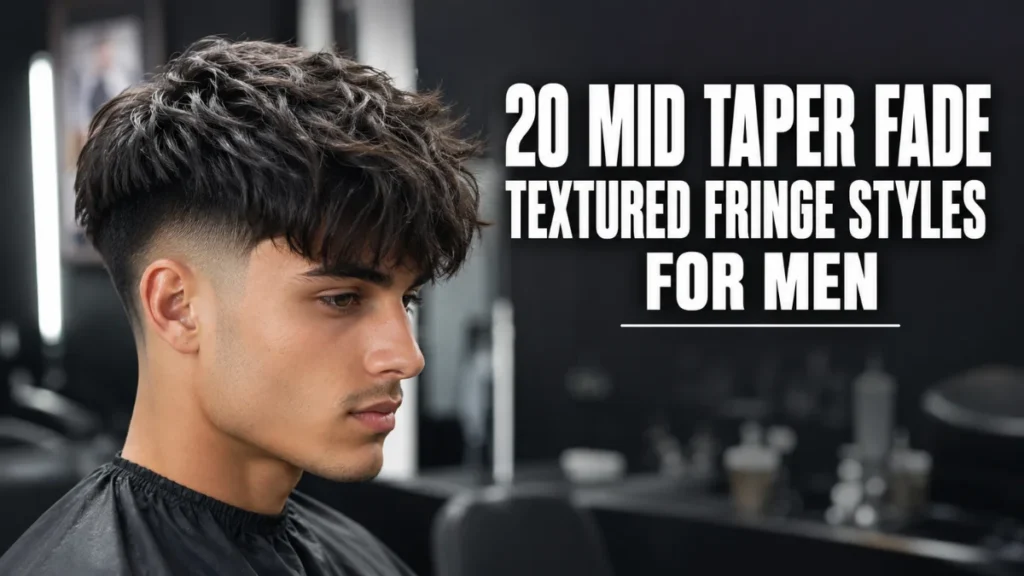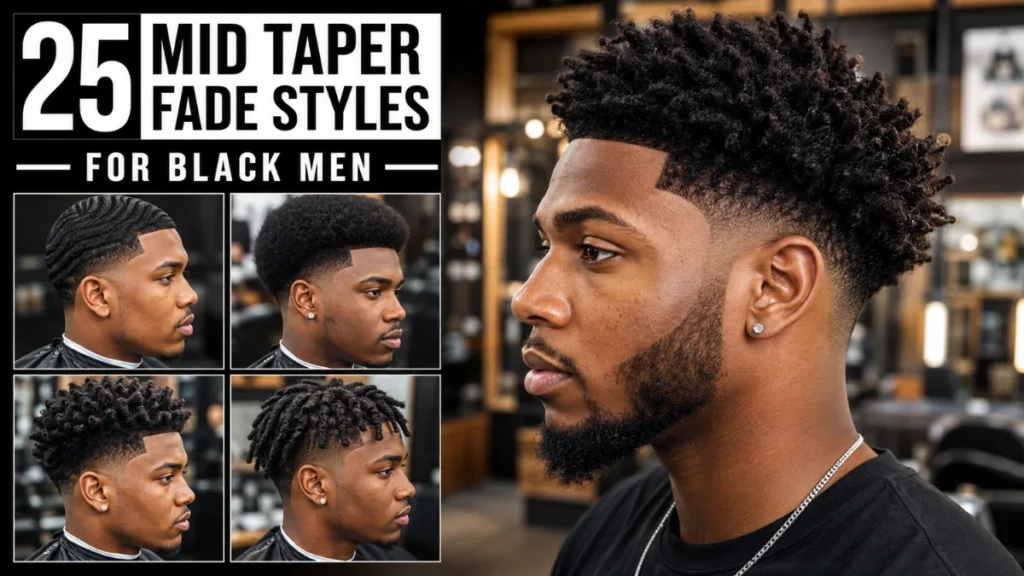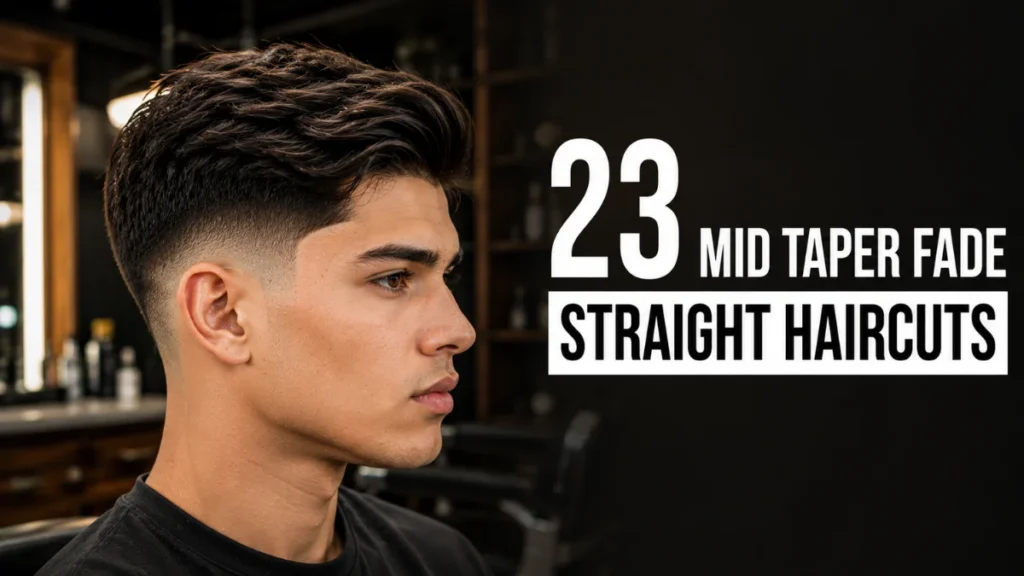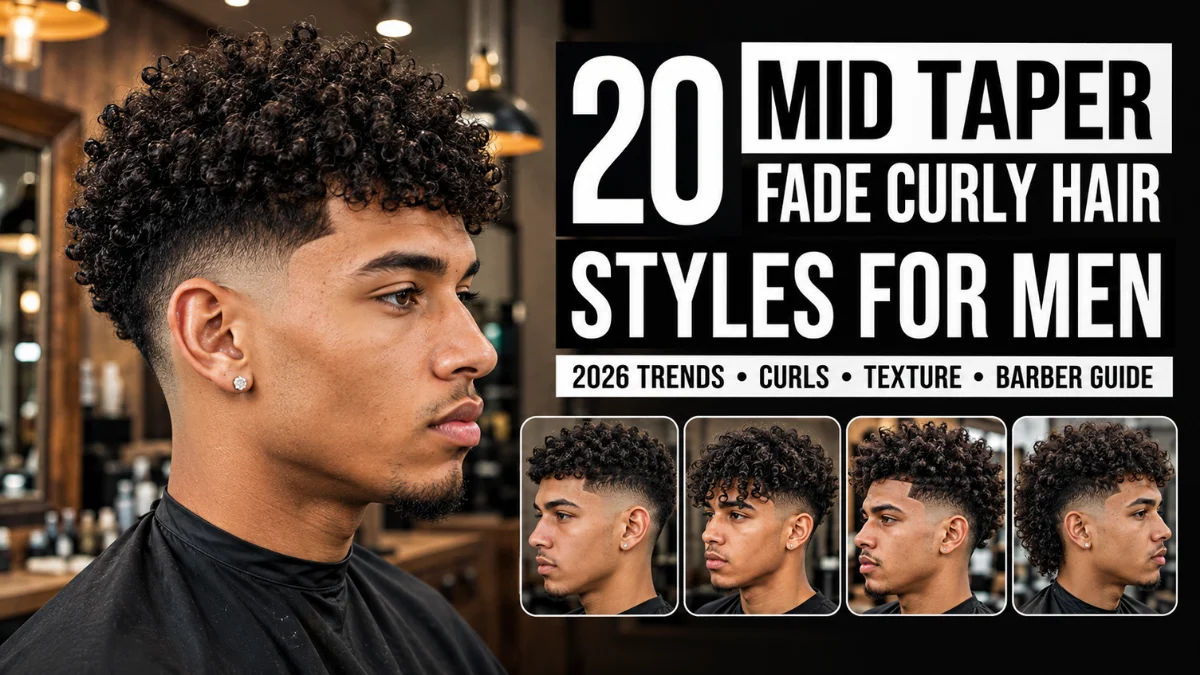
20 Mid Taper Fade Curly Hair Styles for Men & Barber Guide 2026

Curly hair already has the texture and movement most short men’s hairstyles try to create with styling products. A mid taper fade curly hair haircut uses that natural character as the focal point while cleaning up the temples, sideburns, and neckline.
The result can be anything from a compact curly crop to a longer, loose-curly style with substantial volume. The key is getting the taper height, top length, curl shape, and hairline to work together, rather than treating the haircut as a standard fade with curls added afterward.
In 2026, men’s grooming is leaning toward more individualized cuts, natural texture, softer shaping, and hairstyles that retain personality rather than looking overly manufactured. Current men’s hair coverage also continues to highlight natural curls, longer textured styles, and tailored versions of classic cuts.
What Is a Mid Taper Fade for Curly Hair?
A mid taper fade gradually reduces the hair around the temple and sideburn area while creating a clean transition toward the neckline. The defining feature is that the taper is concentrated around the perimeter rather than removing large sections of hair from the entire side of the head.
With curly hair, this distinction becomes especially useful. You can maintain the fullness and spring of the curls on top while controlling the areas around the ears and neck that can make a curly haircut appear bulky.
The finished look depends heavily on curl pattern, density, shrinkage, top length, and head shape. Two people can request the same haircut and need noticeably different cutting approaches.
Why Curly Hair Works So Well With a Mid Taper?
Curly hair naturally creates separation between the textured top and cleaner perimeter. The taper enhances that contrast without requiring the barber to strip away too much of the side profile.
It also gives you flexibility. You can wear short curls, a curly fringe, a rounded shape, a blowout, a longer curly top, or even a curly mullet while keeping the perimeter controlled.
The biggest advantage is proportion. Instead of making the entire haircut short, the barber can remove strategic bulk where it interferes with the shape and preserve length where the curl pattern looks strongest.
Mid Taper vs. Mid Fade for Curly Hair
The terminology can be confusing because barbers and clients sometimes use “fade” and “taper” differently.
A traditional mid fade generally carries the graduated shortening farther across the side panel. A mid taper can remain more focused around the temples, sideburns, and neckline, leaving greater side coverage.
If preserving your curls and overall head shape is your priority, tell your barber exactly how much side hair you want removed. A reference photo can eliminate confusion when terminology differs between shops.
| Feature | Mid Taper | Mid Fade |
|---|---|---|
| Main Focus | Temple, sideburn, neckline | Larger side section |
| Side Coverage | More preserved | More reduced |
| Contrast | Moderate | Usually stronger |
| Curly Top | Remains dominant | Can create stronger contrast |
| Grow-Out | Generally softer | More noticeable as the fade expands |
Neither is automatically better. The right choice depends on the silhouette you want.
20 Best Mid Taper Fade Curly Hair Styles to Try in 2026
The best curly haircut is the one that matches your actual curl behavior, not the one that looks impressive on a completely different head of hair.
1. Classic Curly Top With Mid Taper
Keep medium-length curls on top and use the taper to clean the perimeter. This is the most adaptable starting point because you can style the curls forward, upward, or naturally depending on their length.
A curl cream or lightweight leave-in can help define the existing pattern without turning the hair stiff.
Best for: Loose to medium curls, oval faces, everyday styling.
2. Short Curly Crop With Mid Taper
A short crop is a practical option when you want visible texture without committing to a longer routine. The top remains compact while the taper removes unnecessary weight around the sides.
This works particularly well when your curls naturally form a consistent pattern at shorter lengths.
Best for: Busy schedules, dense curls, low-effort styling.
3. Curly Fringe With Mid Taper
Let the curls move forward over the forehead instead of pushing them upward. The taper creates a clean frame around the sides while the fringe becomes the main feature. This can also be useful when you prefer a softer front profile rather than an exposed forehead.
4. Mid Taper With Loose Curls
Longer, looser curls create movement and a relaxed silhouette. Rather than forcing the curls into a rigid shape, let them fall according to their natural direction. The barber should remove bulk strategically so the sides do not overpower the longer top.
5. Mid Taper With Tight Curls
Tighter curls can be kept relatively short while still showing clear texture. A controlled taper around the perimeter gives the compact top a cleaner outline.
This is a strong option for men who want their natural curl pattern visible without maintaining substantial length.
6. Mid Taper With Curly Blowout
A curly blowout adds height and outward movement to the top. The taper prevents the sides from becoming too wide, creating a more deliberate silhouette.
The key is controlling the direction of the volume rather than simply making the hair as large as possible.
7. Mid Taper With High-Volume Curls
If your curls naturally build significant height, preserve that volume instead of flattening it during the cut. The taper can then act as a supporting frame. This variation is particularly effective when the natural curl pattern already provides strong vertical movement.
8. Mid Taper With Curly Caesar
A short forward curl pattern combined with a defined front edge gives you a compact, structured style. The taper keeps the sides neat without competing with the short fringe.
It is one of the easier curly styles to manage because there is less top length to reshape each morning.
9. Mid Taper With Curly Quiff
A curly quiff pushes the front upward and slightly backward while maintaining texture. The added height can change the entire proportion of the haircut.
Ask your barber to preserve enough front length to support the shape. If the front is cut too short, the curls may not have enough weight to form the desired direction.
10. Mid Taper With Curly Mohawk
A curly mohawk leaves more visual weight through the center while the sides are reduced. The taper can soften the transition around the temples without turning the entire side into a conventional fade. This is a stronger choice for clients who want a distinctive silhouette.
11. Curly Mullet With Mid Taper
Keep the front and crown controlled while allowing additional length toward the back. The taper around the temples gives the front profile a cleaner appearance.
Curly mullets remain relevant within the broader 2026 movement toward adaptable, textured, longer men’s styles.
12. Mid Taper With Defined Ringlets
If your curls naturally form distinct ringlets, avoid overworking them during styling. The goal is to make the pattern visible rather than turning the top into a uniform helmet of curls. A lightweight curl-defining product can help separate the pattern while maintaining movement.
13. Mid Taper With Messy Curls
Not every curly haircut needs a polished finish. Leaving some irregularity in the curls can produce a relaxed, contemporary appearance.
The barber still needs to establish a deliberate perimeter. “Messy” should describe the texture, not an uncontrolled haircut.
14. Mid Taper With Curly Side Part
A defined part introduces structure to naturally textured hair. The barber can create a natural separation or, if you want stronger definition, establish a more visible part. This works best when your hair naturally cooperates with the chosen direction.
15. Mid Taper With Long Curly Top
Longer curls provide more styling possibilities. You can wear them forward, pushed back, parted, or left loose depending on your preferred appearance. The taper becomes particularly useful here because it keeps the perimeter tidy while the top continues to grow.
16. Mid Taper With Curly Pompadour
A curly pompadour uses the front and upper section for height while the sides remain controlled. It requires more styling than a short curly crop but creates a noticeably stronger silhouette. A diffuser can help preserve the curl pattern while adding controlled lift during drying.
17. Mid Taper With Curly Textured Crop
This version combines a cropped top with deliberate separation between individual curls. It is a good middle ground if you want more texture than a traditional short cut but less length than a curly fringe. Avoid removing too much weight from the top if your curls tend to shrink significantly.
18. Mid Taper With Curly Top and Beard
A beard changes the overall visual balance of the haircut. Connecting the beard and sideburn area can create a continuous transition, while separating them gives the hairstyle a cleaner break. The correct option depends on beard density, face shape, and how much contrast you prefer.
19. Mid Taper With Natural Hairline
You do not have to pair a taper with an extremely sharp line-up. Leaving the natural hairline intact can create a softer and more understated finish.
This approach also works well with the current preference for individualized, natural-looking men’s hairstyles rather than identical cuts.
20. Mid Taper With Curly Sponge Texture
A curl sponge can encourage separation in shorter curly or coily hair. The taper keeps the perimeter controlled while the sponge-created texture gives the top additional definition. Use gentle pressure and avoid excessive manipulation, particularly if your hair is dry or fragile.
How to Choose the Right Curly Taper for Your Hair?
Your curl pattern is only one part of the decision. Density, shrinkage, top length, face shape, hairline, and styling habits all affect the final result.
Loose Curls
Loose curls can support longer tops, fringes, quiffs, and flowing shapes. The main challenge is usually preventing the sides from becoming visually wider than the top. A moderate taper can clean the perimeter without making the haircut look disconnected.
Medium Curls
Medium curls offer a large range of options. Short crops, defined curls, textured tops, and medium-length styles can all work depending on density and growth direction.
This is one of the easiest textures to adapt because you can adjust the top length considerably without losing the underlying curl pattern.
Tight Curls
Tight curls often benefit from controlled top length. If you cut them too short, the visible texture can disappear; if you leave too much bulk, the shape can become difficult to control.
The correct length should be judged according to how the curls behave after drying rather than only how they look while wet.
Thick Curly Hair
Density gives you plenty of styling potential, but it can also create unwanted bulk around the temples and ears. Strategic removal is usually more effective than simply shortening everything.
Tell your barber where the hair feels too heavy instead of asking them to thin the entire top automatically.
Fine Curly Hair
With finer curls, preserving visual density becomes more important. Aggressive thinning can make the top appear less substantial.
A shorter taper combined with a carefully shaped top can create a cleaner overall appearance without unnecessarily reducing the hair’s visual fullness.
How Curl Shrinkage Changes the Haircut?
Shrinkage is one of the most important factors when cutting curls.
Hair can appear significantly shorter after it dries and returns to its natural curl formation. If your barber cuts the top based solely on its stretched or wet appearance, the final result may not have the length you expected.
This is why an experienced barber considers the curl’s resting position, density, growth direction, and desired finished shape before deciding how much length to remove.
For longer or highly textured curls, it can also be useful to discuss whether you want the hair shaped according to its natural dry silhouette.
Best Mid Taper Fade Curly Hair for Different Face Shapes
There is no universal rule that one haircut belongs to one face shape. The goal is to adjust the volume and proportions so the overall silhouette works with your features.
| Face Shape | Curly Styles Worth Considering | Barber Adjustment |
|---|---|---|
| Oval | Most curly taper variations | Keep proportions balanced |
| Round | Curly quiff, higher curls, textured top | Add controlled vertical height |
| Square | Short curls, crop, defined texture | Preserve the strong natural structure |
| Oblong | Longer curls, rounded afro, curly fringe | Avoid excessive height |
| Diamond | Layered curls, fringe, controlled volume | Balance forehead and jaw proportions |
| Heart | Medium curls, fringe, moderate volume | Avoid making the crown excessively tall |
Think of this as a starting point rather than a strict haircut formula.
How to Tell Your Barber What You Want?
A vague request such as “mid taper with curls” leaves several important details unanswered.
Tell your barber:
- How much length you want on top.
- Whether you want the curls defined or natural.
- How high you want the taper around the temple.
- Whether you want the sideburn blended into your beard.
- Whether you want a natural neckline or a sharper finish.
- Whether you want a natural hairline or line-up.
- How much side fullness you want to preserve.
A useful request could be:
“Keep my curls as the main feature. I want a medium taper around the temples and sideburns, but don’t take the transition too far into the sides. Preserve enough length on top for my curls to keep their natural shape, and keep the hairline close to its existing position.”
Then show a reference photo that resembles your curl pattern and density, not simply a style you like on someone with completely different hair.
Barber Techniques That Matter With Curly Hair
A good result depends on more than the clipper guards used for the taper.
Cut According to the Finished Shape
Curly hair changes as it dries. The barber needs to understand where the curls will settle instead of judging the final silhouette only while the hair is wet or stretched.
Remove Bulk Strategically
Thinning every area equally is rarely the best approach. Dense sections around the temple, side panel, or crown may need different treatment.
Respect the Curl Pattern
Cutting across the natural direction of the curls can produce an uneven appearance once the hair springs back. The barber should identify the dominant growth and curl direction before establishing the final shape.
Build the Taper Around the Head
The temple area is not identical on every client. A professional taper should account for head shape, hairline position, temple recession, density, and the amount of side coverage the client wants.
Finish After the Shape Is Established
The edge-up, neckline, and final curl definition should support the haircut’s silhouette. They should not become substitutes for a properly designed haircut.
Products That Make Sense for Curly Hair
The right product depends on your curl pattern, density, porosity, desired finish, and styling method.
| Goal | Product Type to Consider | Typical Result |
|---|---|---|
| Moisture | Leave-in conditioner | Softer, more manageable curls |
| Definition | Curl cream | More visible curl formation |
| Light Hold | Mousse | Flexible structure |
| Stronger Definition | Gel | More hold and separation |
| Shine | Lightweight styling cream | Controlled sheen |
| Volume | Root-focused styling product | More lift |
| Frizz Control | Conditioning curl product | Smoother appearance |
You do not need every category. Start with the smallest routine that gives you the finish you want.
Mid Taper Fade Curly Hair Maintenance
The perimeter will show growth before the curls on top necessarily need another major haircut. That means you can maintain the taper separately from the overall top shape when necessary.
How often you need a cleanup depends on your growth rate and how crisp you want the taper to remain. A very close finish will usually make new growth more noticeable than a softer taper.
For the top, focus on maintaining the health and shape of the curls rather than cutting them simply because the sides need attention.
Between Barber Visits
- Cleanse according to your scalp and hair needs.
- Condition regularly enough to maintain softness.
- Avoid excessive heat when it is not necessary.
- Limit rough towel drying and aggressive brushing.
- Sleep with appropriate protection if it helps preserve your curl pattern.
- Refresh curls with water and a suitable product rather than repeatedly adding heavy layers.
- Schedule a shape-up when the perimeter no longer matches your desired silhouette.
How Long Does a Mid Taper Stay Sharp?
There is no reliable universal number of days because hair growth differs from person to person.
A close taper will reveal new growth more quickly, while a softer transition can remain visually acceptable for longer. Your preferred appearance matters just as much as your growth rate.
If you like a freshly detailed perimeter, schedule cleanup appointments around when your taper starts losing its shape rather than following a fixed calendar.
Common Mistakes With Curly Tapers
- Cutting the Curls Too Short: The most common mistake is removing too much top length before understanding how much the hair shrinks. A few extra inches while wet can translate into a very different finished shape once the curls contract.
- Making the Taper Too High: If the taper rises farther than intended, you may lose the side fullness that made the hairstyle attractive in the first place. Be specific about where you want the transition to begin.
- Over-Thinning Dense Curls: Removing too much internal weight can leave curls looking less substantial. The goal should be controlled shape, not automatically reducing every area that feels thick.
- Using Too Much Product: Heavy buildup can make curls look greasy, stiff, or weighed down. Start with a small amount and add more only when the hair actually needs additional hold or definition.
- Brushing Curls Like Straight Hair: Repeated dry brushing can disturb the curl grouping and create unnecessary frizz. Use a method suited to your particular curl pattern and desired finish.
- Pushing the Hairline Back: A sharper line-up is not worth sacrificing your natural hairline. Ask your barber to refine the existing shape instead of continually moving it backward.
Mid Taper Fade Curly Hair Trends in 2026
The strongest 2026 direction is not simply “more fade.” Men’s hair trends are showing greater interest in personal texture, longer growth phases, softer silhouettes, and classic cuts modified to suit individual hair. GQ’s 2026 coverage highlights both tailored short cuts and a renewed interest in longer, natural texture.
For curly hair specifically, that means there is less reason to flatten or disguise the curl pattern. A good taper can provide structure while leaving the top expressive.
Natural Curl Definition
Defined but touchable curls fit the current preference for texture that looks intentional without appearing excessively rigid.
Longer Curly Tops
More men are allowing natural curls to grow longer and using the perimeter to maintain shape. This creates a useful transition between short-term styling and long-term growth.
Curly Mullet Variations
The curly mullet remains an option for clients who want stronger front-to-back contrast. A taper around the temples can make the style more wearable without removing the distinctive length at the rear.
Softer Hairlines
Natural-looking edges are becoming more relevant alongside the wider movement toward individualized grooming. A crisp line-up is still an option, but it is no longer necessary for a polished haircut.
Texture Over Excessive Product
The current direction favors showing what the hair naturally does. Product should enhance the curl pattern rather than completely redesign it.
Who Should Get This Haircut?
A curly taper is worth considering if you want:
- Your natural curls to remain the focus.
- Cleaner temples and sideburns.
- A controlled neckline.
- More side definition without a full high fade.
- Several styling options from the same haircut.
- A modern cut that can adapt as your curls grow.
You may want another style if you dislike maintaining any curl definition or want the sides taken extremely high and tight.
Pros and Cons
| Pros | Cons |
|---|---|
| Preserves natural curl texture | Requires some curl care |
| Flexible top styling | Taper needs periodic cleanup |
| Works with different curl patterns | Shrinkage can affect the final shape |
| Can suit many face shapes | Poor blending is noticeable |
| Customizable top length | Over-thinning can damage the silhouette |
| Works with beards and line-ups | Longer curls require more styling |
FAQ
Is a mid taper fade good for curly hair?
Yes. The combination works because the taper cleans the perimeter while the curls remain the main source of volume and texture.
What curl type works best with a mid taper?
There is no single ideal curl type. Loose curls, medium curls, tight curls, and coiled textures can all be adapted, provided the taper and top length are adjusted to the hair’s behavior.
Does curly hair look better with a taper or fade?
That depends on the desired silhouette. A taper generally preserves more surrounding hair, while a broader fade creates stronger side contrast.
How do I keep my curls defined after the haircut?
Keep the hair conditioned, use a product appropriate for your curl pattern, and minimize unnecessary manipulation. Apply styling products to damp hair when that method works best for your curls, then allow them to set without repeatedly disturbing them.
Is a curly taper suitable for a professional workplace?
It can be. A moderate taper with controlled curls and a clean neckline can look polished without requiring an extremely short fade. The appropriate level of sharpness depends on your workplace and personal style.
Final Thoughts
The strongest mid taper fade curly hair styles do not try to overpower natural texture. They use the taper to clean the perimeter while allowing the curls to determine the personality of the haircut.
Your ideal version could be a short curly crop, defined ringlets, a high-volume top, curly fringe, blowout, longer curls, or even a curly mullet. The right choice comes down to how your curls behave, how much maintenance you want, and how you want the finished silhouette to look.
For 2026, natural texture and personalized proportions make this haircut particularly versatile. Instead of copying a reference exactly, work with your barber to adapt the taper height, top length, curl definition, hairline, and overall shape to your own hair.