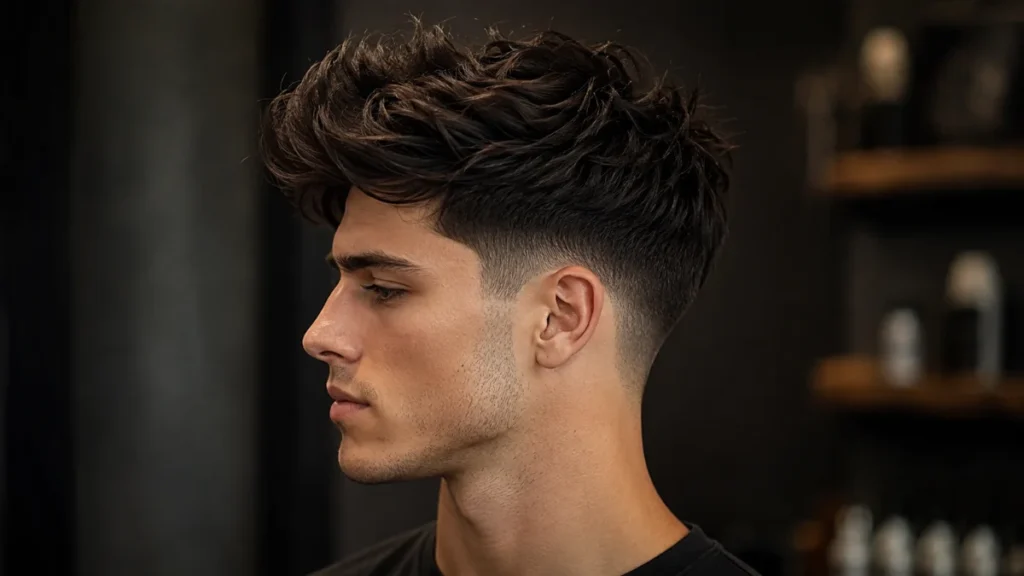
15 Low Taper Fade Buzz Cut Styles for Men, Guard Lengths & Barber Guide

A Low Taper Fade Buzz Cut combines the simplicity of a short buzz cut with a subtle taper around the temples, sideburns, and neckline. The top stays short, while the perimeter is gradually cleaned up to give the haircut a more defined shape.
It is a particularly good option if you like short hair but do not want the sides and back to look completely uniform. The low taper adds just enough detail to frame the head without turning the haircut into a high-contrast fade.
The best version depends on your buzz length, hair density, head shape, hairline, and how sharp you want the finish. A #2 buzz with a soft taper will look noticeably different from a #4 buzz with a skin taper, even though both fall under the same general style.
What Is a Low Taper Fade Buzz Cut?
A Low Taper Fade Buzz Cut starts with closely clipped hair on top and uses a gradual reduction in length around the lower sides and neckline. Unlike a traditional fade that can remove substantial hair from the sides, the taper is concentrated around the perimeter.
The word “low” describes where the transition begins. The taper generally stays close to the temples, sideburns, and lower neckline instead of climbing high toward the parietal ridge.
This gives you two different visual elements: a simple, low-maintenance buzz on top and a more detailed finish around the edges.
The Main Features
- Short, clipper-cut top
- Gradual taper around the temples
- Cleaned-up sideburn area
- Tapered or faded neckline
- Optional line-up
- Optional beard blend
- Can be finished with a shadow or skin-level taper
- Minimal daily styling
The exact appearance depends on the guard used on top and how aggressively the taper is taken down around the perimeter.
Low Taper vs. Low Fade on a Buzz Cut
These terms are often mixed, but they can produce different results.
A low taper concentrates the transition around the temple and neckline areas, leaving more of the side profile intact. A low fade generally spreads the shorter transition farther around the sides and back. Current barber guides similarly distinguish tapering as a more localized, subtle graduation from a broader fade.
On a longer haircut, the distinction can be relatively subtle. On a buzz cut, however, even a small change in side length can dramatically alter the silhouette..
| Feature | Low Taper Buzz | Low Fade Buzz |
|---|---|---|
| Shortest Area | Mainly perimeter | Wider area around sides |
| Side Weight | More preserved | More removed |
| Overall Appearance | Subtle | Higher contrast |
| Grow-Out | Softer transition | Fade becomes visible sooner |
| Best For | Natural, understated look | Stronger faded appearance |
| Top | Buzzed | Buzzed |
| Styling Effort | Very low | Very low |
If you specifically want to keep some fullness on the sides, tell your barber low taper, not simply “low fade.”
Best Buzz Cut Guard Lengths for a Low Taper
The guard number determines how much hair remains on top. It is one of the most important decisions because a one-guard difference can change the entire character of a buzz cut.
#1 Buzz With a Low Taper
A #1 creates a bold, close-cut look by leaving the top incredibly short. Because there is little hair covering the scalp, natural head shape and scalp visibility become more noticeable. This works well for someone who already knows they enjoy very short hair. It is less forgiving if you are unsure about going extremely close.
Best for: Dense hair, strong facial features, and men comfortable with a very short cut.
#2 Buzz With a Low Taper
For a brief buzz, the #2 is a common middle ground. It provides enough coverage to soften the scalp compared with a #1 while remaining unmistakably short. It is also easier to grow into another short style if you decide the buzz is too severe.
Best for: First-time buzz cuts and men who want a clean, compact look.
#3 Buzz With a Low Taper
A #3 leaves more visible texture and coverage on top. The extra length can make the haircut feel less severe and give the barber slightly more room to shape the overall silhouette. This option can work particularly well with thick, wavy, or curly hair.
Best for: Men who want a short haircut without going ultra-close.
#4 Buzz With a Low Taper
Instead of having a very tight buzz, a #4 is noticeably fuller and looks like a short, consistent clipper cut. It can be useful if you want the convenience of a buzz while retaining more texture. The taper becomes more visually noticeable because there is greater contrast between the fuller top and shorter perimeter.
Best for: Men who want coverage and a softer appearance.
| Guard | Approximate Feel | Appearance | Good Starting Point? |
|---|---|---|---|
| #1 | Very close | Bold, exposed | Only if you like very short cuts |
| #2 | Short | Clean and compact | Yes |
| #3 | Moderate | Softer and fuller | Yes |
| #4 | Fuller | Natural and relaxed | Yes |
Guard numbers are useful shorthand, but they are not the entire haircut. Your barber may use different clipper settings around the taper to create the desired transition.
15 Best Low Taper Fade Buzz Cut Styles For Men
1. Classic Low Taper Buzz Cut
The classic version keeps the top at one consistent buzz length while the taper cleans the temples and neckline. There are no complicated designs or dramatic transitions. It is the easiest version to maintain because the haircut does not depend on styling. A clean perimeter does most of the visual work.
Best for: Everyday wear and men who prefer simple grooming.
2. Low Taper Buzz With Line-Up
Adding a line-up gives the haircut a sharper finish around the forehead and temples. This creates more definition without needing to raise the taper. The line-up should follow your natural hairline rather than being pushed backward to create an artificially straight shape.
Best for: Men who like crisp edges.
3. Low Skin Taper Buzz Cut
A skin taper takes the shortest portion around selected perimeter areas down extremely close to the skin. The result creates more contrast between the short buzz and the clean edges. This is bolder than a shadow taper but still keeps the overall transition low.
Best for: Men who want a noticeably sharper perimeter.
4. #2 Buzz With Low Taper
A #2 top paired with a low taper creates a balanced short haircut. You get the close appearance of a traditional buzz without making the entire head look shaved down. This is one of the safer choices if you are trying a tapered buzz for the first time.
Best for: Most hair types and men transitioning from longer hair.
5. #3 Buzz With Low Taper
The #3 version leaves enough length to show some natural texture. The low taper then provides contrast around the lower sides and neckline. It is especially useful for men who want a short haircut but do not want maximum scalp exposure.
Best for: Thick, wavy, and curly hair.
6. Low Taper Buzz With Beard
A short buzz can look even more balanced when paired with facial hair. The beard gives the lower part of the face additional visual weight while the taper creates a clean connection near the sideburns. The beard does not have to be faded aggressively. A controlled beard shape with a subtle sideburn transition can be enough.
Best for: Men with medium or full facial hair.
7. Curly Buzz With Low Taper
Curly hair does not have to be grown long to show texture. A slightly longer buzz can retain enough curl or coil character to distinguish it from straight, uniform clipper hair. The barber should account for shrinkage when choosing the top length.
Best for: Curly and coily hair.
8. Wavy Buzz With Low Taper
Wavy hair can give a buzz cut more visual movement, especially when the top is kept around a #3 or #4 rather than extremely short. The taper keeps the perimeter clean while the top retains a little of the natural wave pattern.
Best for: Medium-to-thick wavy hair.
9. Buzz With Natural Hairline
Not every short haircut needs an aggressive line-up. Keeping the natural hairline can create a softer appearance and reduce the risk of reshaping the front unnecessarily. This is a good choice if you prefer a haircut that looks natural as it grows.
Best for: Men who want low-maintenance grooming.
10. Buzz With Sharp Temple Taper
The temple is one of the areas that can dramatically change the appearance of a short haircut. A carefully detailed temple taper creates definition without requiring a higher fade. This works particularly well with a line-up or neatly shaped beard.
Best for: Men who want subtle detail around the face.
11. Buzz Cut With Tapered Neckline
A clean neckline can make a short haircut look finished from the back. Your barber can taper the neckline gradually rather than creating a hard horizontal line. A natural neckline can also be left slightly softer if you prefer a less structured grow-out.
Best for: Men who care about the back profile of the haircut.
12. Buzz Cut With Beard Fade
This variation connects the haircut to the beard more deliberately. The sideburn region becomes the bridge between the low taper and facial hair. The transition should match your beard density. A very tight beard fade can look disconnected if the facial hair is naturally sparse.
Best for: Medium-to-heavy beard growth.
13. Textured Buzz With Low Taper
A textured buzz uses slightly more length on top and can involve subtle variation rather than treating every section as completely identical. This gives the haircut more dimension while keeping the maintenance requirements extremely low.
Best for: Thick or coarse hair.
14. Buzz Cut With Hard Part
A shaved part can add a graphic detail to an otherwise simple haircut. Because the top is so short, the part becomes one of the most noticeable features. Keep in mind that a hard part requires maintenance as the hair grows, so it is less low-maintenance than a basic buzz.
Best for: Men who want a defined design element.
15. Soft Low Taper Buzz
The soft version keeps the transition visible but avoids an extremely sharp skin finish. The result is understated and tends to blend into the surrounding hair more naturally. This is a strong choice if your priority is a haircut that looks good beyond the first few days.
Best for: Men who prefer natural-looking blends and easier grow-out.
How to Maintain a Low Taper Fade Buzz Cut?
This is one of the lower-maintenance cuts you can get, but “low-maintenance” doesn’t mean “no-maintenance.”
- Trim schedule: Plan on a barber visit every two to three weeks. Because the taper sits low, it grows out a bit more gracefully than a high fade, but the line will still start to soften and blur after about three weeks.
- Daily upkeep: Most guys don’t need product for the top since it’s too short to hold much of a shape. A light matte pomade or texturizing spray can add a bit of definition if you want it, but it’s optional rather than necessary.
- Scalp care: With this much hair removed, your scalp is more exposed to sun and dryness than it would be with a longer style. A daily SPF on the scalp and a light moisturizer after showering will keep the skin from flaking or looking patchy, especially along the tapered sides.
- Between-visit touch-ups: If you’re comfortable with clippers, a home trimmer can help you clean up neckline growth between barbershop visits. Stick to the neckline and avoid touching the taper blend yourself unless you’re confident that’s the part most likely to get uneven without training.
Which Low Taper Buzz Cut Should You Choose?
Start with the amount of hair you are comfortable losing. If you want an extremely short, almost military-style appearance, consider a #1 or #2. If you want more coverage and a softer result, a #3 or #4 gives you more room.
Then decide how visible you want the taper to be.
Choose a Soft Taper If:
- You prefer natural-looking edges.
- You want less contrast.
- You do not want frequent line-up maintenance.
- You are growing the haircut out.
- You want the buzz to remain the main feature.
Choose a Skin Taper If:
- You like crisp contrast.
- You want very clean temples.
- You regularly visit your barber.
- You want the perimeter to stand out.
There is no universally “best” version. The right combination is the one that matches your grooming habits and the shape of your head and face.
How to Ask Your Barber for a Low Taper Fade Buzz Cut?
The simplest way to avoid confusion is to give your barber four pieces of information: top guard, taper height, shortest taper length, and edge preference.
For example:
“I want a #3 buzz on top with a low taper around the temples and neckline. Keep the taper low and leave some weight on the sides. Give me a natural line-up and a tapered neckline.”
If you want a sharper result:
“Keep the #2 buzz on top, take the taper low around the temples and nape, and make the shortest part close to the skin. I want a clean line-up but don’t push my natural hairline back.”
A reference photo can help, especially if you want a particular temple or neckline shape.
What Your Barber Needs to Know
- Top guard number
- Low taper placement
- Shadow or skin finish
- Natural or sharp hairline
- Neckline preference
- Beard connection, if applicable
- Whether you want the sides kept relatively full
Do not simply say “give me a low taper buzz” if you have a very specific result in mind. The more precise the consultation, the less room there is for misunderstanding.
Pros and Cons
| Advantages | Potential Drawbacks |
|---|---|
| Very little daily styling | Head shape becomes more visible |
| Clean and simple | Short hair offers limited styling options |
| Low taper adds definition | Sharp tapers need periodic cleanup |
| Works across many hair textures | Very short guards expose more scalp |
| Easy to explain to a barber | Poor blending is noticeable |
| Can pair with a beard | Hairline mistakes are difficult to hide |
FAQ
What guard should I use for a low taper buzz?
A #2 or #3 is a practical starting point for many men because it keeps the haircut short without going extremely close. A #1 creates a much tighter appearance, while a #4 provides more coverage.
Is a low taper better than a fade with a buzz cut?
Neither is automatically better. A low taper preserves more side weight and creates a subtler appearance, while a low fade produces more visible contrast around the sides.
Can I get a skin taper with a buzz cut?
Yes. The taper can be taken very close to the skin around the temples and neckline while keeping the buzz length on top.
Can I do a low taper fade buzz cut myself at home?
The buzzed top is fairly manageable with clippers and a guard, but the tapered blend on the sides is the harder part to self-execute cleanly. Many guys buzz the top themselves between barber visits and leave the taper touch-ups to a professional.
Is a low taper buzz professional?
It can be. A simple buzz with a conservative taper and natural edges is generally easy to adapt to professional environments. The overall impression depends on the finish, workplace, and personal grooming.